Publications

Follow via RSS

Efficiency of Food Reserves in Enhancing Food Security in Developing Countries: The Nigerian Experience

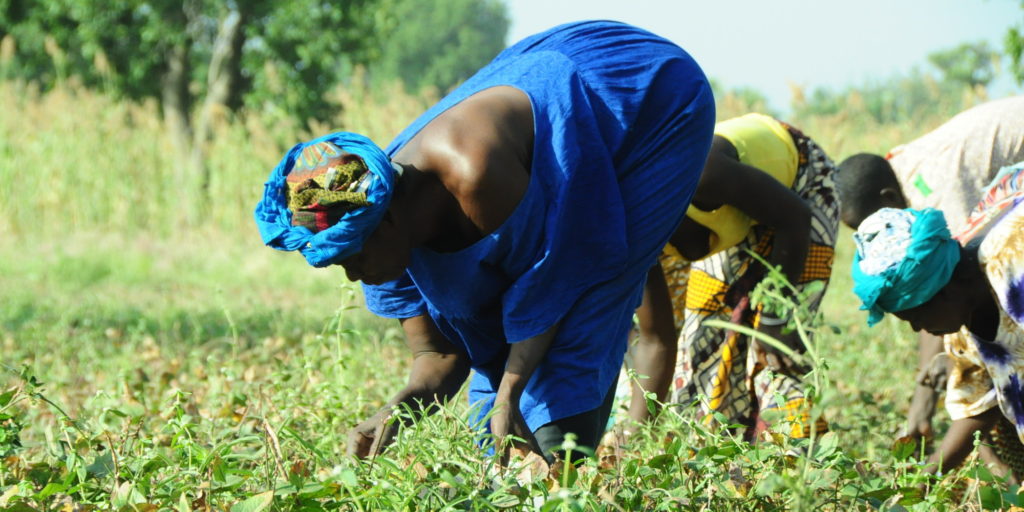
As a policy objective, the attainment of food security in Nigeria began facing challenges prior to independence when oil exportation began in 1958. But the challenges became pronounced and persistent after the commencement of large-scale oil exports in the early 1970s, when the country nearly abandoned agriculture in pursuit of newfound oil wealth. Self-sufficiency in food production and agricultural export earnings, aided by widespread cultivation of food crops and regional specialisation in cash crops – the cocoa mountains in the west, the oil palm and kernel heaps in the east, and groundnut pyramids in the north – began to diminish and disappear respectively. Within a few years after independence in 1960, the agricultural sector transitioned from a net foreign exchange earner to net foreign exchange drain.

Read More Download PDF

Nigeria Economic Update (Issue 40)

Market indices at the Nigeria Stock Exchange closed downward in the trading week ended October 4, 2019. The bourse recorded a  meagre 2.48 percent decrease in twin market indices– All Share Index and Market Capitalization. Both indices closed at 26,987.45 and N13.137 trillion respectively.1 All of other market indices depreciated with the exception of NSE Insurance and NSE Industrial Goods Indices. The worst hit was Consumer Goods Index NSE Banking Index which declined by 4.92 percent and 3.94 percent respectively, while the NSE Insurance Index increased by the most percentage of 5.71percent. The depreciation can be linked to profit taking on gains made the previous week.2 We expect market sentiment to turn around as discerning investors start buying stocks that are now trading at lower levels. We also expect that the swift approval of the 2020 budget will have a positive impact on investor’s sentiment, consumer spending and companies’ earnings; and thus on the future market value of the outstanding shares, especially in the consumer goods market.

Read More Download PDF

Nigeria Economic Update (Issue 39)

The Central Bank of Nigeria (CBN) reviewed upward the minimum Loan to Deposit Ratio (LDR) target for all Deposit Money Banks (DMBs) from 60 percent to 65 percent.1 This is to sustain the momentum gained from a 5.33 percent (N829.40 billion) increase in the industry gross credit between end of May 2019 and 26th September 2019. If Nigerian banks abide by the new regulation, this should translate to increased lending to Nigerian businesses  thereby supporting private sector growth. Regulatory enforcement or incentives may be needed to ensure that banks follow through with the regulation, as many of the biggest banks fell short of the regulator’s initial 60 per cent LDR threshold.

Read More Download PDF

Nigeria Economic Update (Issue 38)

The government’s new fiscal projections have been revealed in the Medium-Term Expenditure Framework (MTEF) 2020-20221. The GDP growth projection was revised downwards from 3.6% to 2.9% for the 2020 fiscal year. Benchmark crude price was also revised from $60 to $55 per barrel, which could weigh on expected revenues. However, while recurrent expenditure is expected to rise in 2020, capital expenditure is projected to fall. The new MTEF shows a projected budgeted increase in recurrent expenditure from NGN4.3 trillion in 2019 to NGN4.7 trillion in 2020 (excluding debt service payments); and downward revision of capital expenditure to NGN1.7 trillion in 2020. While the early design of the MTEF could influence a return to the January-December budget cycle which will improve budgetary predictability for line ministries, the reduction in capital expenditure will likely lead to a deterioration in the much-needed infrastructure and other long-term investment. Failure to meet these needs will likely hinder economic growth in the long run.

Read More Download PDF

Nigeria Economic Update (Issue 37)

The federal government has proposed an increase in Value Added Tax (VAT), from the current 5% to 7.2%3. The increment is linked to the implementation of Nigeria’s new minimum wage which has informed the need for an increase in revenue, particularly from taxation. Although the new policy awaits approval by the National Assembly, it is expected that the additional revenue obtained would help states in meeting their wage payment obligations given the frequent difficulties in salary payment for some states. The additional tax burden has the potential to change people’s economic behaviour by making them save more. Moreover, the VAT rate of other lower middle-income African countries including Cote d’Ivoire, Senegal and Lesotho at 20%, 18% and 15% respectively is significantly higher than Nigeria’s proposed VAT rate. However, households and firms will be negatively affected as the proposed increase would reduce the disposable income of consumers, and a portion of the recent gains in minimum wage will be eroded.

Read More Download PDF

Payment Patterns in Nigeria’s Public Facilities: Unexpected costs and implications for health-seeking behavior in Nigeria

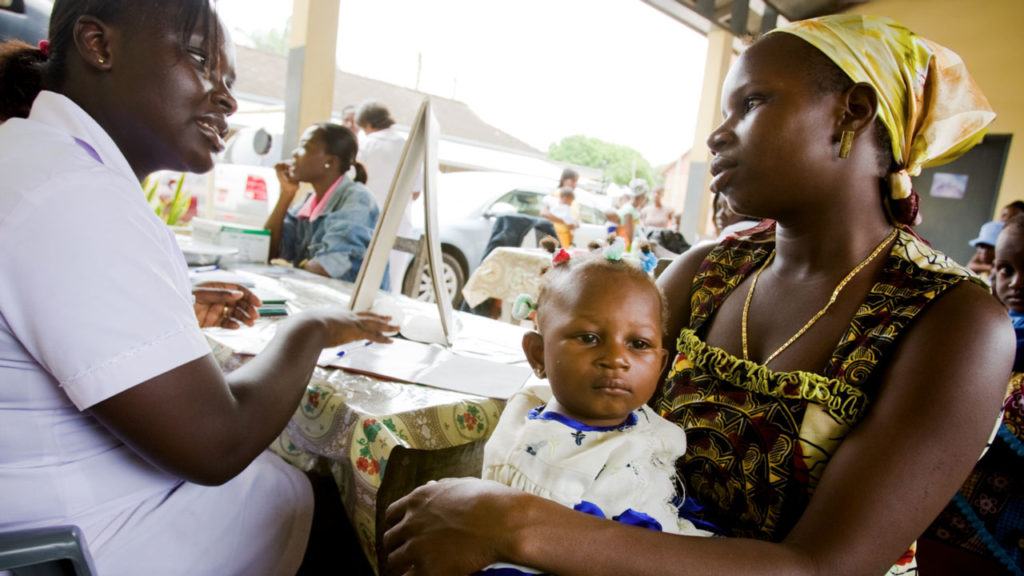
Adequate health financing is a critical element of any strong healthcare system.  In Sub-Saharan Africa, financing and payment models for primary, secondary, and tertiary health care can be significant tools for improving issues of access, quality, and equity in care delivery.  While much effort is made to understand the financing approaches that may be optimal for health systems at large, little is known about financing mechanisms that may work best considering the dominance of out-of-pocket payment and, more importantly, the impact that unexpected, informal costs for care may have on health-seeking behaviour.  The abolition of user fees for public health facilities has become increasingly popular in many low-income countries, with results from numerous studies noting an increase in access and utilization for the poorest populations.  However, abolishing user fees often does not remove the cost of many goods and services related to a care episode.  Though some patients may pay no initial fees for a basic service such as an initial consultation, there are often treatment-related costs that are unknown to the patient.

Even with health insurance or under “free” social schemes, evidence suggests that many patients in Nigeria’s public health facilities still pay a significant amount of care-related costs.  The discrepancy between the expected free cost of care at public facilities and the actual cost of treatment often means that poorer patients pay as they are able to gather funds.  Abolition of user fees and fee exemptions may not effectively protect access to health services among the poor.  The majority of fee removal and exemption mechanisms have not meant an end to the existence of informal fees and other care-related costs. A better understanding is needed of the existence of fee removal mechanisms, whether they are able to increase access for the poor, or if other supplemental mechanisms may be necessary.

Read More Download PDF

Summary Report: Is Nigeria on track to achieving quality education for all?

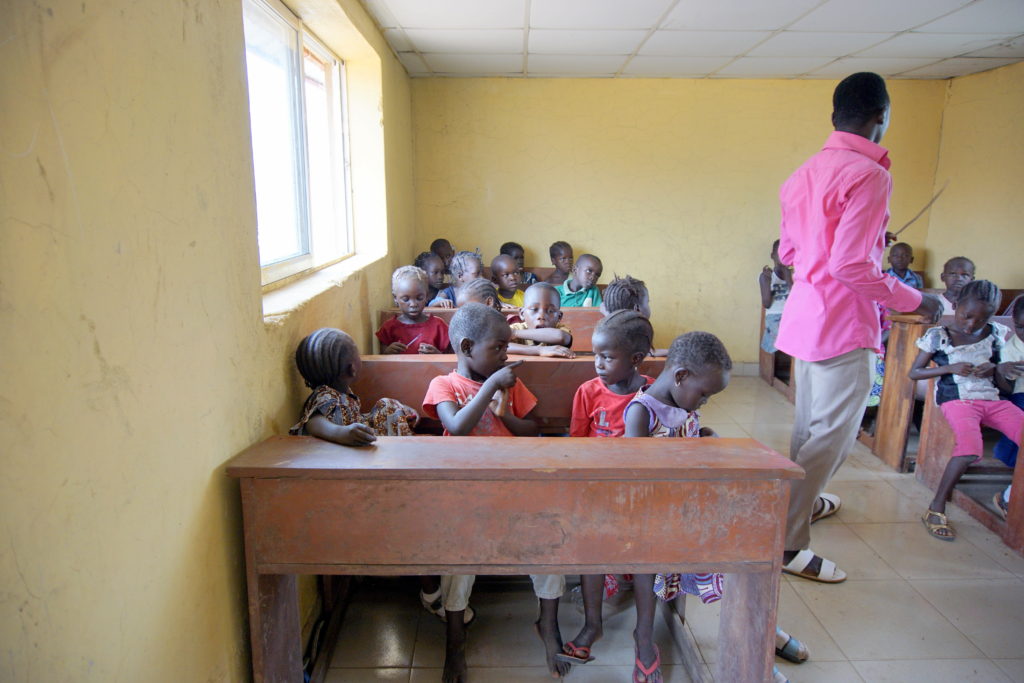
Quality education is a key enabler for sustainable growth and development. The 2030 Agenda rightly recognises this with SDG 4. Despite the importance accorded to education, Nigeria’s educational performance is abysmally low in terms of quality and quantity. Poor educational outcomes are illustrated by the existence of more than 10.5 million out-of-school children in 2018, which is the highest number globally (Adekunle, 2018). On the quality side, educational performance is even more worrisome. According to the World Economic Forum (2017), Nigeria ranks 124th out of 137 countries in terms of the quality of primary education.

About the SVSS project
The Southern Voice “State of the SDGs” initiative provides evidence-based analysis and recommendations to improve the delivery of the Sustainable Development Goals (SDGs). As a collaborative initiative, the program compiles a broad range of perspectives that are usually missing from international debates. This report aims to fill an existing knowledge gap. Southern Voice is confident that it will enrich the discussions on the SDGs and level the playfield with new voices from the Global South. This piece was first published here: Southern Voice
Read More Download PDF

Payment Patterns in Nigeria’s Public Facilities: Unexpected costs and implications for health-seeking behavior in Nigeria

Adequate health financing is a critical element of any strong healthcare system.  In Sub-Saharan Africa, financing and payment models for primary, secondary, and tertiary health care can be significant tools for improving issues of access, quality, and equity in care delivery.  While much effort is made to understand the financing approaches that may be optimal for health systems at large, little is known about financing mechanisms that may work best considering the dominance of out-of-pocket payment and, more importantly, the impact that unexpected, informal costs for care may have on health-seeking behaviour.  The abolition of user fees for public health facilities has become increasingly popular in many low-income countries, with results from numerous studies noting an increase in access and utilization for the poorest populations.  However, abolishing user fees often does not remove the cost of many goods and services related to a care episode.  Though some patients may pay no initial fees for a basic service such as an initial consultation, there are often treatment-related costs that are unknown to the patient.

Read More Download PDF

Nigeria Economic Update (Issue 36)

Capital importation into Nigeria dropped significantly in first quarter of 2019 with more than 26 states unable to attract any form of foreign investment during the quarter. At $5.82 billion, total capital imported declined significantly by 31.4% relative to $8.49 billion capital imported in the previous quarter1. By type of investment, while other investments (loans, and other claims) increased QOQ by 19% to $2.4 billion, both foreign direct and portfolio investments declined during the quarter. Foreign direct investment fell by 8.41% to $222.89 million, however, portfolio investment, Nigeria’s biggest source of capital importation, declined the most by about 40% from $7.15 billion in 2019Q1 to $4.29 billion in 2019Q2. The numbers suggest that investors seem weary of the weak economic and business environment and are taking a risk-averse stance. With the presence of internal push factors such as rising government debt, declining economic performance, and static business climate, we expect a continuous decline in foreign capital inflows. To attract capital inflows, there is need to boost investor protection by improving regulations on protecting minority investors, as well as managing conflict of interest between the government and investors in order to reduce the risk exposure to foreign investors.

Read More Download PDF