Publications

Follow via RSS

Payment Patterns in Nigeria’s Public Facilities: Unexpected costs and implications for health-seeking behavior in Nigeria

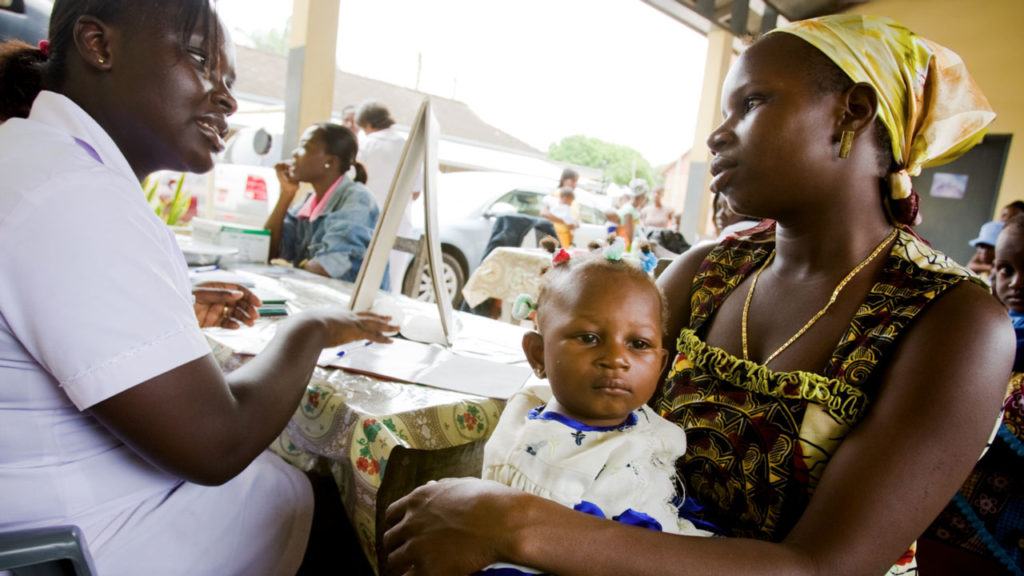
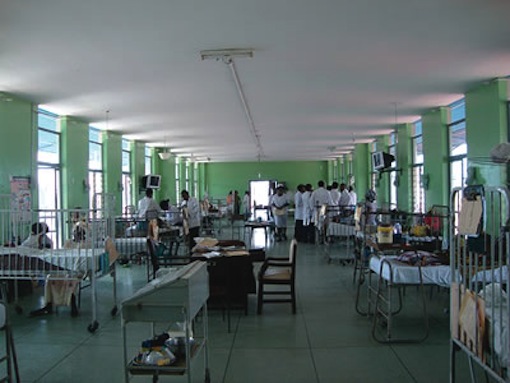
Adequate health financing is a critical element of any strong healthcare system.  In Sub-Saharan Africa, financing and payment models for primary, secondary, and tertiary health care can be significant tools for improving issues of access, quality, and equity in care delivery.  While much effort is made to understand the financing approaches that may be optimal for health systems at large, little is known about financing mechanisms that may work best considering the dominance of out-of-pocket payment and, more importantly, the impact that unexpected, informal costs for care may have on health-seeking behaviour.  The abolition of user fees for public health facilities has become increasingly popular in many low-income countries, with results from numerous studies noting an increase in access and utilization for the poorest populations.  However, abolishing user fees often does not remove the cost of many goods and services related to a care episode.  Though some patients may pay no initial fees for a basic service such as an initial consultation, there are often treatment-related costs that are unknown to the patient.

Even with health insurance or under “free” social schemes, evidence suggests that many patients in Nigeria’s public health facilities still pay a significant amount of care-related costs.  The discrepancy between the expected free cost of care at public facilities and the actual cost of treatment often means that poorer patients pay as they are able to gather funds.  Abolition of user fees and fee exemptions may not effectively protect access to health services among the poor.  The majority of fee removal and exemption mechanisms have not meant an end to the existence of informal fees and other care-related costs. A better understanding is needed of the existence of fee removal mechanisms, whether they are able to increase access for the poor, or if other supplemental mechanisms may be necessary.

Read More Download PDF

Summary Report: Is Nigeria on track to achieving quality education for all?

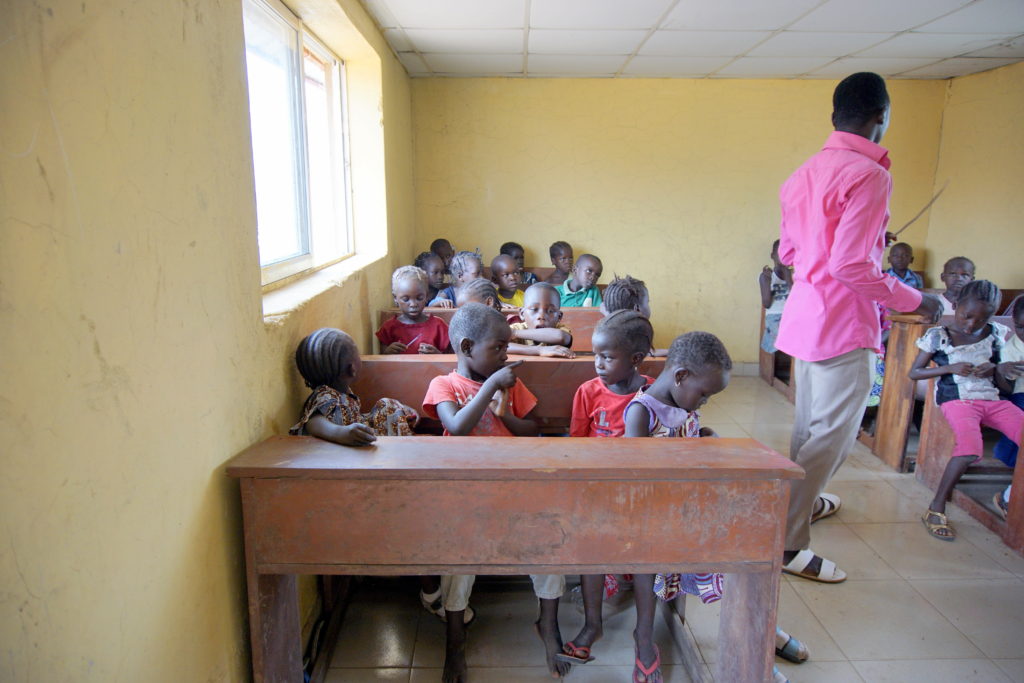
Quality education is a key enabler for sustainable growth and development. The 2030 Agenda rightly recognises this with SDG 4. Despite the importance accorded to education, Nigeria’s educational performance is abysmally low in terms of quality and quantity. Poor educational outcomes are illustrated by the existence of more than 10.5 million out-of-school children in 2018, which is the highest number globally (Adekunle, 2018). On the quality side, educational performance is even more worrisome. According to the World Economic Forum (2017), Nigeria ranks 124th out of 137 countries in terms of the quality of primary education.

About the SVSS project
The Southern Voice “State of the SDGs” initiative provides evidence-based analysis and recommendations to improve the delivery of the Sustainable Development Goals (SDGs). As a collaborative initiative, the program compiles a broad range of perspectives that are usually missing from international debates. This report aims to fill an existing knowledge gap. Southern Voice is confident that it will enrich the discussions on the SDGs and level the playfield with new voices from the Global South. This piece was first published here: Southern Voice
Read More Download PDF

Payment Patterns in Nigeria’s Public Facilities: Unexpected costs and implications for health-seeking behavior in Nigeria

Adequate health financing is a critical element of any strong healthcare system.  In Sub-Saharan Africa, financing and payment models for primary, secondary, and tertiary health care can be significant tools for improving issues of access, quality, and equity in care delivery.  While much effort is made to understand the financing approaches that may be optimal for health systems at large, little is known about financing mechanisms that may work best considering the dominance of out-of-pocket payment and, more importantly, the impact that unexpected, informal costs for care may have on health-seeking behaviour.  The abolition of user fees for public health facilities has become increasingly popular in many low-income countries, with results from numerous studies noting an increase in access and utilization for the poorest populations.  However, abolishing user fees often does not remove the cost of many goods and services related to a care episode.  Though some patients may pay no initial fees for a basic service such as an initial consultation, there are often treatment-related costs that are unknown to the patient.

Read More Download PDF

Nigeria Economic Update (Issue 36)

Capital importation into Nigeria dropped significantly in first quarter of 2019 with more than 26 states unable to attract any form of foreign investment during the quarter. At $5.82 billion, total capital imported declined significantly by 31.4% relative to $8.49 billion capital imported in the previous quarter1. By type of investment, while other investments (loans, and other claims) increased QOQ by 19% to $2.4 billion, both foreign direct and portfolio investments declined during the quarter. Foreign direct investment fell by 8.41% to $222.89 million, however, portfolio investment, Nigeria’s biggest source of capital importation, declined the most by about 40% from $7.15 billion in 2019Q1 to $4.29 billion in 2019Q2. The numbers suggest that investors seem weary of the weak economic and business environment and are taking a risk-averse stance. With the presence of internal push factors such as rising government debt, declining economic performance, and static business climate, we expect a continuous decline in foreign capital inflows. To attract capital inflows, there is need to boost investor protection by improving regulations on protecting minority investors, as well as managing conflict of interest between the government and investors in order to reduce the risk exposure to foreign investors.

Read More Download PDF

The Subnational Political Resource Curse: Allocations, Internally Generated Revenue and Spending Priorities in Nigeria

Oil wealth comes with a caveat-depend on it excessively and be buffeted by oil market volatility. The 2014 oil price crash revealed that Nigeria did not heed this warning. The country’s expenditure forecasts are based on an assumed oil price so that the government was caught flatfooted when the crash began around June. Under duress, public officials eventually revealed how financially irresponsible governance was during the years of plenty: after a tussle with the President, State Governors shared oil profits stowed in a “rainy day” account called the Excess Crude Account (ECA) amongst themselves; they allegedly also hindered the growth of the country’s Sovereign Wealth Fund. It does not seem like those hard-won funds were spent in the public’s interest-reports detailing several state governments’ inability to fund public investments and pay public servants’ salaries have continued to arise into 2018.

Read More Download PDF

For the Ones we Leave Behind: Exclusion in Education for the Rural Northern-Nigerian Girl-Child

Conversations in the Courtyard.

It’s really quite beautiful this time of year in Gaya.

All of Kano State is truly picturesque – arguably more so than the rest of Northern Nigeria – but Gaya is especially charming….and quaint….and it is my hometown.

I enjoy spending time with Fatima – she’s my cousin and we are both fourteen. My parents don’t bring us back here to Gaya from Abuja Federal Capital Territory where we live very often, but whenever we do come, it’s quite a treat. Fatima’s lived here in the village her whole life; she’s never left, could you believe?! I always have many tales for her about city living when we visit, and she tells me stories about our village as well. I find a lot of her stories quite amazing – she once told me she has to walk 2 whole miles and back to the spring every day with her sisters, just so they can have water at home; I do so wish Daddy would let her come live with us, away from here.

Daddy and Uncle Musa – that’s Fatima’s daddy – are sitting on mats out in the courtyard; it’s really nice out there with the old shade-giving trees and the open spaces with the leaf-strewn brown earth. Mother is pacing behind them – she is trying to find reception for her iPad, and it doesn’t seem like she’s having any luck – rural areas! Fatima and I go and sit on the mat by our fathers. I am trying to teach her how to navigate mobile apps on my phone, and I’m not having a lot of luck either – this touch-screen technology is simply alien to her.

It appears Daddy and Uncle Musa are arguing.

“Shehu”, Uncle Musa sounds impatient speaking to Daddy.

“I have told you there is nothing wrong with the way I am raising my children. You may have different views, but that does not mean they are better. Don’t forget YOU were raised right here, in the exact same way.”

“Not quite”, Daddy says.

“I left the village for university, and I did it all on my own because I realized I could do so much better than here. I don’t mean to compare, but just look how differently our lives turned out Musa. I am a year younger than you are, but I have the much better life; and it’s only because I refused to follow the norm, and I pursued a Western education.”

Mother peeks over, she knows trouble is afoot. His brother’s far greater affluence was always a sore subject with Musa, and he especially disliked any comparisons of them both in that regard. My father is an Architect with a very lucrative practice you see, while my Uncle Musa is a farmer back here in the village, with limited education and a meagre livelihood.

“Well then, I suppose you believe yourself better than me because you have a university degree and I do not.”

Daddy appears to weigh his words at this point,

“That isn’t what I mean. I am only trying to say you owe your children the best life you can give them; and the best path is a good education. I am saying to look at both our lives to realize how much of a difference a good education can make.”

Mother quickly steps in; Daddy isn’t always the most pragmatic with words. She tries to cool things down a bit, sensing Uncle Musa is on the verge of responding quite angrily.

“Please pay my husband no mind Brother Musa, he is yet to learn how to talk in polite company. Speaking of your children, how are your daughters faring?”

Mother’s spoken Hausa is not very good, just like mine. We both understand the language nonetheless.

Daddy and Uncle Musa are both bemused now, but Uncle Musa has always liked Mother, in spite of his passive disapproval of her progressive lifestyle which is at odds with the far more conservative one he believes is expected of a woman.

He responds,

“My daughters are fine, thank you Aisha. By God’s grace Fatima will soon be wed, and I can only hope to have such luck with all my daughters. It’s a shame I have no sons.”

It’s Mother’s turn to be bemused,

“Do you really mean to marry Fatima off now? She is only a child.”

“Hajia...”

This is Uncle Musa’s manner of addressing Mother on occasion.

“Do not presume to tell me how to run my household. You too Shehu. It is every father’s pride for his daughter to be properly wed when she is the right age. At Fatima’s age, she may bear children, and therefore she may marry. If nature did not intend her for childbearing now, it would not have endowed her for it.”

Mother is speechless, she looks at Daddy for help.

“Musa”, Daddy begins,

“If you marry Fatima off now, she will have no real future. You condemn her to a life of servitude as solely a wife and mother...”

“As is her place”, Uncle Musa interrupts.

“We must never forget who we are. A woman’s place is as homemaker – she is mother and wife, nothing more. She is to be seen, not heard. She is to help build, and not be herself built. Why do you press me to throw money away that I barely have educating a girl – what gain is there in that? A Western education will serve her no purpose, and will keep her from finding a husband when she ought to. It will plant horrible ideas in her head of equality with men. Look at your wife for instance…”

My father starts, “Tread carefully Musa.”

“I shan’t, not anymore; not when you look for your blindness to spread to my home. Aisha thinks herself your equal, it is unspeakable. How do you expect me or anyone to think you a man, when you may not hold an opinion without her approval beforehand? You lost your way a long time ago Shehu, you with your big education and your bright and shiny ‘educated wife’. You have forgotten who you are. You may live out your folly, you and your household, but do not attempt to pull me and mine into it.”

Whenever Daddy gets really angry, he doesn’t speak. Mother told me once this was because he didn’t want to say or do the wrong things in his ire. She turns to Uncle Musa,

“Brother Musa, I respect your beliefs and your opinions as well, and I would not ever try diminish who you are with my own. My argument is in aid of my nieces – the world is far different place than what the sole perspective of a village such as this would have one believe it is. A woman may aspire to great personal success, and many have done; and it neither will remove from her femininity nor will it render her less desirable to or compatible with a man. Open your heart, and your mind Brother Musa. For love of your daughters, if for nothing else, consider the possibility of changing your stance. Shehu and I have discussed it, and we are willing to take all four of them back with us to Abuja, where we will raise them as our own and give them every opportunity to succeed. Their lives, and ultimately yours, will be much better for it I assure you.”

Uncle Musa responds slowly,

“My daughters will go to Islamic school as they have done; that is what is expected of me.  It is there that they learn all that they are required to. When the time is right, God-willing they will each marry well, and from then on no longer be my property, but the property of their husbands. This is as it has been, and as it always will be. I will speak no further on the subject”

I look at my father, his expression is a combination of annoyance and sadness – I know he wants the best for his brother and his daughters, but is frustrated at his stubbornness and unhappy about what the fate of those girls might be as an outcome of it.

I look at my mother, she too looks unhappy….miserable even. I see though that her eyes still hold a glint of hope, and that she very likely has not given up. I do hope she hasn’t.

I look at Fatima, and I can’t tell how she is feeling. I truly don’t know if she feels like she may just have missed out on a promising future. I can’t tell if a proper education and a career and financial security hold as much value for her as they do for me. Maybe they don’t; maybe her life here is all she knows, and really all she wants. I feel sad for her, knowing that her understanding of her opportunities is limited – that her conditioning has rooted her values in conforming to what is expected of her.

The grown-ups begin to retire indoors; Fatima and I remain outside. We aren’t speaking; I think we are both quietly contemplating what has just transpired. I look at the courtyard, and at the leaves falling from the trees and blown across the ground by the wind. It is quite peaceful here. The Sun sets in the horizon, painting a golden haze over the courtyard.

It’s really quite beautiful this time of year in Gaya.

RESEARCH BY THE CENTRE FOR STUDY OF THE ECONOMIES OF AFRICA INTO THE DIMENSIONS AND DRIVERS FOR EXCLUSION IN QUALITY EDUCATION IN NIGERIA FOUND POVERTY, GENDER AND LOCATION OF RESIDENCE (RURAL VERSUS URBAN) TO BE THE CLEAR CRITERIA FOR EXCLUSION.

GO FURTHER…...Download the full CSEA paper Is Nigeria on Track to Achieving Quality Education for All? Drivers and Implications

Read More

Nigeria Economic Update (Issue 35)

Nigeria’s economy performed poorly and witnessed a second consecutive quarter of weakened growth as real GDP slowed to a year-on-year growth rate of 1.94% in the second quarter of 20191. The rate is lower than the revised 2.1% growth rate reported for the previous quarter (2019Q1) and particularly underlines slow paced growth in the non-oil sector. While the oil sector leveraged on oil price rebounds and expanded by 6.61 percentage points to record a growth rate of 5.15% (from -1.46%), the non-oil sector slowed to 1.64%, declining from 2.47% posted in the last quarter. The trend in the non-oil sector revealed the suboptimal growth state of two major sub-sectors – agriculture and manufacturing. Agriculture subsector fell significantly from 3.17% to 1.79% while the manufacturing sector entered the negative growth rate zone (-0.13%) and contributed less to GDP QOQ (9.1%). The performance of the non-oil sectors is likely to be continually undermined by systemic issues including the lack of large-scale mechanization, inadequate backward and forward integration with local industries, and poor standardization of products. It would be beneficial for the  government to create an environment that encourages  private sector partnerships and public-private partnership for upscaling production, particularly in agriculture and manufacturing sectors. Regulatory agencies such as  Standards Organization of Nigeria (SON) also need to deepen their efforts towards ensuring better quality and standardization of products to boost Nigeria’s domestic sales and exports.

Read More Download PDF

Nigeria Economic Update (Issue 34)

The Federation Accounts Allocation Committee distributed a total of N769.5 billion to the three tiers of government as revenue earned in July 20193. This amount is slightly higher than the N762.6 billion disbursed as revenue earned in June4, by N6.9 billion. For the review month, the Federal, state and local governments received N299.8 billion, N190.38 billion, and N143.57 billion respectively. As 13% derivation, the oil producing states received N42.92 billion and revenue generating agencies received N92.86 billion as cost of revenue collection. Such transparency in revenue disbursement across the three tiers of government should also be reflected in the actual distribution of funds for public services, especially at state and municipal levels. This would strengthen accountability, public financial management and traceable value for tax payers Naira.

Read More Download PDF

Nigeria Economic Update (Issue 33)

Recent reports suggest that a forex restriction on food imports into Nigeria will be implemented in the coming months1. The Apex bank had enlisted, in 2015, 41 items as invalid for foreign exchange at the Nigerian forex markets. This list is set to increase if the recent directive to ban forex for imported food items materializes. Although the key motivations behind the forex control measure include to boost local production, sustain forex stability, and conserve the foreign exchange, many underlying factors have been overlooked. Nigeria relies heavily on imported food items to meet demands of its over 180 million people, given the insufficient local food production capacity (the nation spends almost $4 billion annually to cover the food import bill2). Essentially, the current shortage in domestic food supply capacity cannot immediately replace the restricted imports. Also, the lack of structure and infrastructure for local food production sufficiency could create artificial supply gaps that are incentives to smuggling food into the country and shooting up prices and inflation. A rapid transition from smallholder farming to mechanised farming is required to stem the expected rise in food prices. While the Government promotes mechanisation through the private tractor-hiring enterprise, the programme has remained unprofitable to tractor owners as most clients are smallholder farmers. The tractor-hiring enterprise presents an entry point for international and local donor organizations active in the agriculture sector.

Read More Download PDF