Publications

Follow via RSS

Nigeria Economic Update (Issue 10)

Nigeria’s balance of payment reversed into surplus in the fourth quarter of 2018, after a third-quarter negative period. As reported by the CBN balance of payment estimates showed significant improvements with surplus of $2.80 million in 2018Q4 as against previous quarter’s huge deficit of $4,542.1 million. The current account balance improved from a deficit of $1,544.41 million in Q3 2018 to a surplus of $1,104.57 million in Q4 2018 on account of improvements in goods account - slight increase in export earnings relative to imports. Also, the financial account showed net acquisition of assets of $2,327.91 million in the review period, as opposed to the financial liabilities incurred in the preceding period. To sustain growth in export earnings, there is need to address age-long challenges that inhibit non-oil export trade: particularly dealing with the inefficient and costly transport system as well as broadening the scope of export financing instruments.

Read More Download PDF

Nigeria Education In Focus (Issue 1)

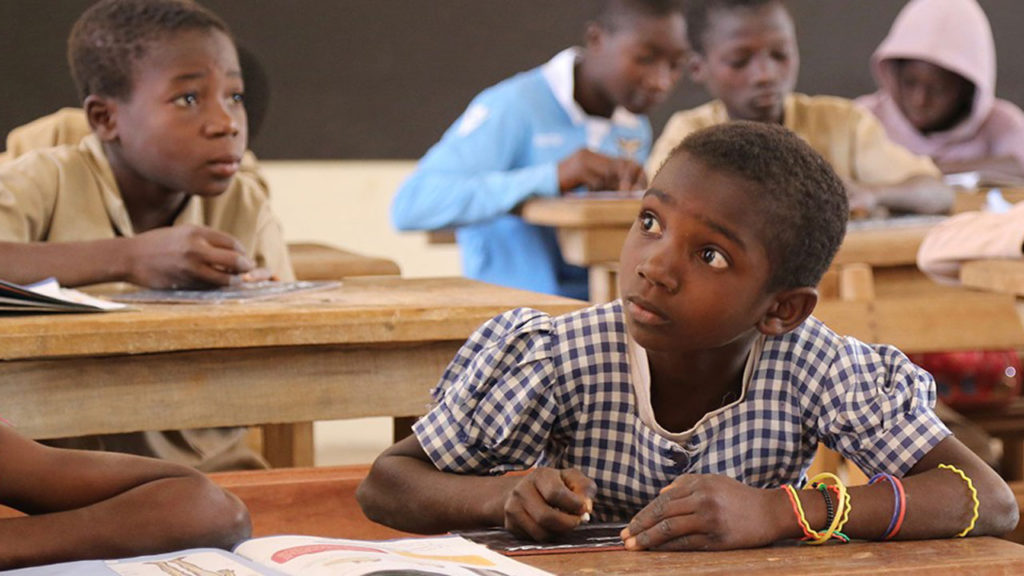
The existing education data in Nigeria are Millennium Development Goal (MDG) centric with focus on enrolment, transition and completion statistics, with no statistics on the extent of learning taking place in schools. However, with the new global agenda, Sustainable Development Goals (SDGs), focusing on quality education, huge data gap exits in Nigeria to track progress and this should be the immediate task ahead of the National Bureau of Statistics (NBS) and the Federal Ministry of Education, which is saddled with ensuring uniform education standard in Nigeria.

       
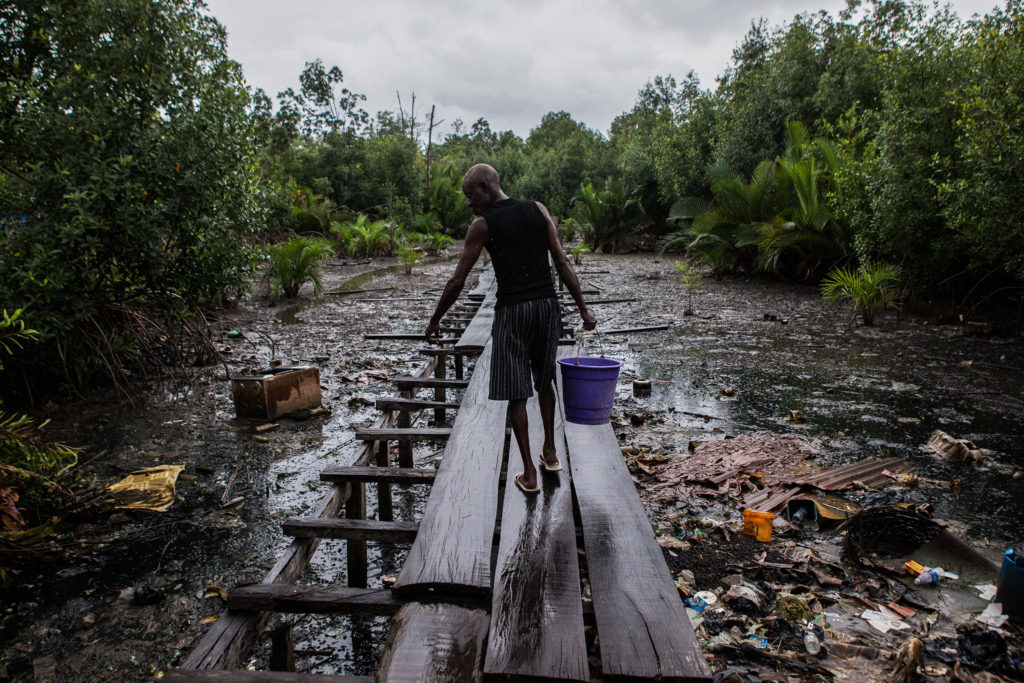
Picture Source: Global Partnership for Education
Read More Download PDF

South-South Ideas: South-South Cooperation Coherence in a Complex Assistance Framework for Development – The Case of Nigeria (2019)

Nigeria is Africa’s most populous country, with an estimated population of 190.9 million; it also has the largest economy, estimated at $376 billion in 2017 (World Bank, 2017). The economy hinges critically on the service sector, while oil is relied upon as the main source of foreign earnings. Despite its huge potential, Nigeria has failed to translate its resource endowment and strategic economic and demographic positions into sustained economic development. In fact, the country’s performance is abysmally low with regard to key development indicators. A portion (46 per cent) of its huge population is poor by World Bank definitions, and socioeconomic outcomes remain among the worst globally (World Bank, 2017). Specifically, Nigeria has the highest number of out-of-school children in the world (13 million in 2018), coupled with high rates of infant and maternal mortality (figure 1). Furthermore, the country suffers from inadequate and dilapidated infrastructure across the energy, housing and transport sectors. This is in relation to about $30 billion in budgeted spending for the 2018 fiscal year by the federal government, which reflects the enormous development financing challenges (Federal Ministry of Budget and National Planning, 2018). Despite these poor development indicators, the country has made modest progress in improving revenue streams, with recent developments in sectors other than oil such as the agriculture and mineral sectors.

Read More Download PDF

Nigeria Economic Update (Issue 9)

By year-end 2018, the country recorded a total trade value of ₦32.3 trillion1, representing 39.3% increase over the corresponding period in 2017. The volume of total merchandise trade in 2018 is noted to be the highest since 2014, nearly double pre-recession levels. Export component grew by approximately 41%, from ₦13.6 trillion in 2017 to ₦19.1 trillion in 2018. Oil (crude and non-crude) is responsible for the most part of export growth in the review year and accounts for about 94% of total exports. Agriculture and manufacturing sector exports also recorded a boost, rising to ₦302 billion and ₦645.7 billion respectively. Similarly, imports rose by 37.5% to ₦13.2 trillion. With exports exceeding imports, the current account balance of trade improved to ₦5.9 trillion in 2018. To further boost Nigeria’s current account position going forward, supply-side policies to improve the efficiency and competitiveness of domestic industries, and thus exports is crucial.

Read More Download PDF

Managing Local Impacts

If managed properly, natural resource exploration could be beneficial to communities where extractive activities take place, either directly through transfer of resource revenues and corporate interventions or through the promotion of local content. However, communities also bear the disproportionate costs of resource extraction from environmental hazard and other socio-economic effects. Effective resource management, therefore, involves maximizing benefits from resources while minimizing the costs imposed on the host communities. Nigeria currently performs below average in managing local impacts of resource extraction. Particularly, the Nigeria Natural Resource Charter (NNRC) conducted a robust assessment of the performance of Nigeria’s oil and gas sector against the 12 precepts of the Natural Resource Charter[1], detailing the relevant findings in their Benchmarking Exercise Report (BER) 2017[2]. Major issues relating to managing local impacts of extractive activities were captured in precept 5. This brief provides actionable policy recommendations that can enhance the management of local impacts of resource extraction, especially in response to the challenges identified in the BER 2017.

[1] The Natural Resource Charter is a set of principles on how to best harness the opportunities created by extractive resources for development for governments and societies rich in non-renewable natural resources.

[2] http://www.nigerianrc.org/2017-benchmark-report/

Read More Download PDF Download PDF

Nigeria Economic Update (Issue 8)

The total amount of non-performing loans (NPL) of Nigerian banks declined for the year 2018, relative to 2017. At N1.79 trillion, the stock of NPL fell by 24.2 percent from N2.36 trillion in 20171. Also, gross loans as of the end of 2018 stood at N15.35 trillion, as against N15.96 trillion as at the end of 2017. The reduction in NPL shows that debtors may have relieved more of their indebtedness in 2018 compared to 2017; this may have been complemented by the Asset Management Company of Nigeria’s (AMCON) resolve to achieve its recovery mandate against erring debtors2. AMCON is saddled with the statutory responsibility, among others, of recovering the NPL hitherto disbursed by eligible banks to their customers. The decline in non-performing loans is expected to continue as the overconcentration of banking sector loans to the unpredictable and volatile oil and gas sector has been reduced to a great length.  Monetary authorities should tighten mechanisms to ensure that commercial banks strictly adheres to the macroprudential guidelines that stipulate a 5 percent NPL benchmark.
Read More Download PDF

Managing Natural Resources for Sustainable Development

In most business schools and development economics classes around the world, Nigeria is used as a textbook case of “resource curse”. With more than USD 1 trillion earned from oil revenue since inception, the country is still ranked high in major underdevelopment indicators such as poverty, infant and maternal mortality among others. A comparative analysis of resource-rich countries, however, indicates that development outcomes hinge not strongly on the resource endowment per se, but crucially on effective management and governance of the resource.

Read More Download PDF Download PDF

Nigeria Economic Update (Issue 7)

Nigeria’s economy has shown sustained signs of recovery. Real GDP growth rate rose Year-on-Year by 2.38 percent in 2018Q4, as against 1.81 percent recorded in the preceding quarter – an increase of 0.57 percentage points.1 Non-oil sector remained the focal point for the economic expansion - growth in the sector’s activities improved to 2.7 percent from 2.3 percent and contributed approximately 93 percent to real GDP. The numbers unveil key high-performing non-oil activities during the quarter, with services manufacturing, and agriculture leading the pack. Going forward, the economy is expected to continue registering positive growth following a more stable political economy. However, inadequate credit among other factors may hinder the non-oil sector from scaling. The CBN may consider revising the banking regulations to include loan quotas for sectors with high growth and revenue-generating potential.

Read More Download PDF

Nigeria Economic Update (Issue 6)

The Nigerian economy raked in more revenue for the four quarters of 2018 fiscal year than in 2017. In the recently released economic report, the CBN reported that federally collected revenue increased by 28.4 percent to N9.44 trillion in 20181 – from N7.35 trillion in 20172. Both oil and non-oil components of federally collected revenue rose in the review year, attaining one-year peaks in 2018Q4 (N1.47 trillion) and 2018Q3(N1.14 trillion) respectively. The annual increase was most prominent in oil revenue sources, which grew significantly by 35 percent at the backdrop of 2018 improved oil price and domestic production, and accounted for N5.55 trillion of the total collected revenue. However, after statutory deductions and transfers, the federal government retained N3.96 trillion and a closer review shows that the FG expenditure pattern - at N7.36 trillion - resulted in a fiscal deficit of N3.4 trillion for the whole year 2018. Boosting non-oil sector trade and export, through infrastructure development and credit support, is critical to boosting overall government revenues to levels that match expenditure.

Read More Download PDF