Publications

Follow via RSS

Nigeria Economic Update (Issue 50)

Crude oil price experienced a mixed week from November 18 to November 25, 2016. Specifically, OPEC basket price and Brent crude price fluctuated, to a daily average of $44.6 (from $42.33)and $48.3 (from $46.86)per barrel respectively. The present oil volatility is as a result of sell-offs, attributable to speculations/fears of an insufficient production cut by OPEC (in its bid to control oversupply) - a deal scheduled for its next meeting on November 30th 2016. This speculations have arisen due to the reluctance of major OPEC member country (Saudi Arabia) to participate in the potential oil cut dealwhich could exert a downward pressure on oil prices. However, oil prices should rise if OPEC members agree to the oil cut deal. Irrespective of the outcome of the meeting, Nigeria is exempted from the potential crude oil cut. Thus, it will be optimal for the government to act quickly to address the insurgence in the Niger Delta region, in order to raise domestic oil production as much as possible.
Read More Download PDF

Nigeria Economic Update (Issue 49)

Nigerias Petroleum Products Imports statistics show a gradual reduction in the volume and value of petroleum imports (PMS, AGO, HHK) between May and September 2016. Specifically, volume of imports declined by 34.1 percent for PMS, 37.6 percent for AGO, and 60.3 percent for HHK in the period.The significant decline in imports in the reporting periods may be as a result of persistent forex scarcity issues faced by importers. On account of stagnation in domestic production of refined petroleum products, continuous decline in oil imports may create a demand gap with upward pressure on gasoline prices in the economy.
Read More Download PDF

Nigeria Economic Update (Issue 48)

Crude oil price decreased in the review week. OPEC weekly basket price reduced by 3.5 percent to $42.06per barrel from November 4, 2016 to November 11, 2016, while Nigerias bonny light price decreased by 1.1 percent to $44.36per barrel in the same period. Global oil market refocused on oversupply, as indicated in the OPECs October crude data figures (global OPEC and Non-OPEC oil supply grew by 0.97mb/day to average 96.32mb/day and outpaced demand by 1.92mb/day).
Read More Download PDF

Nigeria Economic Update (Issue 47)

Recent data by NBS indicates an increase in bank credit to private sector. Specifically, private sector credit rose (year on year) by 24.4 percent to N16,185.1 billion in 2016Q3 relative to 2016Q2, with Oil and gas, and Manufacturing sectors taking the consecutive largest shares of the credit. The rise may be connected to the need to improve credit availability to critical sectors in order to hasten the recovery from the ongoing recession. The present rise in bank credit to the manufacturing sector seems to be a step in the right direction as the sector is critical to Nigerias industrialization and economic stability.
Read More Download PDF

Nigeria Economic Review

This report provides a concise and timely analytical overview of key aspects of the Nigerian economy. The report is an attempt to track the developments in the relevant aspects of the economy over a three-month period. It provides valuable insights into potential drivers of the economic trends and outlines expectations for subsequent quarters of the year. The areas of focus are Global Economic Performance, Domestic Economic Performance, External Sector Performance, and Sectoral Performance. 
Read More Download PDF

Nigeria Economic Update (Issue 46)

The Executive council recently approved a three-year external borrowing plan (2016-2018) which specifies external borrowing of approximately $30 billion (to be sourced mostly from MDBs) for infrastructure development. Although, the plan is yet to be approved by the Senate, the planned concessional loans for infrastructural development would imply inflows of foreign exchange which could help moderate the exchange rate volatilities in the near term, and offer potential improvement in business productivity and job creation.
Read More Download PDF

Nigeria Economic Update (Issue 45)

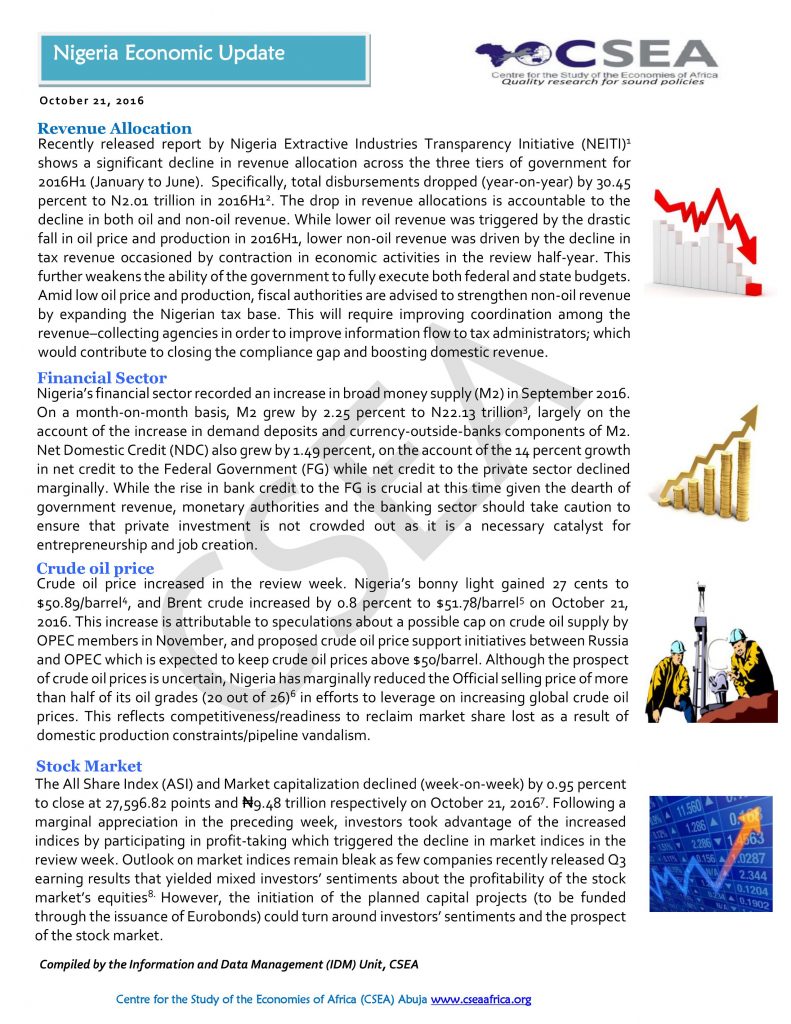
Recently released report by Nigeria Extractive Industries Transparency Initiative (NEITI)shows a significant decline in revenue allocation across the three tiers of government for 2016H1 (January to June). Specifically, total disbursements dropped (year-on-year) by 30.45 percent to N2.01 trillion in 2016H1. The drop in revenue allocations is accountable to the decline in both oil and non-oil revenue. While lower oil revenue was triggered by the drastic fall in oil price and production in 2016H1, lower non-oil revenue was driven by the decline in tax revenue occasioned by contraction in economic activities in the review half-year.
Read More Download DOCX

Nigeria Economic Update (Issue 44)

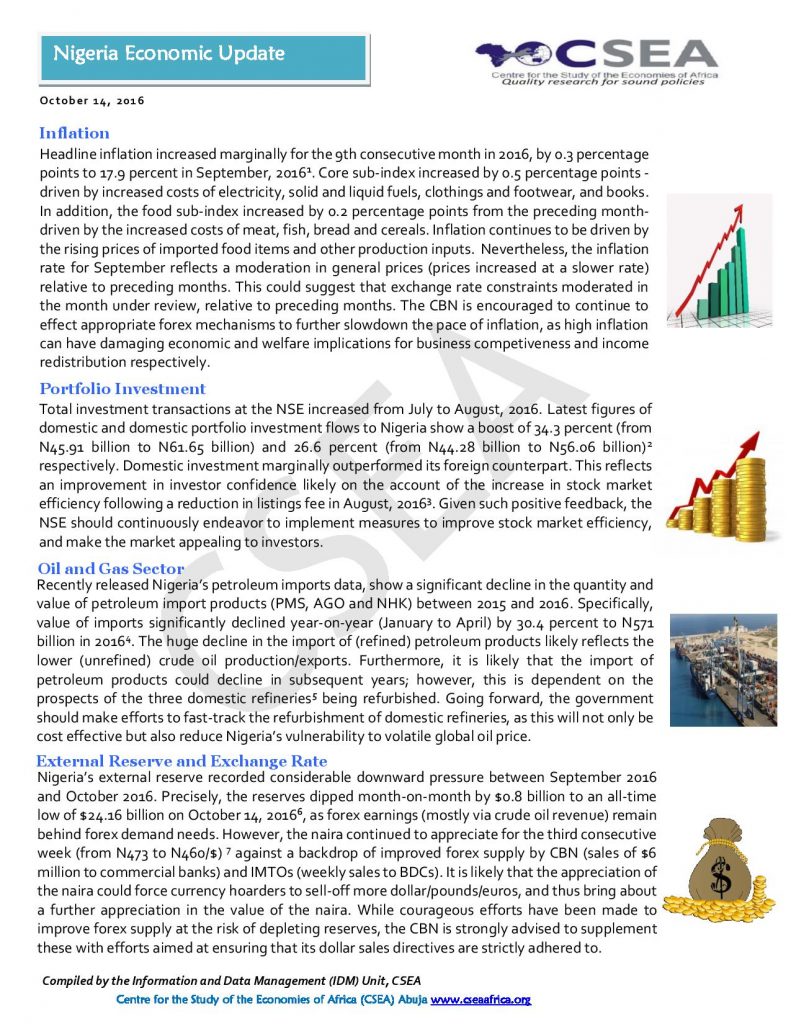
Recently released Nigerias petroleum imports data, show a significant decline in the quantity and value of petroleum import products (PMS, AGO and NHK) between 2015 and 2016. Specifically, value of imports significantly declined year-on-year (January to April) by 30.4 percent to N571 billion in 2016. The huge decline in the import of (refined) petroleum products likely reflects the lower (unrefined) crude oil production/exports. Furthermore, it is likely that the import of petroleum products could decline in subsequent years; however, this is dependent on the prospects of the three domestic refineriesbeing refurbished.
Read More Download PDF

Nigeria Economic Update (Issue 43)

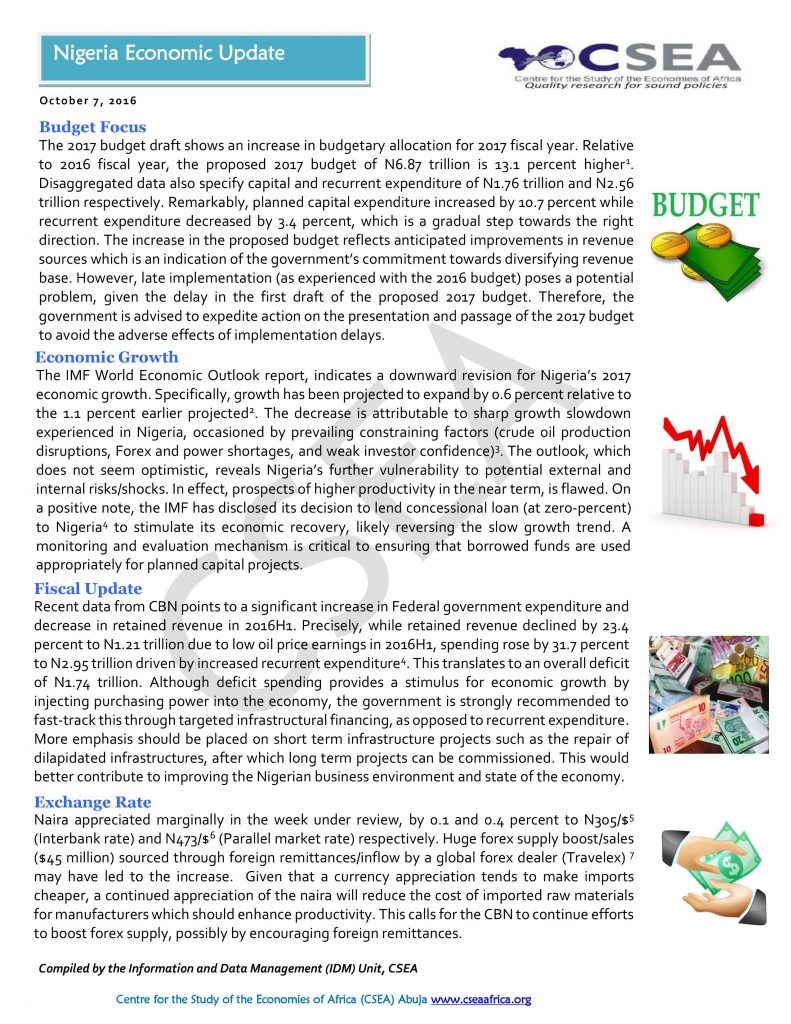
The IMF World Economic Outlook report, indicates a downward revision for Nigerias 2017 economic growth. Specifically, growth has been projected to expand by 0.6 percent relative to the 1.1 percent earlier projected. The decrease is attributable to sharp growth slowdown experienced in Nigeria, occasioned by prevailing constraining factors (crude oil production disruptions, Forex and power shortages, and weak investor confidence). The outlook, which does not seem optimistic, reveals Nigerias further vulnerability to potential external and internal risks/shocks.
Read More Download PDF