Publications

Nigeria Economic Update (Issue 37)

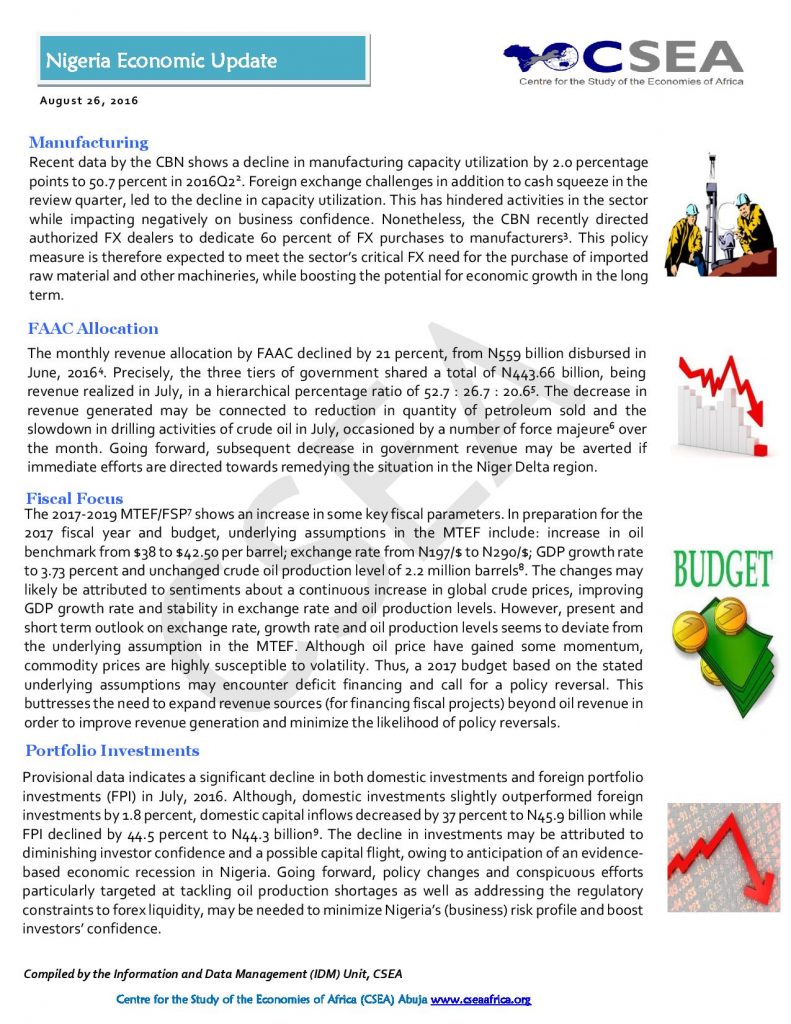
Recent data by the CBN shows a decline in manufacturing capacity utilization by 2.0 percentage points to 50.7 percent in 2016Q2. Foreign exchange challenges in addition to cash squeeze in the review quarter, led to the decline in capacity utilization. This has hindered activities in the sector while impacting negatively on business confidence. Nonetheless, the CBN recently directed authorized FX dealers to dedicate 60 percent of FX purchases to manufacturers. This policy measure is therefore expected to meet the sectors critical FX need for the purchase of imported raw material and other machineries, while boosting the potential for economic growth in the long term.
Read More Download PDF

Nigeria Economic Update (Issue 36)

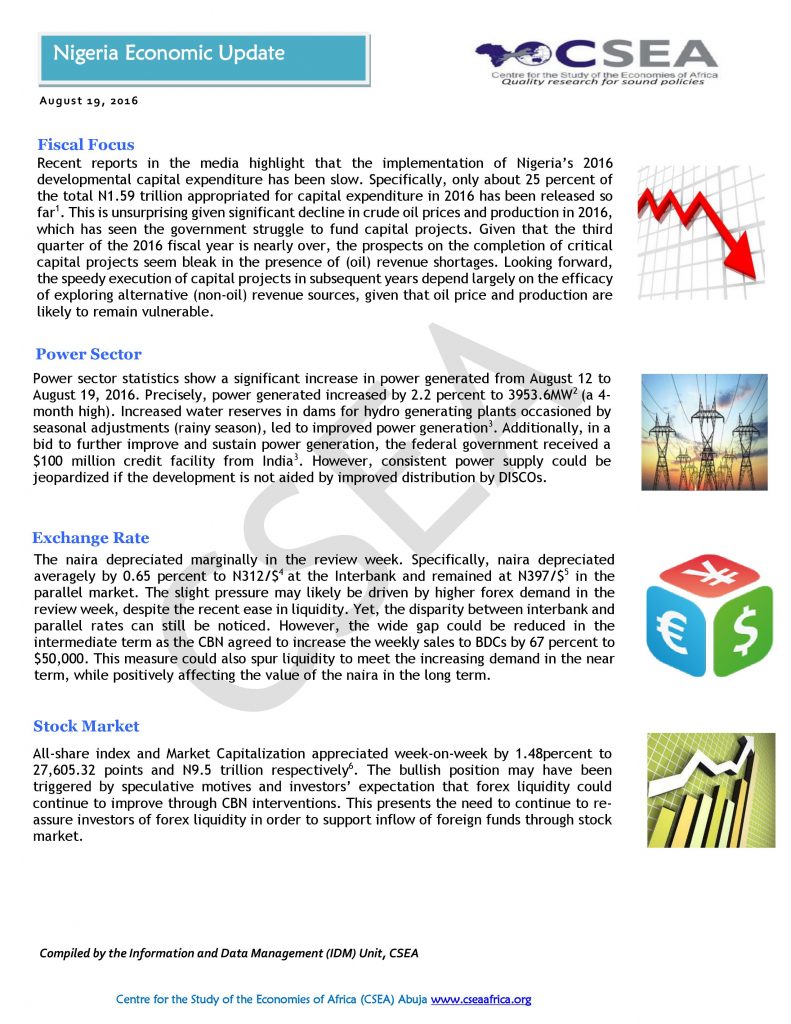
Power sector statistics show a significant increase in power generated from August 12 to August 19, 2016. Precisely, power generated increased by 2.2 percent to 3953.6MW(a 4-month high). Increased water reserves in dams for hydro generating plants occasioned by seasonal adjustments (rainy season), led to improved power generation. Additionally, in a bid to further improve and sustain power generation, the federal government received a $100 million credit facility from India. However, consistent power supply could be jeopardized if the development is not aided by improved distribution by DISCOs.
Read More Download PDF

Nigeria Economic Review

This report provides an evidence-based analysis of the state of the Nigerian economy in a bid to inform economic policies in Nigeria. The report presents some analyses of significant economic events in Nigeria within the period, and provides an outlook on what policymakers, businesses, and individuals should expect in subsequent quarters of 2016. It also provides valuable insights into potential drivers of the economic trends and outlines expectations for subsequent quarters of the year. The area of focus are Global Economic Performance, Domestic Economic Performance, External Sector Performance, and Sectoral Performance. 
Read More Download PDF

Nigeria Economic Update (Issue 35)

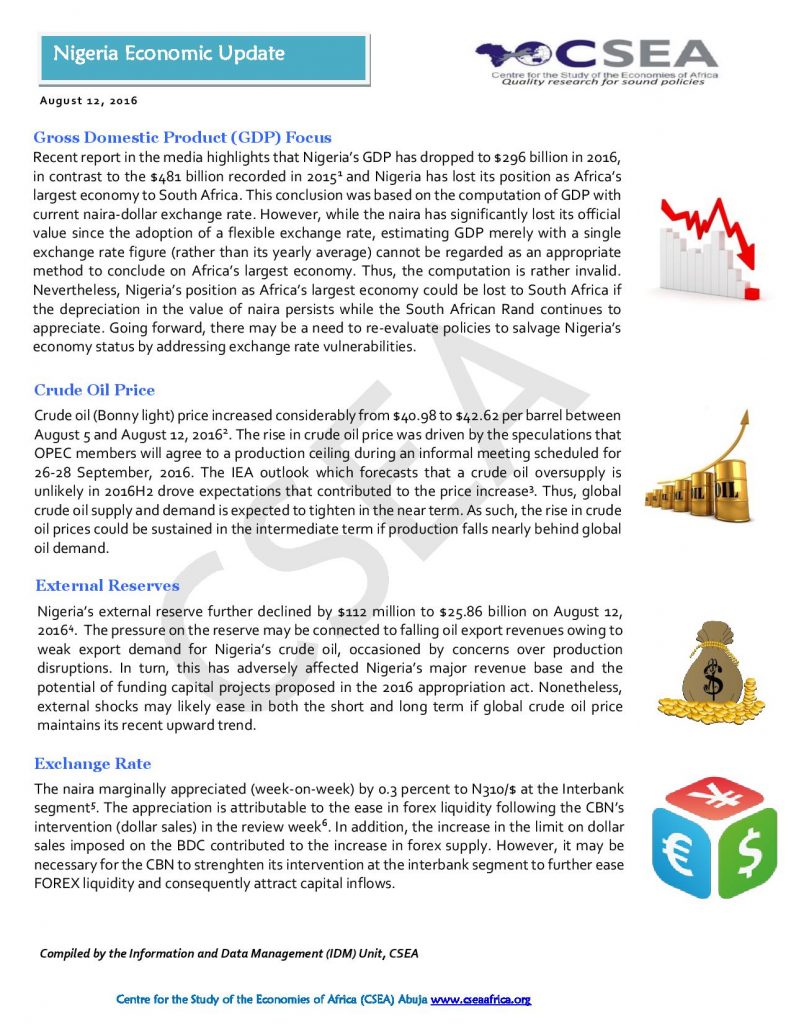
Recent report in the media highlights that Nigerias GDP has dropped to $296 billion in 2016, in contrast to the $481 billion recorded in 20151 and Nigeria has lost its position as Africas largest economy to South Africa. This conclusion was based on the computation of GDP with current naira-dollar exchange rate. However, while the naira has significantly lost its official value since the adoption of a flexible exchange rate, estimating GDP merely with a single exchange rate figure (rather than its yearly average) cannot be regarded as an appropriate method to conclude on Africas largest economy.
Read More Download PDF

Nigeria Economic Update (Issue 34)

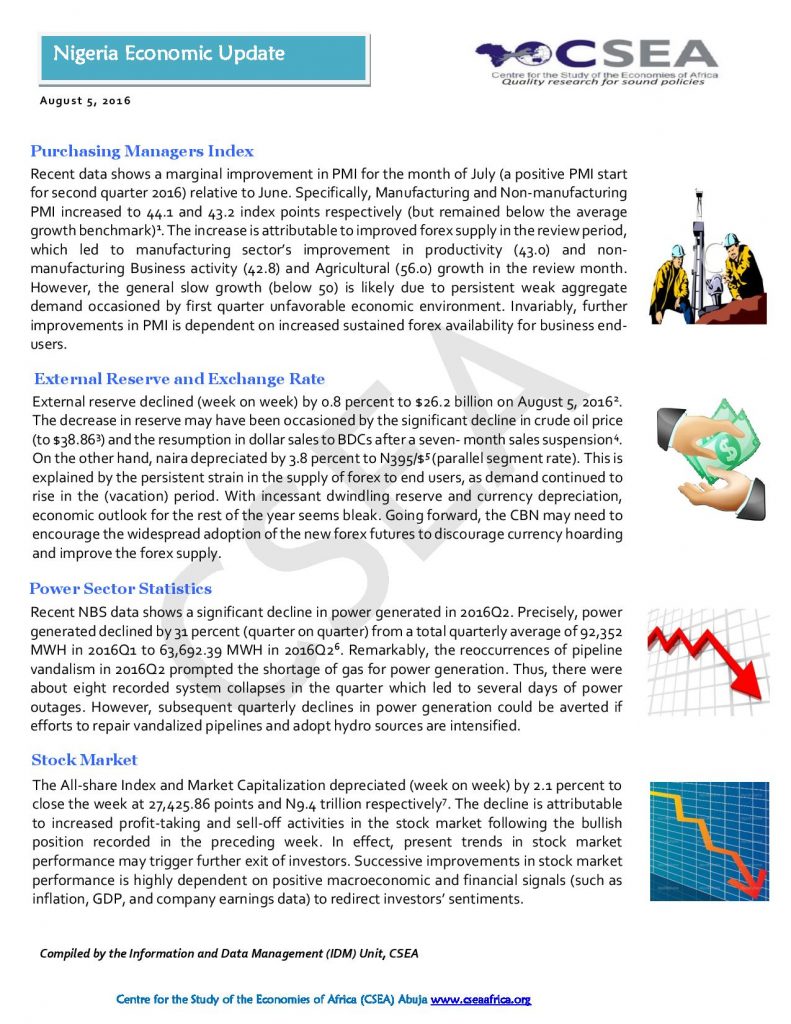
Recent NBS data shows a significant decline in power generated in 2016Q2. Precisely, power generated declined by 31 percent (quarter on quarter) from a total quarterly average of 92,352 MWH in 2016Q1 to 63,692.39 MWH in 2016Q2. Remarkably, the reoccurrences of pipeline vandalism in 2016Q2 prompted the shortage of gas for power generation. Thus, there were about eight recorded system collapses in the quarter which led to several days of power outages. However, subsequent quarterly declines in power generation could be averted if efforts to repair vandalized pipelines and adopt hydro sources are intensified.
Read More Download PDF

Improving Basic Education Outcomes in Nigeria Effectiveness, Accountability and Equity Issues

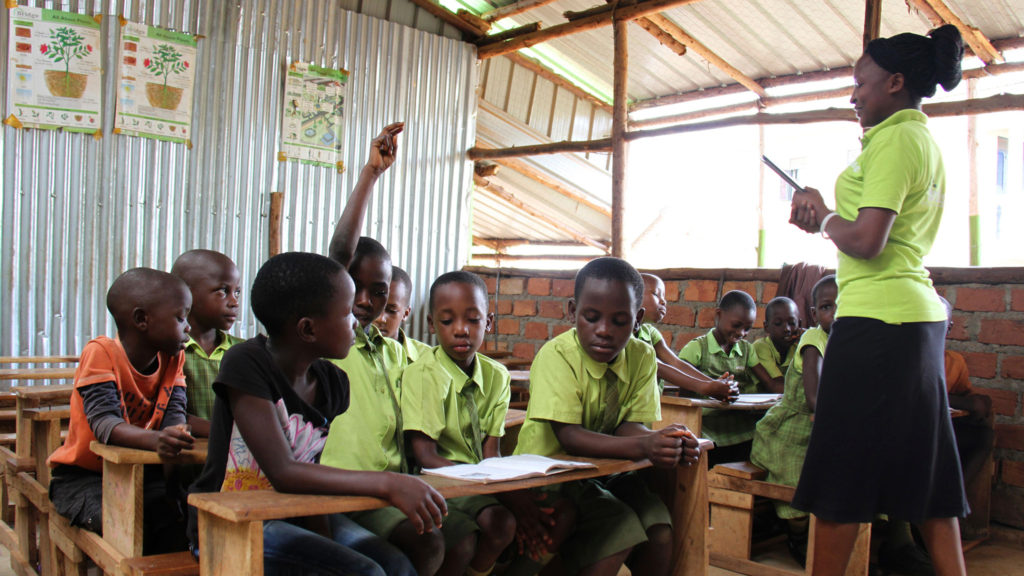
This project reviews and assesses the basic education system in Nigeria in the context of Universal Basic Education (UBE) as designed in the UBE Act 2004 with a focus on effectiveness, accountability and equity in basic education financing. The project utilizes desk review of data and literature, interviews with officials at federal, state and local government levels, and structured questionnaires at school level. The report provides an assessment of the effectiveness, accountability, and equity of basic education in Nigeria. The central objective of the UBE Act (2004) is to provide institutional and resource frameworks to promote equity in educational outcomes across the country. Central to this objective are effective mechanisms for financing basic education that ensure availability of resources at the time and place where they are needed, and accountability in the use of resources that hinges on clarity of resource flows, capacity for monitoring and evaluation and oversight by all stakeholders in basic education, including the parents. The dominance of federal government as the source of funds pivots the success of UBE on factors beyond domestic effort, given the dominance of petrodollars in revenues of the federal and state governments and volatility of the market for crude petroleum. The approach is rather ineffective, as allocations from the federal government, plus matching monies raised by the states are insufficient to meet the needs of basic education, creating persistent resource gaps in the funding of basic education infrastructure. In response, schools in some states have introduced different types of levies with the consent of parents and in contravention of the provisions of the UBE Act.

Read More Download PDF Download PDF

Nigeria Economic Update (Issue 33)

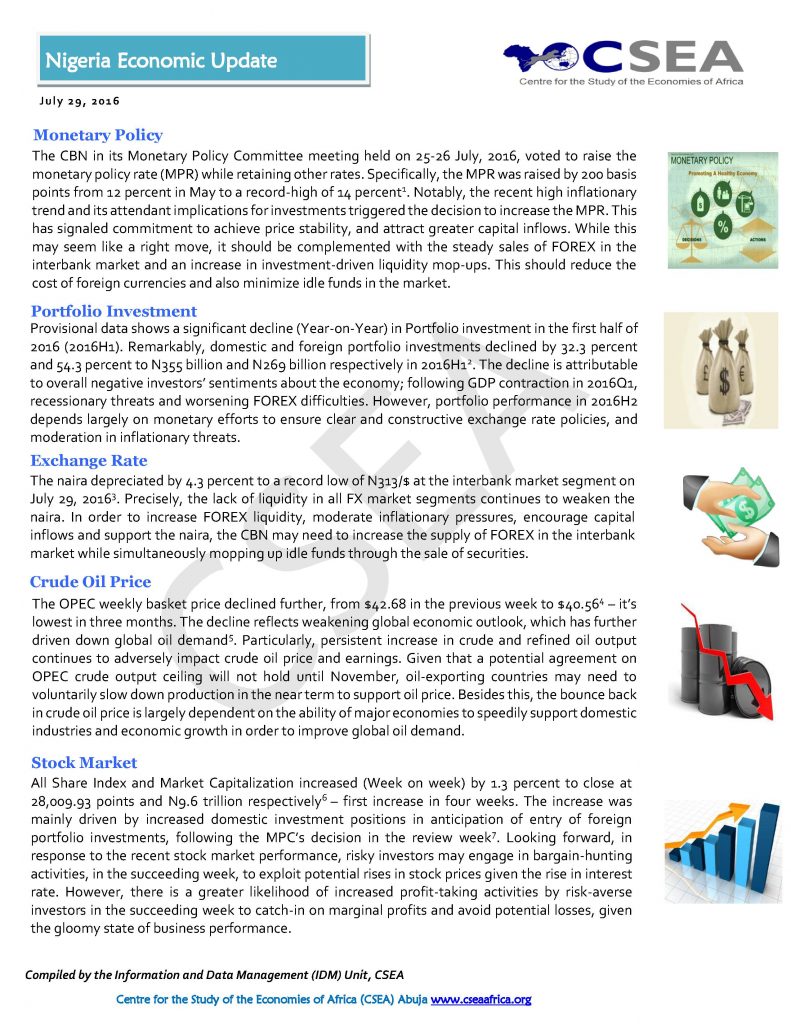
The naira depreciated by 4.3 percent to a record low of N313/$ at the interbank market segment on July 29, 2016.Precisely, the lack of liquidity in all FX market segments continues to weaken the naira. In order to increase FOREX liquidity, moderate inflationary pressures, encourage capital inflows and support the naira, the CBN may need to increase the supply of FOREX in the interbank market while simultaneously mopping up idle funds through the sale of securities.
Read More Download PDF

A Review Of Nigerias 2016 Budget

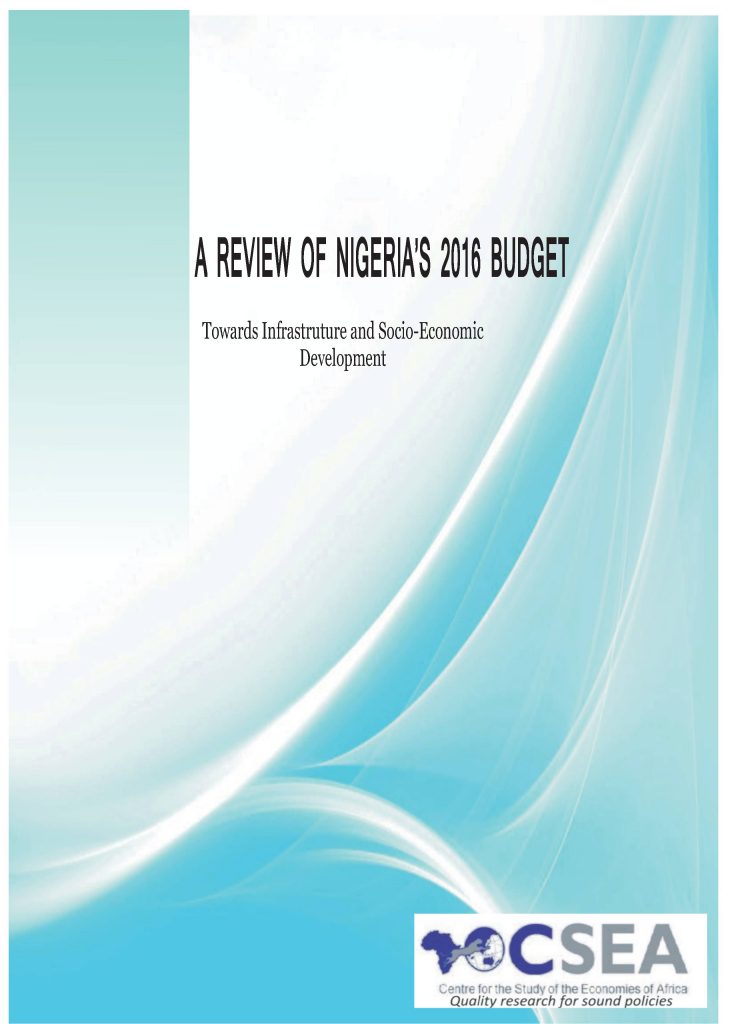
This study reviews and assesses the 2016 budget of the Federal Republic of Nigeria in line with IMFsbudget assessment indicators, namely: comprehensiveness, transparency, and realism. The assessment is based on clear understanding of the present administrations objectives, which are: to achieve socio-economic and infrastructural development, to diversify the Nigerian economy, and to achieve improved security of lives and properties.
Read More Download PDF

Portfolio Diversification Between Developed And Less Developed Economies

This study examines the hedging effectiveness of portfolio investment diversification between developed and developing economies; with focus on the Nigerian stock asset vis--vis the stock assets of the United States (US) and United Kingdom (UK). Its main contribution is in the analysis of optimal portfolio diversification using optimal portfolio weight (OPW) and optimal hedging ratio (OHR). Empirical findings show that the OPW and OHR are low, which indicates impressive potential gains from combining Nigerian stock assets in an investment portfolio with US and UK stock assets. In addition, exchange rate volatility is found to pose stern limitation on the potential benefits of this portfolio diversification arrangement. It is therefore recommended that the monetary authority in Nigeria should pursue policies towards reducing exchange rate volatility to the barest minimum. This will possibly attract more investors from developed economies who might be willing to combine Nigerian stock in their investment portfolio to minimize portfolio risk.
Read More Download PDF