



Publications

Follow via RSS

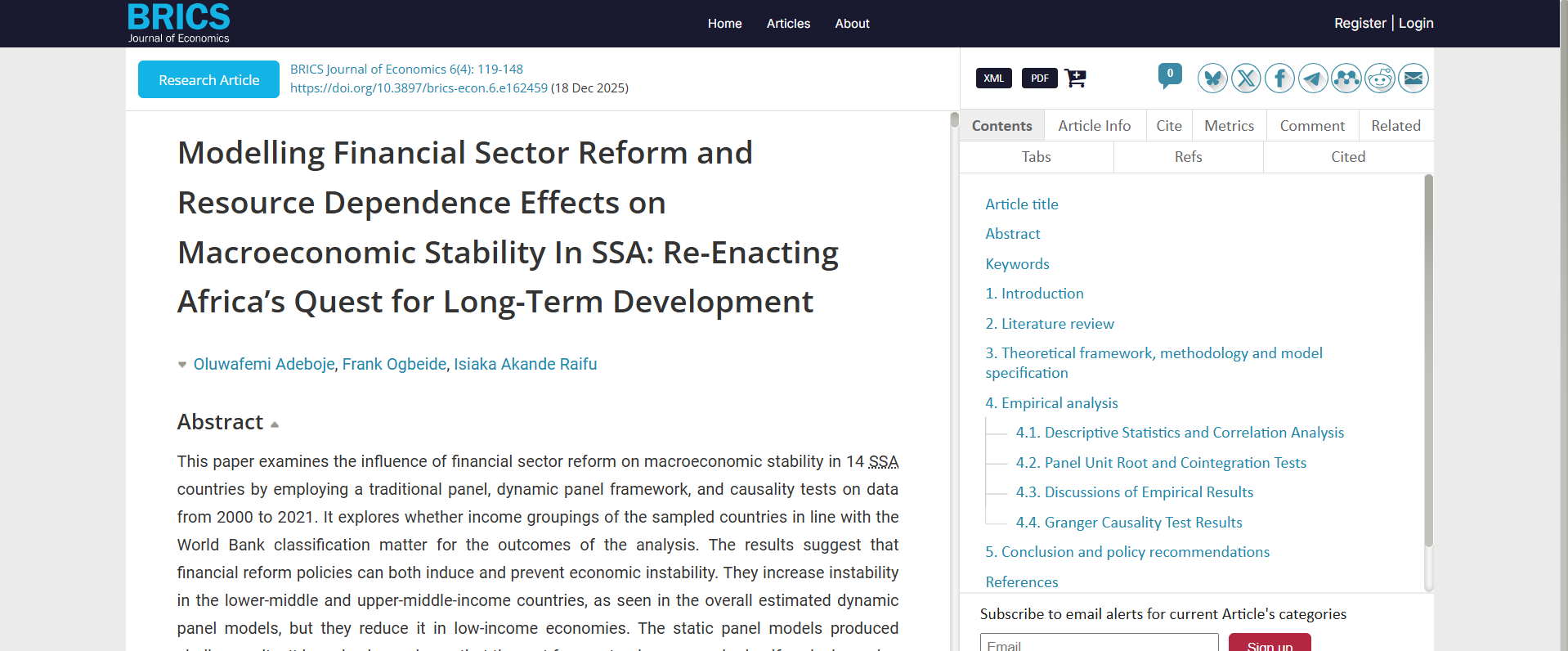
Modelling Financial Sector Reform and Resource Dependence Effects on Macroeconomic Stability In SSA: Re-Enacting Africa’s Quest for Long-Term Development

This paper examines the influence of financial sector reform on macroeconomic stability in 14 SSA countries by employing a traditional panel, dynamic panel framework, and causality tests on data from 2000 to 2021. It explores whether income groupings of the sampled countries in line with the World Bank classification matter for the outcomes of the analysis. The results suggest that financial reform policies can both induce and prevent economic instability. They increase instability in the lower-middle and upper-middle-income countries, as seen in the overall estimated dynamic panel models, but they reduce it in low-income economies. The static panel models produced similar results. It has also been shown that the rent from natural resources had uniformly damaging effects on the macroeconomic stability of all income groups in SSA, effectively confirming the “resource curse” thesis. Yet, the findings of the panel as a whole contradicted this, suggesting that revenue from natural resources can effectively play a role in stabilizing macroeconomic conditions. The results also suggest the existence of what can be called “a human capital-misery trap”, in which higher human capital development can lead to macroeconomic instability. Inflation was found to have a detrimental effect, and the impact of government interventions appeared to be mixed. This paper emphasizes the need for robust financial reforms and comprehensive policy measures in Sub-Saharan Africa (SSA), aiming to enhance the effectiveness, competitiveness, and stability of the financial sector and the broader economic landscape, which will require prudent management of natural resources.
Read More

Read More

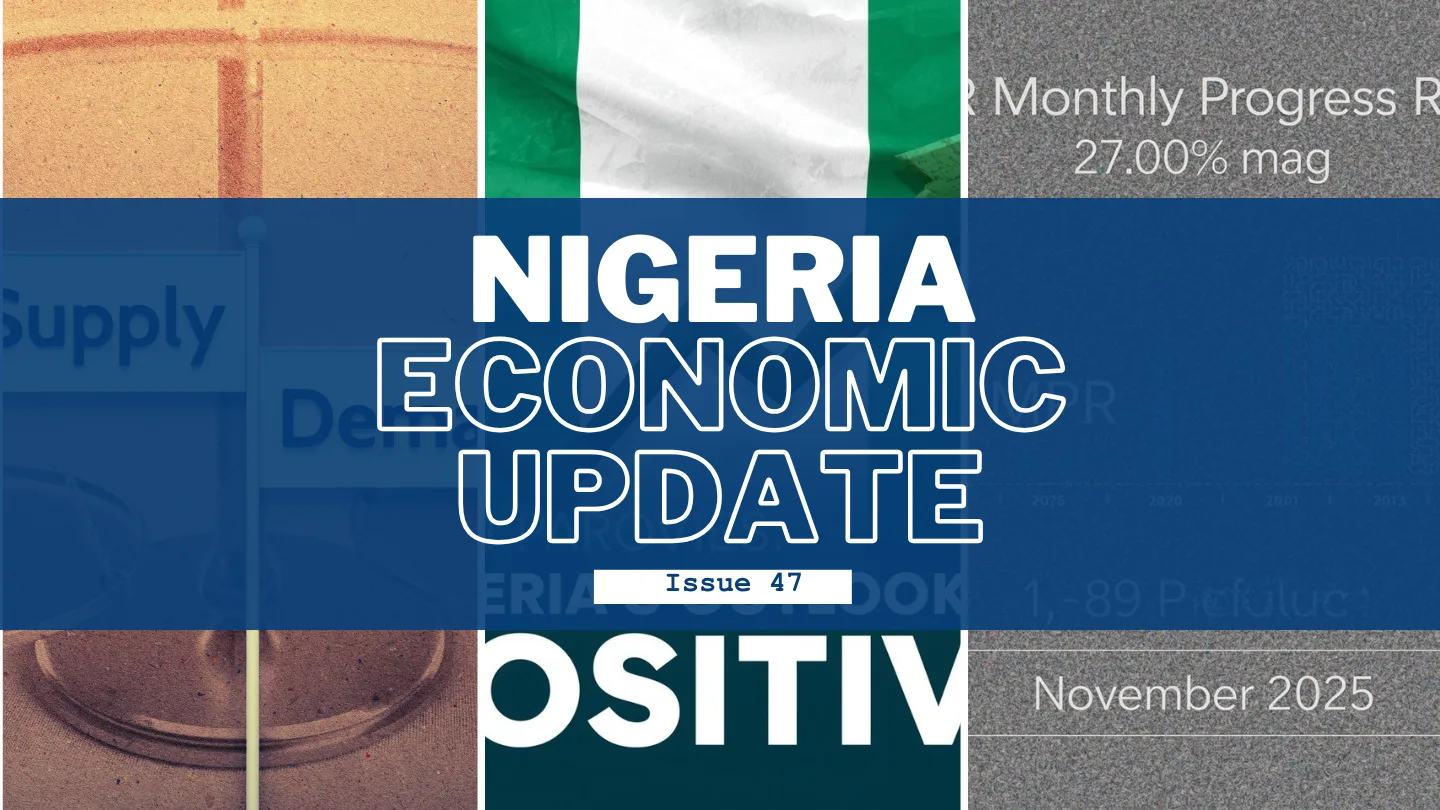
Nigeria Economic Update, Issue 47

The Central Bank of Nigeria (CBN's) 303rd Monetary Policy Committee (MPC) meeting, convened on November 24-25, 2025, opted to hold the Monetary Policy Rate (MPR) steady at 27.0% while adjusting the Standing Facility corridor to +50/ 450 basis points. The Cash Reserve Requirement (CRR) was maintained across the board: Deposit Money Banks at 45.0%, Merchant Banks at 16.0%, and the non-TSA public sector at 75.0%. The Liquidity Ratio was retained at 30.0%. The Committee considered the sustained deceleration in headline inflation (year-on-year) over seven consecutive months, reaching 16.05% in October 2025. This decline was attributed to factors such as sustained monetary policy tightening, stable exchange rates, increased capital inflows, surplus current account balance, better food supply, and stability in the price of Premium Motor Spirit (PMS). To sustain these positive trends, the CBN should intensify efforts to enhance the efficiency of foreign exchange market interventions by leveraging digital tracking and forecasting tools (using Machine Learning and Artificial Intelligence infrastructure) to anticipate volatility and respond promptly. It is also necessary to boost agricultural output through the release of large quantities of fertiliser to the Ministry of Agriculture and collaboration with state governments to improve security in farming regions and sustain agricultural activities. Furthermore, there is a need to expand social intervention programmes to shield vulnerable populations from the effects of inflation

Read More Download PDF

The moderating role of monetary policy in the nexus between inflation and tourism demand in South Africa

While tourism is considered an engine of economic growth and development, macroeconomic crises, such as high inflation, can negatively impact the sector. However, monetary policy (MP) can play a significant role in mitigating the effects of inflation on tourism. This study aims to explore the moderating role of MP in the inflation–tourism demand nexus in South Africa.

Read More

Read More

Nigeria Economic Update, Issue 46

According to the Organisation of Petroleum Exporting Countries (OPEC) Monthly Oil Market report for November 2025, Nigeria’s crude oil production increased marginally to 1.4 million barrels per day (mb/d) in October 2025, representing a 0.8% rise from the 1.3 mb/d recorded in September 2025. Despite this slight increase, production remained below the country’s oil production quota of 1.5 mb/d, marking the third consecutive month that Nigeria failed to meet its target. Concurrently, the price of Nigeria’s Bonny Light fell from $69.44 per barrel in September to $65.53 per barrel in October 2025, a decrease of $3.91 per barrel. The continued inability to meet production quotas reflects operational inefficiencies and persistent challenges, including pipeline vandalism.The decline in crude oil prices in October 2025 was driven by increased global oil supply, which exceeded demand by 500,000 barrels per day. Lower oil prices combined with production shortfalls have direct implications for government revenues from oil exports, creating macroeconomic uncertainty and putting pressure on exchange rate stability. To address production shortages, the government should strengthen infrastructure and security measures to prevent vandalism and operational disruptions. Investment in downstream activities, such as gas commercialisation, could help reduce dependence on crude oil export revenue. Additionally, efforts to diversify the economy should be intensified to mitigate exposure to global oil market shocks, which is significantly shaped by numerous global factors.

Read More Download PDF

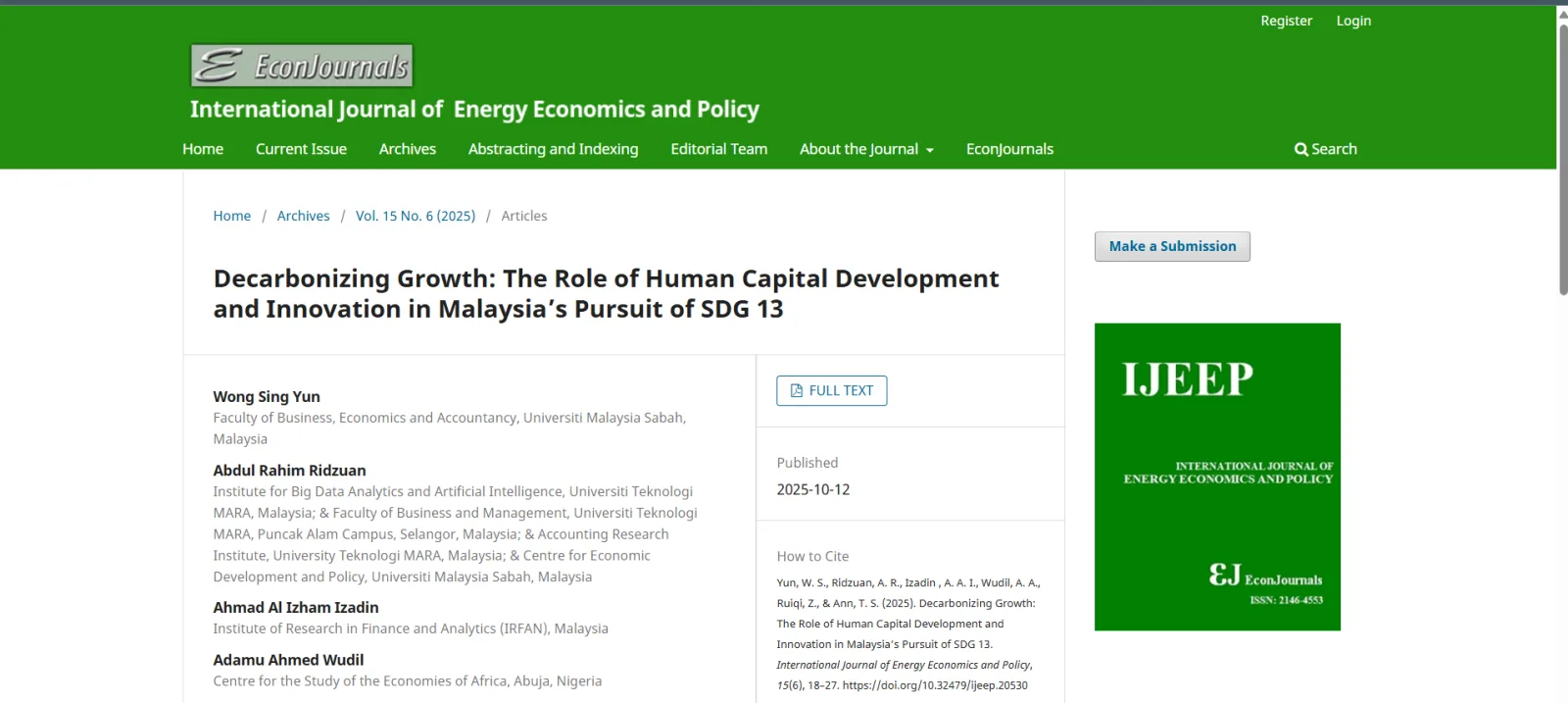
Decarbonizing Growth: The Role of Human Capital Development and Innovation in Malaysia’s Pursuit of SDG 13

This study investigates the impact of human capital development and technological innovation on environmental sustainability in Malaysia, as part of the Malaysian commitment to Sustainable Development Goal 13 (Climate Action). Using Autoregressive Distributed Lag (ARDL) model and time series data covering the period 1990-2022, the analysis explores the dynamic relationship between CO2 emissions and major macroeconomic variables, namely economic growth, energy consumption, technological innovation, trade openness, foreign direct investment (FDI), quality of governance, education, and GINI coefficient. The empirical findings reveals that technological innovation and human capital development significantly contribute to long-run decline in CO2 emission, hence emphasis their role in ensuring a sustainable low-carbon economy. On the other hand, FDI correlates with higher emissions, which gives relevance to pollution haven hypothesis in the Malaysian case. The study emphasis the need to invest in green technology, incorporate sustainability in the education system and tightening environmental standards in the foreign investments. Such policy steps are necessary to ensure that economic progress is no longer linked to environmental degradation and accelerate Malaysia’s transition towards a climate-resilient future.

Read More

Read More

Nigeria Economic Update, Issue 45

Data from the Central Bank of Nigeria (CBN) revealed that Nigeria’s gross external reserves rose to $43.32 billion as of November 6, 2025, the highest level recorded in six years. This marks a 1.83% month-onmonth increase from $42.54 billion on October 6, 2025, and a 5.87% rise from $40.92 billion on January 6, 2025. The recent build-up in reserves is largely attributed to the successful issuance of the Federal Government’s $2.3 billion Eurobond, which injected fresh liquidity into the economy and strengthened Nigeria’s external position. Beyond the Eurobond inflow, other contributory factors may include modest improvements in oil export earnings, tighter monetary policy measures, and a gradual recovery in foreign investment sentiment. The steady accumulation of reserves is a positive signal for the economy, reflecting improved external liquidity, a stronger ability to meet foreign obligations, and enhanced investor confidence in Nigeria’s macroeconomic management. Higher reserves also serve as a buffer against external shocks, helping to stabilise the exchange rate and reduce vulnerability to global financial volatility. To sustain this momentum, the government should diversify external inflows, deepen non-oil export capacity, improve diaspora remittance channels, and strengthen foreign investment inflows to ensure that reserve growth is built on sustainable, longterm drivers rather than temporary inflows.

Read More Download PDF

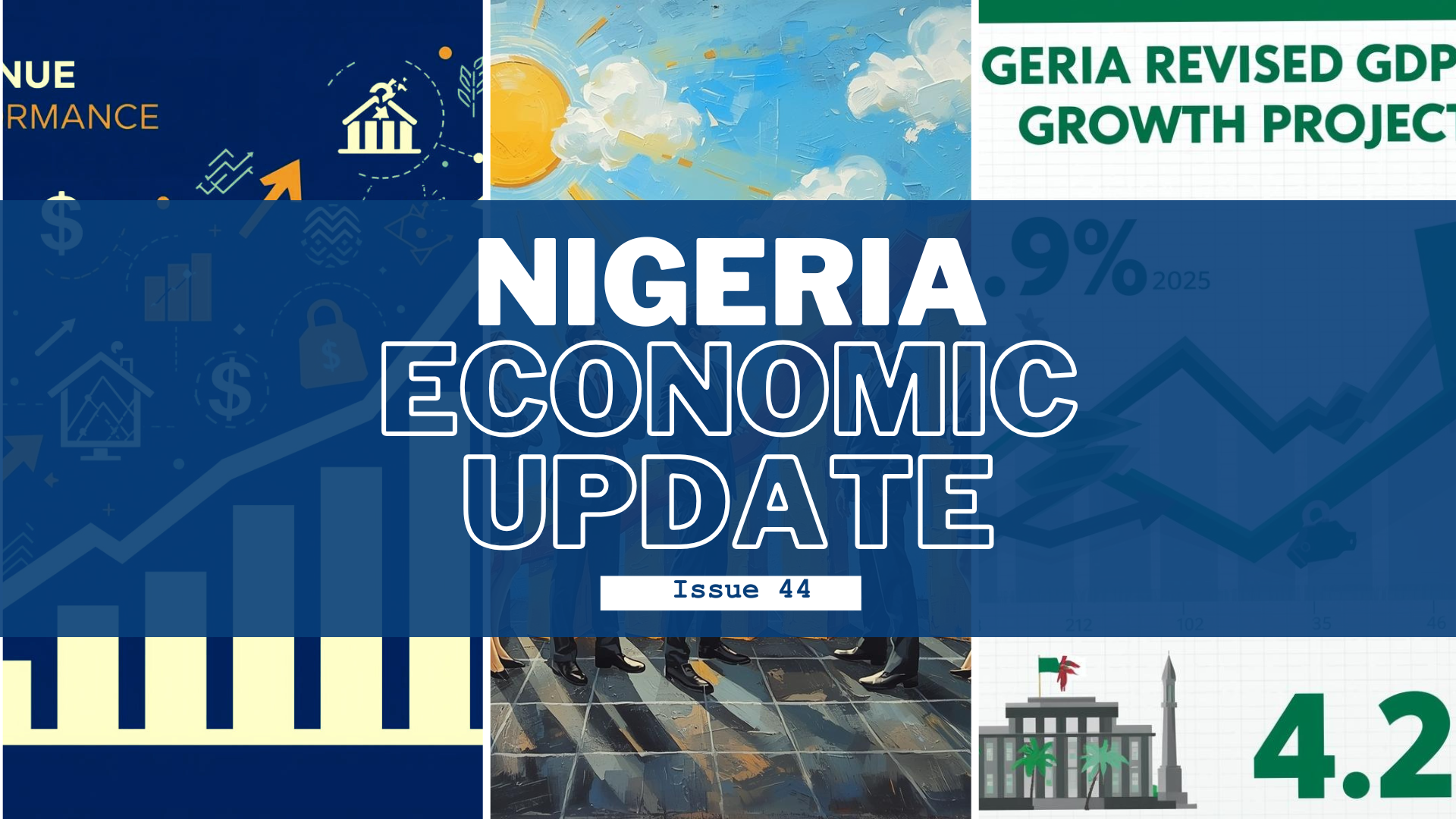
Nigeria Economic Update, Issue 44

The International Monetary Fund, in its October 2025 World Economic Outlook report, revised Nigeria’s GDP growth projections to 3.9% in 2025 and 4.2% in 2026. These figures represent increases of 0.5 and 1.0 percentage points, respectively, from the previously projected 3.4% and 3.2% in July 2025. These upward revisions reflect improving economic conditions, including increased oil production, stronger investor confidence, and a supportive fiscal stance. The improved outlook for 2025 and 2026 is also attributed to reduced uncertainty and the limited impact of U.S. tariffs on Nigeria, given the country’s relatively low exposure to volatile global trade dynamics. While Nigeria’s growth forecast was revised upward, the growth forecast for Sub-Saharan Africa is expected to remain unchanged at 4.1% in 2025, rising modestly by 0.3 percentage points to 4.4% in 2026. Despite steady economic conditions, the outlook remains fragile, with risks tilted to the downside. For Nigeria, the revised growth forecast indicates strengthening macroeconomic stability, but the economy remains heavily reliant on oil revenues, making it vulnerable to price fluctuations and production shocks. To ensure sustainable growth, the government must reduce dependence on oil by investing in other sectors such as manufacturing, agriculture, and services. In addition, targeted reforms that enhance government transparency and ensure regulatory consistency are essential to boost investor confidence.

Read More Download PDF

Exploring the Role of Institutional Quality in the Crowding-Out Effect of Military Expenditure on Health Expenditure and Outcomes in Africa

This study revisits the long-standing debate on the guns-versus-butter phenomenon, that spending on military activity crowds out non-military expenditure. By focusing on Africa, we conjecture the crowding-out effect of military expenditure on health expenditure beyond government health expenditure, but also private and out-of-pocket health expenditure, and health outcomes. The empirical analysis based on the dynamic two-step system generalized method of moments reveals that omitting institutional quality measures biases the estimated crowding-out effects of military expenditure. After the inclusion, the results indicate that a 10 % increase in military expenditure leads to a 0.40 % decline in government health expenditure, accompanied by 0.01 % and 0.30 % increases in private and out-of-pocket health expenditure, respectively. Regarding health outcomes, the same increase in military expenditure results in a 0.20 % rise in maternal mortality, while infant mortality and life expectancy decline by 0.09 % and 0.01 %, respectively. Further analysis reveals that including the interaction term of military expenditure and institutional quality only reverses the crowding-out effect on government health expenditure and not on private and out-of-pocket health expenditure. For health outcomes, the favorable effect of the interaction term is only evident in reducing infant and maternal mortality rates. We offer policy recommendations to improve fiscal spending on the health sector in Africa as a paramount measure to improve human capital development and provide areas for further empirical contributions.

Read More

Read More

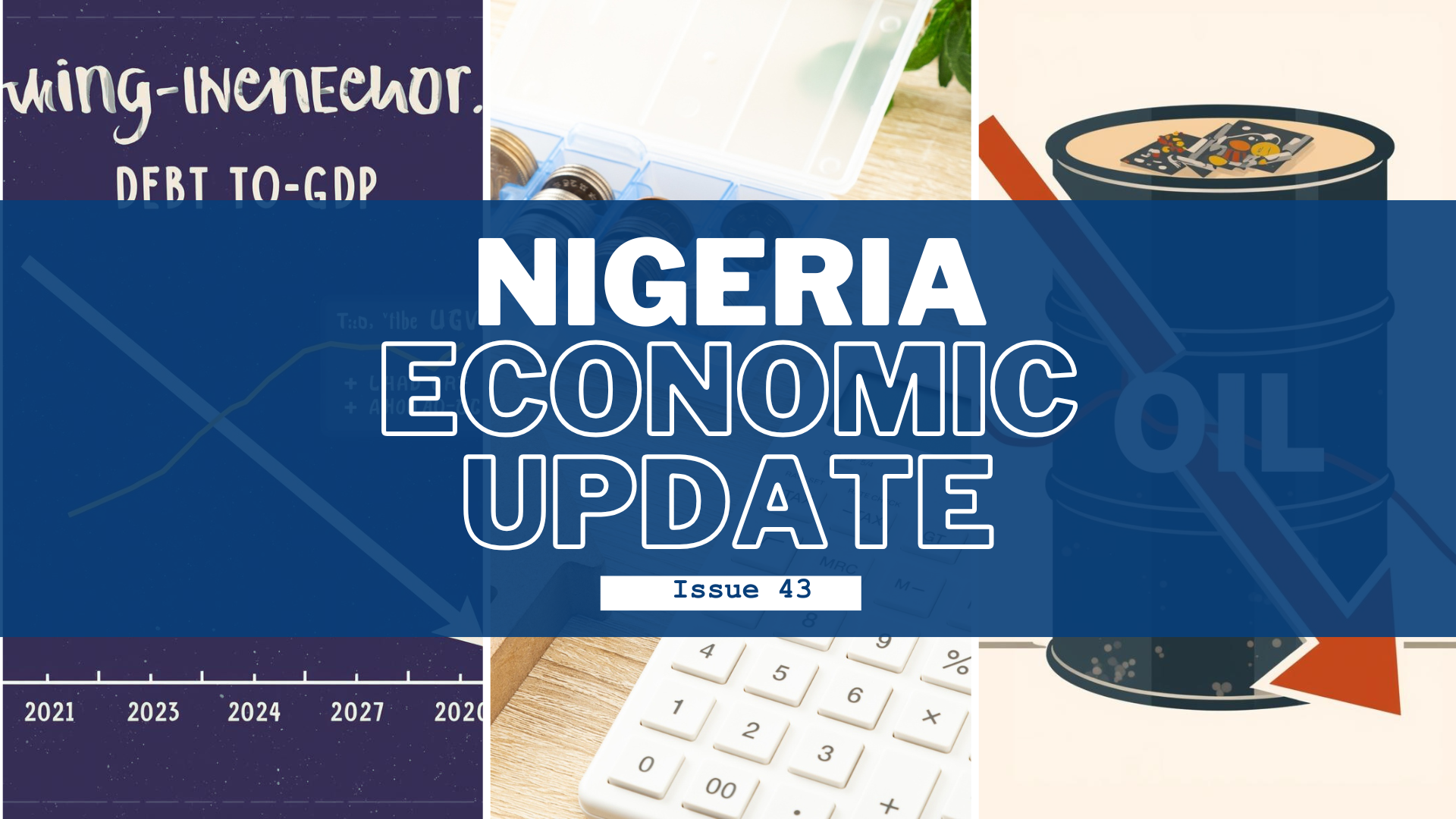
Nigeria Economic Update, Issue 43

The October 2025 report from the Organisation of Petroleum Exporting Countries (OPEC) indicated that Nigeria's oil production declined by 0.045 million barrels per day (bpd), falling from 1.434 million bpd in August 2025 to 1.39 million bpd in September 2025. This represents a 3.1% decline and marks the second consecutive month of reduced output, bringing the average third-quarter production to 1.444 million bpd – down 2.5% from 1.481 million bpd in the second quarter. The production level is 7.3% below Nigeria’s OPEC quota of 1.5 million bpd and 33.8% below the national target of 2.1 million bpd. This consecutive decline in output is particularly concerning, given the nation's reliance on crude oil as its primary source of revenue.According to the Nigerian Upstream Petroleum Regulatory Commission (NUPRC), a three-day strike by the Petroleum and Natural Gas Senior Staff Association of Nigeria (PENGASSAN) contributed to the decline in oil production in September. To mitigate the risks associated with fluctuating oil revenues, policymakers should prioritise reforms that enhance alternative revenue sources, including the effective implementation of the tax reform bill.Restoring and efficiently operating local refineries will increase revenue and strengthen economic resilience. Furthermore, diversifying the economy away from oil by investing in sectors such as technology, mining, and agriculture, supported by loan incentives and capacity building for MSMEs in these sectors, will promote sustainable growth.

Read More Download PDF