Data from the World Bank Poverty and Shared Prosperity report shows that Nigeria’s poverty level has further increased in the wake of the COVID-19 pandemic. More specifically, 79 million Nigerians live in extreme poverty, accounting for 20 percent of the people living in poverty in SSA. COVID-19 and its associated economic crisis are enabling factors of the high poverty headcount2. Data from COVID-19 phone surveys in Nigeria suggests that about 85 percent of households experienced higher food prices, with half reducing their food consumption as a coping strategy2. The upward trend in poverty is expected to continue owing to the difficulty in generating adequate broad-based economic growth, inability to create jobs, and high population growth rate. As a result, private sector innovativeness and talent should be fostered in way that creates new opportunities for young people. The government on the other hand should utilize the policy landscape to support the private sector and enforce population control measures.
The Monetary Policy Committee (MPC) has voted to retain the monetary policy rate (MPR) at 11.5%1. Other parameters remain unchanged; for instance, the cash reserve ratio (CRR) was maintained at 27.5% while liquidity ratio remains at 30%. The committee’s decision to take a holding position is expected to be supplemented by various ongoing government intervention programmes. These programs are intended to facilitate employment generation and stimulate recovery/growth in various sectors of the economy post-pandemic. While this decision might be suitable for now, it is important for the MPC to closely monitor the evolving economic situation in the country, especially in view of rising inflation rate and foreign exchange fluctuations which have an impact on the value of the Naira. Close monitoring and a proactive approach, will ensure that the measures put in place yield the desired outcome of stimulating growth.
Inflation rate for February 2021 rose for the 18th consecutive month to its highest rate since February 2017.1 SGeoffrey Johnson Obipecifically, inflation rate increased to 17.33 percent in February 2021 from 16.47 percent in January 2021. The food sub-component of inflation rose to 21.79 percent from 20.57 percent while core inflation stood at 12.38 percent from 11.85 percent in the review period.2 Disaggregated data by states shows that Kogi (24.73 percent), Bauchi (22.92 percent) and Ebonyi (20.45 percent) recorded the highest inflation rates within the review period. The continuous rise in the prices of food supplies is as a result of the interplay of several factors including sustained insecurity in areas where foods are grown, rising transportation costs, and high import costs linked to the depreciation of the naira. As such, addressing the rise in prices will require a multipronged solution including ensuring the safety of farm workers and enhancing productivity in the sector through the adoption of innovative farming and processing technologies.
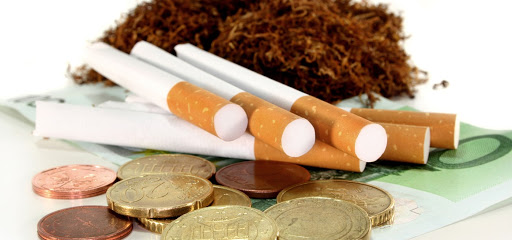
In this study, we document successful cases of effective synergies in countries that, like Nigeria, display a significant presence of the tobacco industry and face similar challenges to trade regulation but were still able to implement higher tobacco tax policies and other tobacco control measures, while reducing the level of illicit trade. The key lesson is that measures to reduce illicit tobacco trade needs to be amalgamated with tobacco taxation, and each can be addressed in its own respect with appropriate strategies. Moreover, Nigeria has not reached the phase where tobacco tax should be a concern for the tobacco industry. With the new tax policy introduced in 2018, this amounts to 16.4 percent excise tax burden in overall, which is still significantly lower than the 75 percent excise tax burden on tobacco products recommended by the WHO. Our analysis of price trends in Nigeria and differential with neighbouring countries show that there has not been significant perturbation in the Nigerian tobacco market to create an arbitrage opportunity.
Total Nigeria merchandising trade stood at N9.12 trillion in the fourth quarter of 2020, representing an 8.9 percent increase relative to the preceding quarter and a 9.9 percent decrease relative to the corresponding quarter of 2019.1 For the fifth consecutive quarter, Nigeria recorded a negative balance of trade with the import component of trade accounting for 65 percent while export component of trade accounted for 35 percent. Crude oil accounted for 78.93 percent of Nigeria’s export while manufactured goods accounted for 64.56 percent of total imports. Nigeria’s major export trading partner is India (17.12 percent) while China (28.28 percent) accounted for most import to Nigeria. Improvements in foreign trade is expected to continue as economic activities in our major trading partner countries increase. However, diversifying the export base to include other goods such as agricultural commodities, textiles, and manufactured goods is pertinent. To achieve this, ensuring standardization of commodities and setting competitive freight charges will unlock the opportunities in external trade.
The Central Bank of Nigeria (CBN) has introduced the CBN “Naira 4 Dollar Scheme” as an incentive for senders and recipients of international money transfers.1 More specifically, all recipients of diaspora remittances through CBN licensed International Money Transfers Operators (IMOs) will be paid N5 per $1 received as remittance inflows in addition to the USD sent from abroad. This will however last from March 6, 2021 to May 8, 2021. The Naira 4 Dollar Scheme is being put in place to incentivize foreign exchange inflows into the country and increase foreign reserves. The scheme is likely to deter the CBN from further devaluing the currency following improved foreign exchange inflows. However, the effect of the scheme on Nigeria’s balance of payment account should be seriously considered in order not to push the country into further deficit.
Affordable and efficient energy supply is essential for enhanced welfare and better development outcomes. However, African states suffer from huge deficits in energy generation and distribution, resulting in unreliable power networks, frequent power outages and expensive tariffs. In a bid to improve efficiencies through interconnectivity and reduce energy development challenges at the national level, sub-regional power pooling initiatives have become increasingly popular in Africa. The idea behind creating power pools is to encourage cooperation among countries, through linking excess capacity in one country where power is produced more economically, with excess demand in another country that can benefit from cheaper imports.
Download Paper here
The World Bank’s Women, Business, and Law (WBL) 2020 index which measures the laws and regulations that affect women’s economic opportunity show that Nigeria scores 63.1 out of 100. This is lower than the sub-Saharan Africa regional average of 71 and the same score as the previous year.1 Nigeria’s performance varies across the several legal indicators including laws addressing the constraints to freedom of movement (50), women's decision to work (75), women's pay (50), women's work after marriage (100), women’s work after having children (0), constraints on women starting and running a business (75), gender differences in property and inheritance (80), and affecting the size of a woman's pension (75). Improvements in opportunities that accrue to women are underpinned by cultural and social shifts that close gender bias not only in the economy, but also in society and politics. To spur these shifts, the media and Civil Society Organizations (CSOs) should promote gender equal narratives, while the private sector and government should redesign policies to create more and better opportunities for women.
Data released by the National Bureau of Statistics indicates that Nigeria’s real Gross Domestic Product (GDP) grew by 0.11% in Q4 20201. Further disaggregation shows that the oil sector contributed 5.87% to total real GDP while the non-oil sector contributed 94.13% during the period. Although the growth rate in Q4 2020 is lower than the corresponding quarter of 2019 which was 2.55%, it represents a 3.74% improvement over the previous quarter (Q3 2020). More importantly, it is the first positive quarterly growth since the economy contracted in both the second and third quarters of 2020, thereby ending the recession experienced due to the pandemic. The growth reflects the gradual return of economic activities following the resumption of movements which limited commercial activities in the previous quarters. Considering that economic activities are returning to pre-COVID levels and COVID vaccination is underway, economic expansion is expected in the near term. However, the size of the expansion will depend on the spending choices of the government as it responds to the new and evolving challenges. As such, budgetary allocations to sectors capable of delivering an inclusive recovery such as the agriculture sector should be prioritized.