Publications

Follow via RSS

The Role of Social Influence in Enforcing Tax Compliance: Experimental Evidence from Nigeria

Economic development is linked with increased state capacity including the ability to mobilise domestic tax resources. For many developing countries, high levels of informality are a major constraint in this regard. Yet, economic incentives like changing the tax rate or increasing the filling and audit rate can be ineffective in a highly informal economic structure.

In this paper, we explore possible roles for behavioural interventions such as sharing information about peers’ tax behaviour to engineer higher tax compliance. Based on an artefactual field experiment among own account workers in Nigeria, we find that information interventions can play an important role in ensuring tax compliance.

Specifically, targeting information around what people can directly observe can be a way to improve tax compliance. Providing information on punishment or good practices that appeal to feelings of morality yields higher tax compliance.

DOWNLOAD FULL PAPER

Read More Download PDF

Nigeria Economic Update (Issue 22)

The Monetary Policy Committee (MPC) voted to retain the Monetary Policy Rate (MPR) at 11.5 percent.1 The Monetary Policy Rate (MPR) has remained at 11.5 percent since September 2020. The committee also decided to retain the Cash Reserve Ratio (CRR) at 27.5 percent, liquidity ratio at 30 percent and the asymmetric corridor of +100/-700 basis points around the MPR. The committee’s decision to take a holding position is already being supplemented by various ongoing government intervention programmes. These programs are intended to facilitate employment generation and stimulate recovery/growth in various sectors of the economy post-pandemic particularly the agriculture and services sectors. While this decision might be suitable for now, it is important for the MPC to closely monitor the evolving economic situation in the country, especially in view of rising inflation rate and the currency devaluation.

Read More Download PDF

Nigeria Economic Update (Issue 21)

Consumer prices decreased for the first time since August 2019, though marginally. Inflation rates decrease from 18.17 percent in March 2021 to 18.12 percent in April 2021.2 The decrease in inflation rate is driven by a reduction in food component of inflation from 22.95 percent to 22.72 percent which outweighed a 0.07 percent increase in core inflation within the review period. While the decline in inflation is a good development, inflation rate in Nigeria is still on a high, and double digit which remains counterproductive for economic stability. The Nigeria’s inflation problem is primarily driven by low levels of aggregate supply due to poor productivity levels, and the volatility of the Nigerian Naira emanating majorly from the shocks in crude oil prices. The need to boost productivity remains a priority for a decline in price level. Factors that aid the increase in aggregate supply should be identified and prioritized as well.

Read More Download PDF

Nigeria Economic Update (Issue 20)

Based on recent estimates by the World Bank, a total of $17.2 billion diaspora remittances flowed into Nigeria in the year 20201. This represents a decline by 27.7 percent when compared to the previous year. The decrease can be attributed to restriction of movement, lull in business activities and employment uncertainties in host countries occasioned by the COVID-19 pandemic. Also, the decrease was driven by a high premium on the Naira/USD exchange rate in informal markets, coupled with an unexpected policy directive that required agent banks of money transfer operators to effect pay-outs in US Dollars rather than the Naira. Going forward, we envisage that remittance inflows into Nigeria would improve in 2021 since host countries’ economies have begun to recover from the COVID-19 shock. Ongoing policies introduced by the central bank could also encourage increased remittances.

Read More Download PDF

Nigeria Economic Update (Issue 19)

Data from the National Bureau of Statistics shows that Value Added Tax (VAT) revenue for the first quarter of 2021 (Q1 2021) stood at N496.39 billion. This represents 9.17 percent and 52.93 percent increase relative to the previous quarter and corresponding quarter of 2020, respectively1. Further disaggregation shows that the following sectors generated the highest VAT: other manufacturing sector - N49.41 billon and professional services - N42.50 billion. Mining sector and textile/garment sector contributed the least to VAT collections during the period under review. The sectorial distribution of VAT revenue is an indication of the importance of the manufacturing and service sectors to the Nigerian economy. It is therefore important to continuously improve the business climate in the country to enhance the growth potential of these sectors as they are yet to reach their optimal levels. Enhancing overall business climate would also attract investments in other less-performing sectors of the economy, which should ultimately lead to more tax revenues to fund much-needed infrastructural projects in the country.

Read More Download PDF

Nigeria Economic Update (Issue 18)

Recently released Budget Implementation Report shows that gross total revenue generated in the third quarter of 2020 (Q3 2020) declined by 3.07 percent relative to the previous quarter. Specifically, gross total revenue fell to N1.88 trillion in Q3 2020 from N1.94 trillion in the preceding quarter.1 Further disaggregation shows that gross oil revenue fell to N813.59 billion in Q3 2020 from N1.02 trillion in the previous quarter while gross non-oil revenue grew to N1.07 trillion in Q3 2020 from N921.53 billion2. The decline in total gross revenue was driven by a 20 percent fall in gross oil revenue which outweighed a 15.7 percent increase in gross non-oil revenue. Going forward, government revenue is expected to recover by 2022 as the oil market stabilizes and tax receipts from non-oil sectors increase with improved economic activities. However, a large share of the economy remains informal with implications on the size of tax revenue raised. Even for businesses in the formal economy, a sizeable number of businesses continue to evade tax, leading to leakages in the system. Consequently, informality and tax evasion will have to be addressed using technology to improve data collection and monitoring of firms.

Read More Download PDF

Nigeria Economic Update (Issue 17)

Data from the National Bureau of Statistics (NBS) indicates improved performance in total volume and value of electronic banking transactions in Q4 2020. Total volume of e-payment transactions for the period under review was 3.46 billion valued at ₦356.47 trillion1. This is a 24.6 percent and 11.4 percent increase in transaction volume and value respectively, relative to the previous quarter of 2020. Disaggregation by types of payment channels shows that online transfers accounted for 64.3 percent and 33.7 percent of total volume and value in the period under review. Real-time gross settlement (RTGS) accounted for just 0.04 percent of volume but 31.7 percent of value, while National Electronic Funds Transfer (NEFT) accounted for 1.4 percent of volume and 27 percent of value. Consistent growth in total digital financial transactions could signify a positive trend for the country’s financial inclusion goals. It is however important that such growth ultimately translates to extending banking services to excluded segments of the population.

Read More Download PDF

The Fiscal and Health Impact Of Increases In Tobacco Tax In Nigeria

The detrimental health consequences of tobacco use have been recorded over many decades. The Royal College of Physicians’ report in 1962, followed by the US Surgeon-General’s report in 1964, established a causal relationship between tobacco use and lung cancer. Since these seminal studies, thousands of scientific studies have established that smoking is not only bad for the lungs, but has a detrimental impact on nearly all organs in the body.

In response to the reports by the College of Physicians and the Surgeon General, many governments, especially in high-income countries, have implemented measures to discourage the uptake and use of tobacco products. These interventions include smoke-free policies, counter-advertising, warning labels on cigarette packs, the banning of tobacco advertising, promotion and sponsorship (TAPS), and, since 2012, plain packaging. Studies have shown that these interventions reduce the attraction of tobacco, and discourage its uptake. However, the single most effective intervention is an increase in the excise tax on cigarettes. Tax increases that increase the retail price of cigarettes make cigarettes less affordable, discourage their use, and improve health outcomes. As well as decreasing tobacco use, an increase in the excise tax increases government revenue.

In 2003, after three years of negotiation and an even longer period of preparation, the World Health Assembly unanimously adopted the WHO Framework Convention on Tobacco Control (FCTC). The FCTC recognises that the tobacco epidemic, which is responsible for 8 million premature deaths each year, is a global problem and requires a global response. The FCTC came into force in February 2005 and has been ratified by 180 countries and the European Union. Nigeria ratified the FCTC in October 2005. By ratifying the FCTC, Nigeria committed itself to adopt evidence-based policies, as described in the FCTC, to reduce tobacco use.

Read More Download PDF

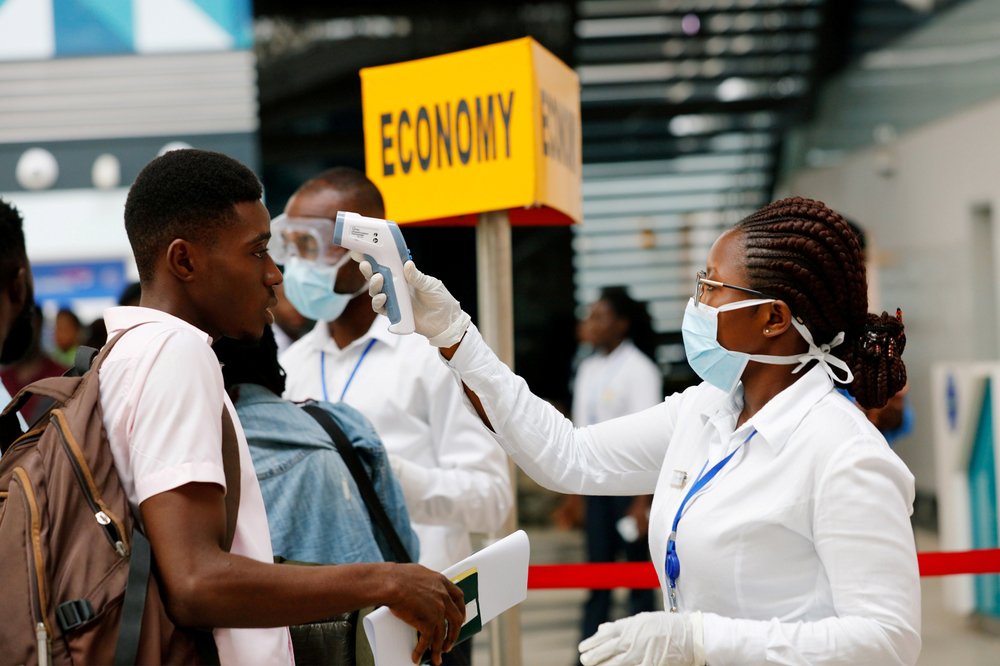
COVID-19 in Africa: The implications for macroeconomic and socioeconomic dimensions

The COVID-19 outbreak began in December 2019 in the Wuhan city of China and has continued to spread globally. As of this writing, 28.2 million cases have been recorded globally with 910,000 deaths. Aside the health impact, the pandemic has led to an unprecedented disruption in economic activities, initiating a sudden demand, supply, and financial shock. The mitigation strategies put in place by governments across the world to curb the virus as well as the uncertainty associated with the pandemic has led to a reduction in the consumption of non-essential commodities. Meanwhile, disruptions to global supply chains in a closely connected world as well as the reduced demand have necessitated a slowdown in production. Furthermore, investors have become more risk averse with the prices of risk assets falling to levels experienced in the 2007-20008 global financial crisis.   To counteract the fall in private sector demand, stabilize the financial system, and ensure economic recovery, governments and central banks across the world have deployed a range of policies and programmes. Central banks are cutting policy rates and providing direct liquidity to the financial system. Federal and sub-national governments are providing tax relief, cash transfers, and employee retention schemes to alleviate the burden on affected individuals and businesses. Africa is not left behind as governments have increased spending plans (about 1.9% of their GDP) and central banks are adopting more accommodating monetary policies.

Read More Download PDF