Within the period of January 1 and May 31, 2021, the Nigerian Communications Commission (NCC) recorded an increase of over 400 percent in revenue budget performance in respect of spectrum fees.¹ The NCC exceeded its N36 billion projected revenue with over N150 billion within the five months. This has been as a result of effective regulatory regimes effected over the years and a major contribution to the Federal Government’s revenue drive and generation. There have also been advancements in the nation’s telecoms industry and improved operations of licenses leading to expansion in economic output. Towards the end of 2020, the NCC announced that N344.71 billion was generated and remitted by the Commission, to the government’s Consolidated Revenue Fund (CRF) in the last five years. While the NCC stands out as a profitable government agency, careful consideration should be taken in order to avert the overregulation of telecom providers. Such excessive regulation could dissuade private investors from the sector and have adverse effects on the industry’s profits.
The Federal Government has approved the Medium-Term Fiscal Framework (MTFF) for 2022-2024. The framework is based on the following key parameters: crude oil price benchmark of $57 per barrel, crude oil production of 1.88 million barrel per day, exchange rate of N410.15/$, inflation rate of 13 percent and Gross Domestic Product (GDP) growth rate of 4.2 percent in 2022.1 The framework further projects federal government budget to rise from N13.58 trillion in 2021 to N13.98 trillion in 2022 and revenue is to rise from N7.99 trillion to N8.36 trillion within the same period. The MTFF is important in setting benchmarks for government spending in the medium-term which breeds accountability, transparency, and organization. However, historical precedents suggest that adhering to the medium-term framework is difficult owing to the use of overly optimistic parameters. In this case, an inflation rate of 13 percent can be considered optimistic given that the current inflation rate is 18%. Consequently, revising these parameters to reflect the current trends in the economy is critical to achieving the budget targets.
This inception report focuses on the emerging trends in Africa’s digital and data environment. The study builds a case for mobilizing action at both regional and national levels, to strengthen data governance frameworks in Africa, particularly in view of the ongoing regional economic integration initiatives under the African Continental Free Trade Area (AfCFTA). We advocate for stronger data policies in Africa as a development tool for bridging identified gaps that could put the region at a disadvantage, and as a means of building greater confidence which is a requirement for growing the digital economy. The findings suggests that while the potential of digital technologies is yet to be fully exploited in Africa, the region has witnessed a surge in the use of digital platforms and tools in recent years. This has influenced the ease and manner in which data gathering and exchange occurs, resulting in heightening concerns around potential data abuse. In response, national efforts and domestic legal frameworks on data governance are gradually increasing in Africa, although rather slowly as there are still significant policy gaps. While the magnitude of the data policy gaps vary across different member countries, African countries have so far largely been unable to match the pace of change in the new data driven global economy. There is also a lack of uniformity in policy approaches being adopted by member states.
The COVID-19 pandemic has had severe impacts on the macroeconomy and the livelihoods of households globally. The restrictions to movement alongside the associated uncertainty stimulated a sudden decline in the demand for commodities and disrupted production, leading to the underutilisation of capital and labour. More specifically, as governments sought to curb the spread of the virus by implementing workplace and school closures, and encouraging social-distancing practices, these policies led to a significant impact on all economies. A recent study on the impact of COVID-19 on gross domestic product (GDP) and trade finds that the pandemic caused a 2% decline in global GDP, a 2.5% decline in the GDP for developing countries, and a 1.8% for industrialised countries.
For Nigeria, which saw its first case in February 2020, the economic contraction was severe and sustained leading to a recession in the third quarter of 2020. The economic contraction is the result of the adoption of lockdown measures – which had an impact on nearly all sectors of the economy – along with the pandemic’s impact on partner economies engaged in international trade and those providing foreign investment. Meanwhile, the income of the majority of citizens has been affected, because a large share of informal workers has no recourse to unemployment insurance or paid leave of absence.
This article was first published on SAIIA
Crude oil price increased to the highest since 2019 while external reserve decreased in the week under review. The price of Nigeria’s bonny light increased by 3.5 percent to an average of $76.4 per barrel in the week under review.3 Despite the increase, external reserve fell by $246.9 million to an average of $33.59 billion. External reserves have been depleting since May 2021.4 The main source of foreign exchange earnings is from crude oil and an increase in crude oil price should be reflected in the external reserves. However, the increase in crude oil prices does not translate into increase in external reserves and revenue as Nigeria sells crude oil on contract.5 While crude oil prices are exogenous to the Nigerian economy, the rise in crude oil prices eventually will improve government revenue and external reserves. Furthermore, the depleting external reserves implies that the Nigerian economy is still heavily dependent on imports and reveals the importance of diversifying the Nigerian economy.
Inflation rate decreased for the second consecutive month in May 2021. More specifically, inflation rate fell to 17.93 percent in May 2021, 0.19 percent lower than the 18.12 percent recorded in April 2021.1 The decrease was driven by the food component of inflation which fell to 22.28 percent from 22.72 percent in the preceding month. By contrast, core component of inflation increased by 0.41 percent to 13.15 percent in the review period. The marginal decrease in food inflation could be linked to improved security in food-producing regions in the past weeks. On the basis of improved security, the prices of food could continue to fall leading to a decline in overall inflation. The Central Bank of Nigeria can increase the Monetary Policy Rate (MPR) which should reflect in the interest rates offered by commercial banks and decrease bond prices to reduce the money supply and address the persistent rise in prices.
According to the World Bank, 7.2 million Nigerians could be pushed into poverty due to higher inflation rate and fall in purchasing power in 2020. Inflation rate rose every month in 2020 to reach a peak of 15.75 percent in December 2020.3 There are 86.8 million Nigerians currently living in poverty, and the economic situation in Nigeria means that the country may not be able to push households and individuals out of poverty in the nearest future. Food inflation is at an unprecedented level of 22.28 percent, unemployment and underemployment remains high and GDP growth rate in Q1 2021 stood at 0.51 percent in a country with a population growth rate of more than 2.5 percent. Ensuring inclusive growth process and empowering the poor, providing social protection for the poor and vulnerable, encouraging small and medium scale enterprises, and a sustained investment in education and health would alleviate poverty in Nigeria.
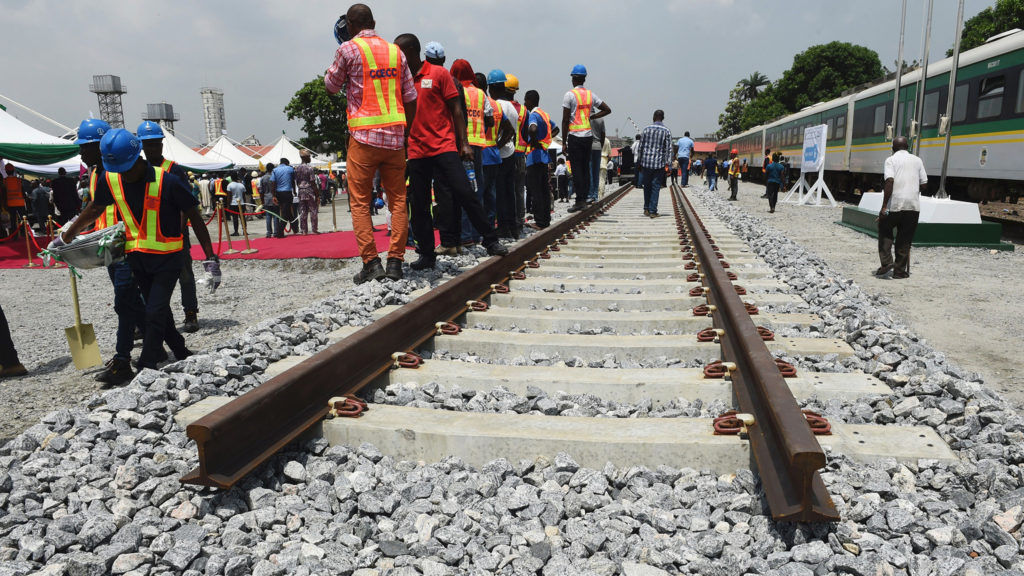
China’s investment in African infrastructure as part of its Belt and Road Initiative has proven to be both transformative and controversial. While investment projects are helping Africa to close its infrastructure gap, they have also raised fears of runaway debt levels. Overall, more research is needed on the development impact of Chinese investment activities on the continent, including the financial implications thereof. This report aims to address this knowledge gap. Drawing on diverse datasets, it examines Chinese infrastructure projects in three countries: Ethiopia, Kenya and Nigeria. A key result of the study is that while many of these projects are still under way, they are likely to have a positive impact in the future. In particular, they will boost trade and development in the commodities and services sectors. Nevertheless, the benefits of the Belt and Road Initiative will not be evenly distributed in Africa. Top commodity producers and exporters will continue to benefit more than some other African countries. Countries should take cognisance of and mitigate the downside risks associated with Chinese interventions in Africa, including growing their debt loads and minimising the negative effects on the environment.
The value of total merchandise trade increased by 6.99 percent to N9,757.87 billion in the first quarter of 2021 when compared to the value recorded in preceding quarter.1 The increase can be attributed to 15.61 percent increase in import and an 8.99 percent decrease in export resulting to a trade deficit of N3,943.45 billion within the review period. Furthermore, export accounted for 29.79 percent while import accounted for 70.21 percent of total trade. Major import partners were China (29.34 percent), Netherlands (10.60 percent) and United States of America (8.88 percent). Major export partners include India (16.79 percent), Spain (9.88 percent), and China (6.54 percent). The economic implication of the trade deficit implies that there is an additional pressure on the naira, leading to situations that propel currency depreciation which is inflationary. The CBN would need to put more effort in defending the naira in the foreign exchange market.