


Publications

Follow via RSS

Plastic Pollution: Implications and Way Forward

This article seeks to highlight the costs of plastic pollution as well as to provide targeted and actionable recommendations for different stakeholders, especially in the African context.

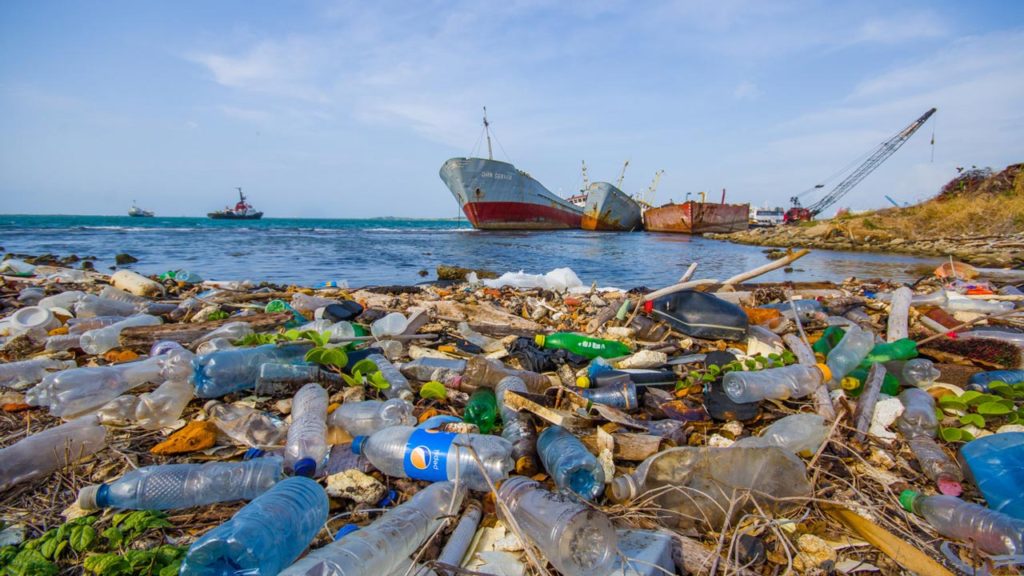
Plastic pollution has become one of the most pressing environmental concerns globally, having become the fulcrate of recent global policy debates bordering on marine pollution and environmental sustainability. At the United Nations Environment Assembly in Nairobi in 2017[Download File">1], over 200 nations signed a resolution which seeks to eliminate plastic pollution in the seas, reaffirming the UN Sustainable Development Goal 14 “to conserve and sustainably use the oceans, seas and marine resources for sustainable development”. Evidence indicate that plastic pollution poses serious threat to marine species and has adverse consequences for public health and environmental sustainability. Every year, 500 billion plastic bags are used around the world, 13 million tonnes of plastic leak into the ocean, 100, 000 marine animals are killed by plastics, and 83 percent of tap water are found to contain plastic particles --according to statistics by the African Development Bank (AfDB) Download File">[2].

As plastic remains in the environment for centuries, the trillions of plastic pieces accumulating in water bodies form part of a global pollution issue that affects all coastal countries especially in Africa.Download File">[3]. Eighty percent of the continent's Gross Domestic Product is concentrated in just 11 African countries that have prominent coastlines (Nigeria, South Africa, Algeria, Angola, Egypt Morocco, Sudan, Tunisia, Kenya, Ghana and Libya) Download File">[4]. With the present and projected unprecedented population growth and urbanization in Africa, especially in the coastal zones, Africa’s growing middle class is increasingly creating larger consumer markets for plastic goods with supermarkets replacing informal shops and markets. An additional 1.3 billion people [equivalent to 3.5 million per month] is projected to be added in Africa by 2050, and urbanization are expected in the Download File">coastal zone with an estimated 49 million more people in low elevation coastal flood plains by 2060  Download File">[5].

While plastics are extremely useful and serve a variety of purposes, adequate plastic waste collection and recycling systems are lacking in many African countries. As a consequence, discarded plastics often ends up in the environment, where it can cause health and other problems for marine and land animals including humans, as well as climate change. Both micro-plastics pieces (between 2 to 5 millimeters) and macro-plastics (above 20 millimeters) often find their way into the soil and water bodies where they endangers animals, and can wind up in the food chain with health consequences Download PDF">[6]. When macro-plastics entangle marine animals, mobility is impeded leading to starvation and increasing susceptibility to predators. Furthermore, when smaller marine creatures such as plankton are poisoned due to plastic ingestion, it also poses health problems for the larger animals that depend on them for food, including humans. As such, those who enjoy seafood are especially exposed to the harmful effects of plastic pollution: A study by scientists from the University of Ghent, Belgium find that shellfish lovers are eating up to 11, 000 plastic fragments in their seafood each year Download File">[7].

Plastic pollution also has other adverse implications for land and its inhabitants. A study carried out in five continents in 2017 by the University Of Minnesota School Of Public Health revealed that 83 percent of tap water samples taken around the world contained plastic pollutants Download File">[8]. This presents health challenges even for vegan and those who do not eat seafood. Furthermore, the breaking down of plastics both in its production and decomposition release methane --a greenhouse gas that contributes to global warming. In addition, the incineration of plastic in the open air, leads to air pollution that can contribute to respiratory problems when inhaled by animals and humans.

Plastic pollution also poses significant economic costs: not only is the cost of cleaning up plastic debris from seas expensive Download File">[9], excessive pollution can negatively impact tourism and thus the macro-economy. Plastic pollution spread across countries, creating a regional problem with high costs for economically important sectors such as tourism and fishing.

Way Forward

Although momentum on beating plastic pollution has grown in recent years, international efforts to limit plastic pollution have so far witnessed limited success in addressing the problem. Although the majority of plastic wastes do not originate from the ocean, most the international efforts have concentrated on the oceans. To fill this gap and to address the regional and transnational problem of plastic pollution, negotiations on a regional plastics treaty is necessary. A regional plastic treaty that tackles plastic pollution where it originates; fosters innovation for more sustainable plastics; and supports countries within the region in enhancing their domestic waste collection and recycling systems is vital. Given that collaborative efforts are necessary to achieve significant and desired impact, the regional community such as African Union, Economic Community of West African States can also create directives aimed at eradicating plastic pollution in the continent.

Nevertheless, individuals and non-governmental organizations including civil society, research, private organizations as well as religious institutions and traditional groups also have key roles to play. For individuals, indiscriminate disposal of plastics on the streets, gutters and public places should be deliberately avoided. National and sub-national governments of African countries would need to provide incentives and penalty to ensure behavioral change and discourage indiscriminate disposal of plastics.

For both individuals and organizations, collecting and supplying plastic bottles for recycling is needful to encourage re-use and help reduce the scale of plastic production. Particularly, research organizations (think tanks and universities) should embark on policy-oriented and behavioral research on plastic use reduction and waste mitigation in order to generate local evidence that can inform government policies. Civil society organization can leverage the research for necessary advocacy toward policy-making and implementation. Again, national and sub-national governments need to create the incentive structure to stimulate such behavioral change.

For governments at all levels, there is need to implement more environmental-friendly policies and initiatives, especially relating to plastic pollution. For instance, at state level, the government of Lagos state, Nigeria has set a pace on environmental conservation through its Lagos Waste Management Authority (LAWMA). In addition to education residents on waste management, LAWMA recovers reusable recyclable materials from landfills sites which are then manually sorted and delivered to companies for incorporation in their production line Download File">[10]. Kenya also sets a noteworthy example on the eradication of plastic pollution through its ban on plastic bags. The ban came into effect in August 2017 and charges people who indiscriminately dispose plastics a fine of $40, 000 fine or risk imprisonment of up to 4 years Download PDF">[11]. Going forward, national governments should work with their state and local governments to localize such noteworthy waste management initiatives.

Plastic pollution is a global threat to environmental sustainability, public health and economic development, concerted efforts between individuals, think-tanks and civil society organization, national and regional governments as well as the international community is needed for effective management and mitigation of the effects of plastic pollution.
Read More

Nigeria Economic Update (Issue 18)

According to the World Bank, poverty level in Nigeria increased in 2017 with almost half the Nigerian population living in extreme poverty. As stated in the “Nigeria Biannual Economic Update” report, approximately 49.2 percent of Nigeria’s population live below the PPP $1.90 per capita per day poverty line in 20171 – an uptick of 0.8 percentage points. Particularly important is that despite emergence from recession in 2017, poverty and unemployment levels increased. The World Bank suggests that prospects for poverty reduction have been jeopardized by limited connective infrastructure, and policy makers’ inability to identify interventions best suited for development potentials.

Read More Download PDF

Nigeria Economic Update (Issue 17)

Media highlights show that recent figures from the Nigeria Investment Promotion Council (NIPC) reveals a progressive inflow of capital into Nigeria. Specific figures indicate that Nigeria’s actual capital investment inflow stood at $84.3 billion as at 2018Q11, growing by 27 percent from the $66.4 billion recorded for the whole 2017 fiscal year. Notably, highlights suggest that the capital investment flows have been invested in 112 projects domiciled in 28 states in Nigeria, including the FCT. The increased capital inflow gives a fair sense of growing investors’ interest in the Nigerian economy, as well as their involvements in capital investment projects.

Read More Download PDF

AfCFTA: What It Means For Nigeria

The Presidents of forty-four (44) African countries just recently signed the agreement for the creation of African Continental Free Trade Area (AfCFTA). The success of AfCFTA will make it the biggest trade agreement since the formation of the World Trade Organization in 1995. By reducing barriers to trade, such as removing import duties and non-tariff barriers, the AfCFTA is expected to boost intra-African trade given its potential of bringing over 1.2bn people together into the same market. According to the African Development Bank (AfDB), the AfCFTA “will stimulate intra-African trade by up to $35 billion per year, creating a 52 per cent increase in trade by 2022;Download File"> and a vital $10 billion decrease in imports from outside Africa.”

However, despite the expected benefits from AfCFTA, nine other African countries, including Nigeria and South Africa have delayed assent to the treaty. In Nigeria, various concerns have been raised which includes the exposure of the already struggling local manufacturing sector to undue competition. According to the Manufacturers Association of Nigeria (MAN), the agreement will lead to job losses and increase unemployment. In addition, due to the poor export capacity in the non-oil sector and low industry capacity, stakeholders suggest that there is a need to review trade agreements and policies at this time at because most of the developed countries grew by closing down their borders for a while. A brief discussion of some major factors that affect the scale of free trade effects is provided below.

Size of the Market: Enlarging a trade bloc increases the size of the market, to which all countries have easy access; this also implies that the importance of the size of the domestic market of individual decreases, which favors the small countries. Let’s take the three key players in this debate; consumers, producers, and exporters. Consumers in smaller countries would always gain from mutual trade liberalization because they would not only have access to cheaper goods and products of high quality, but also to more variety. Exporters in the smaller countries would also benefit from the trade liberalization, as they gain access to larger markets and more competitive inputs. This means that with cheap labor in smaller countries, lowering import restrictions allows farmers, builders, and factory owners to access production inputs and resources, therefore increasing their production capacity.  Producers in the smaller country present a mixed picture, with the more productive ones gaining and the less efficient losing. When foreign competition increases, it exerts pressure on producers to become more efficient and increase productivity. Firms unable to improve productivity could be pushed out of the market. However, this can be counterbalanced by other firms that benefit through availability of better and cheaper inputs, which helps them Download File">become more competitive both at home and abroad.

Supply-Side Constraints: Supply-side constraints include not only government policies but also the country’s physical and institutional infrastructure, its human resources and all the other elements determining the short-term flexibility of an economy. The extent to which countries can benefit from improved market access depends on their ability to supply goods and services to export markets and to compete effectively.  The weak capacity of participating countries to shift resources into the production of goods and services for which the free trade area (FTA) created new demand could lead to adverse effect on the economy.  The lack of an enabling environment in participating countries creates difficulties in withstanding competition, makes them vulnerable to price variations and to collusive behavior of larger firms and price setting. In addition, they are in a weaker position to search for information, enforce contracts and property rights and to protect themselves from protectionist tendencies.

This implies that market access by itself is not sufficient to promote growth in countries facing supply side constraints. In such cases, market access has to be complemented by measures to relax supply-side constraints Therefore, it is important for all parties’ economies to be well-informed and able to respond to new opportunities that come with FTA. Unless a free trade agreement has indirect supply-increasing effects (such as might flow from greater investment), binding constraints to an increase in trade may remain in the form of limits to how far and how quickly a partner can increase production.

Tariff Provision: The extent to which an FTA actually changes tariff policy is an important factor that could influence the effect of free trade. Existing literature suggest that smaller, deferred tariff cuts will reduce the trade effect directly, and that the smaller the tariff cut the less likely it is that firms will bother with any additional red tape required to access FTA provisions. Therefore, extent to which an FTA will result in effective policy change (and hence produce a significant impact) depends partly on the relative importance of the tariff barriers that it cuts and the non-tariff barriers that are outside its scope.

In conclusion, analyzing the conditions for benefiting from a free trade agreement allows governments to display stronger leadership and readiness for the transition process. For key sectors where there are concerns about large job displacements, the liberalization process can be gradually phased in over a credible and finite time frame. On the other hand, to take full advantage of market access (and also better withstand enhanced import competition), policies to enhance competitiveness can be implemented as priority. Policy makers can use their political capital to take bolder steps that deepen mutual economic cooperation and help accelerate shared prosperity. Lastly, the smaller the tariff cut within an FTA the less likely it is that firms will find it commercially worthwhile to tackle non-tariff barriers.

Read More

Digital Technology and Fertilizer Reforms in Nigeria

Over the years, several attempts have been made to boost farmers’ productivity, among which are supplying farm inputs (such as improved seeds, agrochemicals and fertilizers) at subsidized prices to the farmers. Various domestic and imported fertilizer production costs are subsidized to lower prices to farmers. A historical review of Nigerian fertilizer policies indicates an inconsistency of government fertilizer distribution and subsidy policy over the years. The fertilizer subsidy programs ranged from conventional subsidies to “market-friendly” subsidies. Conventional fertilizer subsidies include the following key features: government importation and distribution of fertilizer, the sale of fertilizer to subsidized pan-territorial prices via state-owned enterprises, and universal program availability to all categories of farmers. The key features of market-friendly subsidies are the use of a targeting mechanism such as input vouchers to target poor farmers, and delivery of the subsidized fertilizer via the private input distribution system.

Read More Download PDF

Finance and Firm Productivity in Africa: Background Study from World Bank Enterprise Survey Data

Access to finance has been considered to be one of the important factors in influencing firms’ real activities and in promoting aggregates. However, literature on the relationship between finance and firm-level productivity is almost non-existent for African countries. This paper fills this gap by using cross-sectional firm-level data to estimate the effect of access to finance on labour productivity, total factor productivity (TFP), and the stochastic frontier trans-log model. This study also estimates an instrumental variable model - two-stage least square estimator to address potential endogeneity bias between access to credit and firms’ productivity. The results obtained show that the lack of access to finance, especially overdraft facilities negatively affects the productivity of firms in Africa. Also, smaller firms and sole-proprietorships are mostly affected because they have less access to finance. This study suggests that the development of a balanced financial system should be of topmost priority to policy makers. This ensures that more finance is channelled towards those firms whose productivity depends heavily on the availability of finance irrespective of their characteristics. This would result in firms increasing their investments in productivity-enhancing activities, which would benefit long-term economic growth.

Read More Download PDF Download PDF

A Note On The Economic Downturn In Sub-Saharan Africa

The recent movements in the dollar-naira exchange rate, following the removal of the currency peg, has stimulated ongoing debate in the media that South Africa has regained its position as the largest economy in Africa. The prevailing notion is that the depreciation of the naira and simultaneous appreciation of the rand against the US dollar implies that South Africa’s GDP has surpassed that of Nigeria. However, this argument needs some re-examination, given that the value of the GDP (in current US$) is sensitive to the choice of exchange rate and GDP figures used for its computation. This piece situates the present argument in the context of recent commodity market crisis and its implications for the two largest economies in Sub-Saharan Africa

Read More Download PDF

Examining Nigerias Learning Crisis: Can Communities Be Mobilized To Take Action?

Until recently, policy design and interventions in basic education were unduly focused on increasing school enrollment in developing countries, with little attention on improving the quality of learning. Using two states in Nigeria – Lagos and Kano, this paper examined the extent to which School Based Management Committees (SBMCs) mobilized actions (collective and private) to improve school-level accountability, and how this affected school performance and learning outcomes. The study finds that increasing citizen clients‘ participation and voice via SBMCs can improve educational outcomes by strengthening accountability. When functional, their activities remarkably raise intermediate outcomes (i.e., school resources and enrolment), however, there is no evidence to suggest that they improve children‘s learning outcomes.
Read More Download PDF

Nigeria Economic Update (Issue 9)

Nigeria’s Gross Domestic Product (GDP), maintained positive growth rate two quarters after emergence from recession in 2017Q2, thus consolidating the recovery process. Specifically, real GDP grew by 1.92 percent in 2017Q4, a slight increase from the 1.40 percent in the previous quarter and a huge recovery compared to the contraction (-1.73 percent) during the corresponding quarter in 2016. Notably, the 2017 fiscal year recorded an annual real GDP growth rate of 0.83 percent, significantly increasing Year-on-Year by 2.41 percentage points.  
Read More