Project Reports

  • Home
  • Project Reports

Summary Report: Is Nigeria on track to achieving quality education for all?

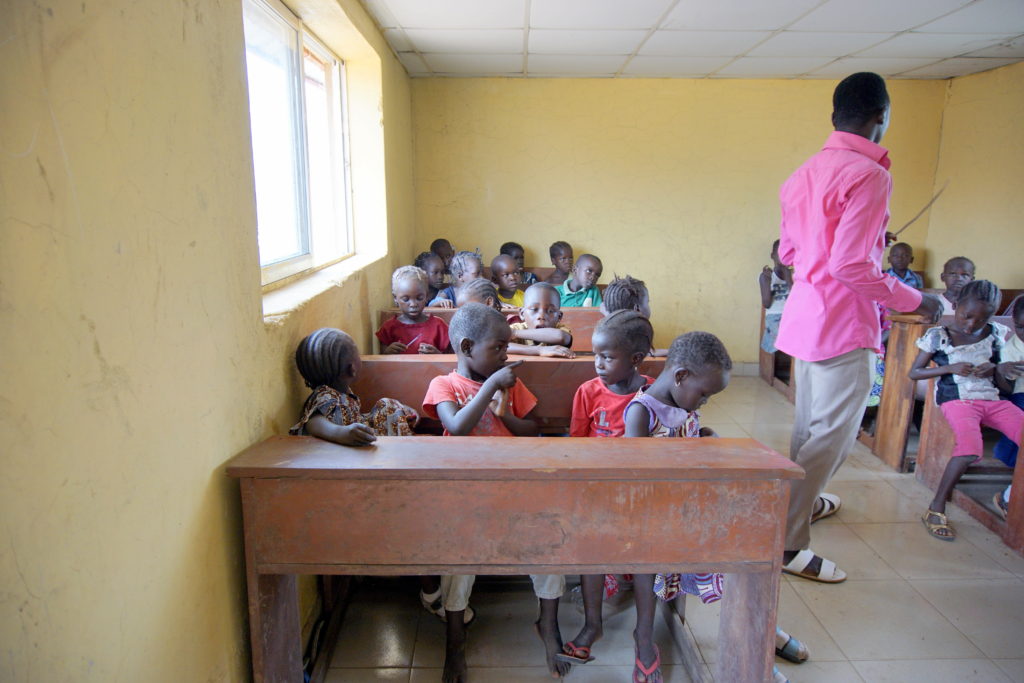
Quality education is a key enabler for sustainable growth and development. The 2030 Agenda rightly recognises this with SDG 4. Despite the importance accorded to education, Nigeria’s educational performance is abysmally low in terms of quality and quantity. Poor educational outcomes are illustrated by the existence of more than 10.5 million out-of-school children in 2018, which is the highest number globally (Adekunle, 2018). On the quality side, educational performance is even more worrisome. According to the World Economic Forum (2017), Nigeria ranks 124th out of 137 countries in terms of the quality of primary education.

About the SVSS project
The Southern Voice “State of the SDGs” initiative provides evidence-based analysis and recommendations to improve the delivery of the Sustainable Development Goals (SDGs). As a collaborative initiative, the program compiles a broad range of perspectives that are usually missing from international debates. This report aims to fill an existing knowledge gap. Southern Voice is confident that it will enrich the discussions on the SDGs and level the playfield with new voices from the Global South. This piece was first published here: Southern Voice
Read More Download PDF

South-South Ideas: South-South Cooperation Coherence in a Complex Assistance Framework for Development – The Case of Nigeria (2019)

Nigeria is Africa’s most populous country, with an estimated population of 190.9 million; it also has the largest economy, estimated at $376 billion in 2017 (World Bank, 2017). The economy hinges critically on the service sector, while oil is relied upon as the main source of foreign earnings. Despite its huge potential, Nigeria has failed to translate its resource endowment and strategic economic and demographic positions into sustained economic development. In fact, the country’s performance is abysmally low with regard to key development indicators. A portion (46 per cent) of its huge population is poor by World Bank definitions, and socioeconomic outcomes remain among the worst globally (World Bank, 2017). Specifically, Nigeria has the highest number of out-of-school children in the world (13 million in 2018), coupled with high rates of infant and maternal mortality (figure 1). Furthermore, the country suffers from inadequate and dilapidated infrastructure across the energy, housing and transport sectors. This is in relation to about $30 billion in budgeted spending for the 2018 fiscal year by the federal government, which reflects the enormous development financing challenges (Federal Ministry of Budget and National Planning, 2018). Despite these poor development indicators, the country has made modest progress in improving revenue streams, with recent developments in sectors other than oil such as the agriculture and mineral sectors.

Read More Download PDF

A Scoping Study of Nigeria’s Tobacco Market and Policy Space

Tobacco use and control in Nigeria and other African countries have received little attention relative to other regions like Asia and Latin America. This is due to the perceived low smoking prevalence in Africa compared to the more immediate need for interventions against infectious diseases. However, the trends are changing quickly. Economic growth rate in Sub-Saharan Africa (SSA) nearly tripled from an average of 1.7 percent in 80s and 90s to about 4.8 percent in the 2000s and 2010s, with Nigeria growing more than five-fold from 1.2 percent to 6.7 percent within the same period (World Bank, 2018). On a similar trend, albeit of lesser magnitude, is the smoking prevalence in Nigeria which grew from 11.3 percent in 2000 to 17.4 percent in 2015 (World Bank, 2017). A combination of rising incomes, population growth, media-driven social trends, and targeted advertisement by the tobacco industry are the key drivers of the rising prevalence in SSA.

Read More Download PDF

Energy Subsides in Nigeria: Opportunities and Challenges

Various forms of consumer energy subsidies[1] are implemented in Nigeria. Three energy products are particularly subsidized: gasoline (Premium Motor Spirit –PMS), household kerosene (HHK), and electricity. In the case of petroleum products (PMS and HHK), government provided subsidies by paying petroleum products marketers the difference between the market rate and the government approved retail price[2]. For electricity, the government required state utility companies to charge tariffs below the costs of electricity production, then it reimbursed as part of a lump sum and by under-charging the electricity sector for the cost of natural gas[3].While petroleum (fuel) subsidy has increased, other forms of energy subsidies (such as kerosene) have relatively fallen over the years. Notably, the proposed study focuses on petroleum subsidies in Nigeria, as it weighs most heavily on the Nigerian economy and the welfare of the citizens[4].

As in the case of most energy subsidizing countries, the main rationale for energy subsidies in Nigeria is to protect consumers from the negative effects of increases in petroleum prices, while promoting industrial growth. Also, in line with most oil-exporting countries, the provision of petroleum subsidies in Nigeria is driven by socio-political reasons – the perception that cheap petrol prices are an entitlement for citizens of an oil-wealthy country. However, despite the poverty alleviation justification for providing subsidies, there is strong evidence that Nigeria’s experience with subsidies has been marred with economic, structural, and political challenges, among others.

Read More Download PDF Download PDF Download PDF

2017 BENCHMARKING EXERCISE REPORT

 This report is the third in the series of benchmarking exercise reports produced by the Nigeria Natural resource Charter (NNRC); carried out to provide an assessment of governance of Nigeria’s petroleum wealth. The first two exercises were conducted and published in 2012 and 2014 respectively. It uses the NRC framework, developed by a diverse set of internationally renowned experts on natural resource management to conduct the assessments. In 2016, the framework was revised to aid a more contextual and detailed approach in obtaining results so as to ensure accurate analysis of the resource sector. This revised framework is the basis for the 2017 edition of the exercise. It analyses the governance of petroleum wealth in Nigeria and identifies crucial changes that have taken place in the sector since the last benchmarking exercise was conducted.For the 2017 edition, the NNRC entered into a partnership with a consortium of organisations.

CSEA contributed to four precepts in the report:

  • Precept 5: Local impacts:The government should pursue opportunities for local benefits and account for, mitigate and offset the environmental and social costs of resource extraction projects.
  • Precept 6: State-owned enterprises:Nationally owned companies should be accountable, with well-defined mandates and an objective of commercial efficiency.
  • Precept 7: Investing for growth: The government should invest revenues to achieve optimal and equitable outcomes, for current and future generations.
  • Precept 8: Stabilizing expenditure:The government should smooth domestic spending of revenues to account for revenue volatility.

Read More Download PDF