Project Reports

  • Home
  • Project Reports

Financing Basic Education in Nigeria What are the Feasible Options?

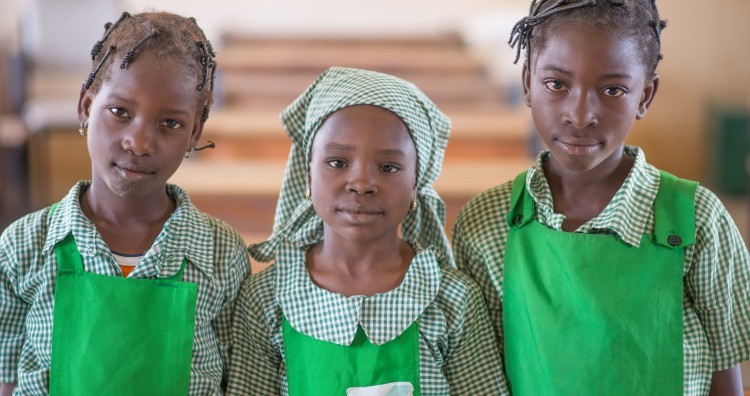
Over the past years, basic education in Nigeria has experienced mixed performance. On the positive side, school enrolment has increased and gender disparity in primary education has been reduced significantly in line with MDGs targets. However, educational outcomes remain weak on various indicators of quality and equity. For example, quality of education in Nigeria was ranked 124th out of 144 countries on the Global Competitiveness Index in 2015. Also, van Fleet et al. (2012) finds that 58.3 percent of primary school children in Nigeria are not meeting the expected levels of literacy and numeracy skills. Specifically, 65.7 percent of the students cannot read, while 51 percent lack basic arithmetic skill.

While several factors accounted for this dismal performance, inadequate finance is no doubt paramount. Between 2010 and 2014, the expenditure on education only accounted for 0.5 per cent of the national GDP and 8.8 percent of the federal government spending (Nwoko, 2015). This is grossly below both UNESCO’s recommendation of between 4 to 6 percent share of GDP and the Dakar Education for All EFA’s recommendation of 20 percent of national budget. Apparently, while all levels of education in Nigeria remain underfunded, basic education level remains more underfunded. While there is no specific estimate of the overall financing gap in Basic Education for Nigeria, the EFA Global Monitoring Report for 2014 shows that Nigeria needs to spend an additional US$1.6 billion annually on primary school teachers’ salaries alone to achieve Universal Primary Education by 20201. Data from Central Bank of Nigeria (CBN, 2015) shows that while general government expenditure (federal, state and local) on non-basic education increased by NGN194.7 billion between 2008 and 2012, universal basic education (UBE) funding increased by a modest NGN19.1 billion.

The deficiencies in financing are reflected in the persistent supply-side constraints in Nigeria‘s Education sector. In basic education, inadequate funding is evident in the number of OOSC and shortages in school infrastructure. Nigeria presently has the highest levels of OOSC (8.7 million) in the World (See Nwoko, 2015). Similarly, estimates on classroom/facilities at the primary and junior secondary level points to a shortfall of around 60 percent and 67 percent respectively (Digest of Education Statistics, Nigeria, 2010). Given these and other apparent challenges that constrain outcomes at the school level, it becomes imperative for policymakers to design strategies towards mobilizing more resources.

Read More Download PDF

Rethinking Job Creation and Employment Generation Strategies in Nigeria

Recent achievements of robust economic growth accompanied by increasing rates of unemployment present an uncharted paradigm in the history of the Nigerian economy. Despite economic growth averaging 7 percent during 2004-2012, unemployment rose from 13.4 percent to 27.4 percent. In particular, youth unemployment rose from 29 percent to over 40 percent.

The experience becomes more paradoxical when the drivers of recent growth are brought under consideration. Over the period, non-oil sectors that are considered natural job creators – agriculture, commerce and distribution, and communications sectors – account for more than 80 percent of economic growth. While the increasing unemployment rate is in part due to expansion of the labor force due to influx of new entrants, it is more significantly a result of failure of economic growth to create substantial employment. At other times, especially during the financial crisis, economic growth was accompanied by net job destruction.

This paradox puts a dent to credibility of the “growth will create labour demand” hypothesis that has been the key doctrine of the Bretton Woods institution for decades, and has led to suggestions for rethinking labor market strategies. Realization of the need for growth to create employment and reduce poverty had given birth to the increasingly popular qualification of economic growth in terms of “inclusiveness” and “pro-poorness” in development circles. Indeed, there is a renewed emphasis on promoting growth in sectors with high rates of labor absorption, with the idea that expansion of those sectors will result in increased demand for labour, and as a consequence, increased employment rates.

Read More Download PDF

Policy Simulation Of Measles Immunization Programs For Children In Borno State

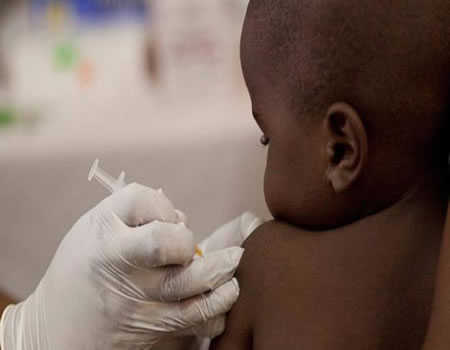
Despite the efforts made by the Nigerian government, policy makers and other stakeholder to increase children vaccination against infections, measles vaccination coverage remains very low. While this problem is more profound in the northern part of Nigeria, its present form in Borno State even requires urgent attention. This study is an attempt to expose the issue. It conducts a policy simulation exercise on two measles immunization programs for children of age 9-23 months free immunization against measles with media awareness campaign (PolicyA) and free immunization against measles with house to house campaign (Policy B) to boost children measles immunization coverage. The study estimates the relative cost and the effectiveness measure such as the health benefits morbidity avoided and mortality averted. In what follows, it compares the cost per child covered and the cost-effectiveness ratios of the policy alternatives. The cost per child indicates that policy A has a lower cost and lower level of coverage, while policy B has a higher cost and a higher level of immunization coverage. In terms of cost of treating measles and the value of statistical life (VSL), the results of the cost effectiveness analysis show that both policies are efficient. However, policy A has a lower cost effectiveness ratio than policy B.

Read More Download PDF

Program Based Budgeting Analysis Of Education, Health And Water Sectors In Nigeria


This report examines the Federal Government spending in the three (3) main social sectors of the Nigerian economy - Education, Health and Water, in five (5) distinctive categories over a period of four (4) years. Rather than reviewing the budget for these three sectors in the format in which they are presented in the federal Governments budget, the report arranged the data according to major programs (following program budgeting approach). It analyzes the Federal Governments budget appropriation and implementation, revealing the performance of government expenditure in these sectors. The report also compares the federal government spending in terms of recurrent versus capital expenditures; wage versus non-wage expenditures and donor versus domestic expenditures. This analysis shows that the Nigerian government apportioned more funds to the education sector and least to the water sector between the years 2006 to 2010 with the total sums of N1,125 billion and N224 billion (in 2006 prices), respectively. Compared with other countries, spending on education, health and water in percent of GDP is still low; social indicators are poor and the allocation within sectors is not consistent with national priorities MDGs and vision 20:2020.
Read More Download PDF

Policy Simulation Of Female Education Programs In Nigeria

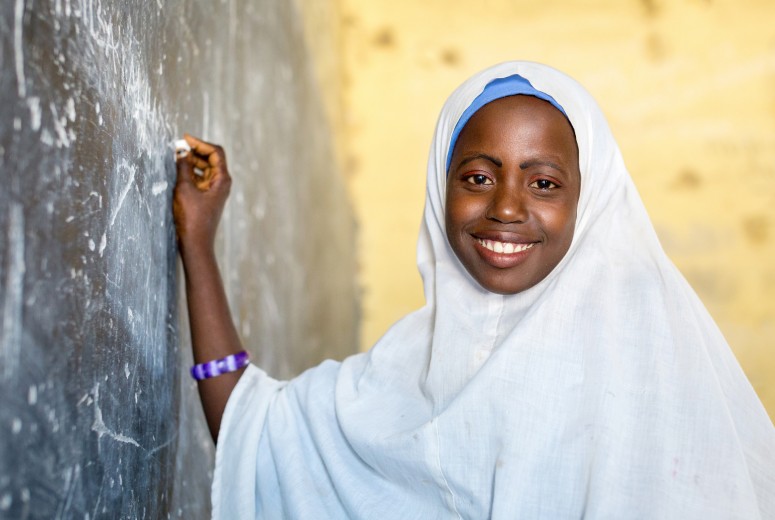
In spite of the efforts made by the government to increase access to affordable education,access to basic education and enrollment by the girl child remains poor. While this problem is very profound in developing countries, its present form in Nigeria even requires more urgent attention. It is against this backdrop that this study conducts a policy simulation exercise on two educational assistance programmes for girls free tuition fee for all with stipend for girls (PolicyA) and free tuition fee for all with transport for girls (Policy B) to boost female primary school enrollment. The study estimates the relative cost and the effectiveness measure such as life time earnings. It compares the cost per beneficiary and the cost-benefit ratios of these policy alternatives. The cost per beneficiary shows that policy B has a lower cost and a lower level of enrollment, while policy A has a higher cost and a higher level of enrollment. Overall, the results of the cost-benefit analysis show that both policies are beneficial though policy A has a lower cost-benefit ratio.

Two funding scenarios (paying for the policy) as well as distribution scenarios (equity) were also analysed. The equity dimension of the exercise is to ensure that the policies are pro-poor and able to distribute the benefits in an equitable manner. The sensitivity analysis performed to determine the stability of these findings, show that the results are robust to parameter changes and assumptions. In sum, since both programs can be implemented (as shown by their low cost-benefit ratios), we recommend that policy B be introduced in the urban centres where there is likelihood or high level of pedestrian risk, insecurity and high rate of motor accidents that may discourage parents from sending their children (especially girls) to school. In rural areas where there is higher incidence of poverty, which often force parents to the engage their female children in economic activities, policy A should be implemented. Finally, in semi urban areas with less pedestrian risk and moderate poverty incidence, both policies can be implemented as complements, depending on resource availability.

Read More