Publications

Follow via RSS

Nigeria Economic Update (Issue 26)

The total value of capital importation into Nigeria amounted to US$ 8.49 billion in the first quarter of 20191. This represents a significant increase of 216% relative to 2018Q4 and   about 35% growth when compared to the corresponding quarter in 2018. The largest amount of capital importation by type was received through portfolio investment, which accounted for 84% (US$ 7.15 billion) of total capital importation. Other investments and foreign direct investments also increased during the quarter and accounted for 13% (US$ 1.10 billion) and 2.86% (US$ 243.36 million) of total capital imported in 2019Q1. In the months following the end of election period, there seems to have been a build-up in investors’ confidence in the macro economy, as partly evidenced in portfolio investment QOQ increase of 306% – from US$ 1.4 billion to US$ 7.1 billion. However, the agriculture and manufacturing sectors, that are expected to deliver inclusive growth and sustainable development, have not attracted the majority of the investment. To attract capital into these sectors, the cost of local production will need to be lowered by building competitive infrastructure and reducing import protection such as the removal of the Import Prohibition List.

Read More Download PDF

Nigeria Economic Update (Issue 25)

Foreign and domestic investors consolidated their portfolio investments in May 2019 by increasing the value of their buy orders for Nigerian equities by about 50%. Compared to April 2019, total portfolio investments increased from N148.91 billion to N221.13 billion in May 20191. This makes it the second month of increase in the second quarter, indicating improvements from previous months of decline in the first quarter of 2019. The increases were triggered by greater investments from domestic investors, as the total value of transactions executed by domestic investors significantly outperformed transactions executed by foreign investors by 30%. However, improvements in both the domestic and foreign portfolio investments may be connected to limited uncertainties and a boost in investors’ confidence in the economy, following the end of the election periods. At the minimum, we expect that the portfolio inflows will be sustained. However, increments in portfolio investment will depend on the extent to which inflation is curbed, maintaining stability in the foreign exchange market and the friendliness of the overall investment climate

Read More Download PDF

Nigeria Economic Update (Issue 24)

Foreign Direct Investment (FDI) flows into Nigeria contracted substantially in 2018. Figures from the United Nations Conference on Trade and Development (UNCTAD) show that FDI inflows dropped by a significant 43% to $2 billion in 20181, ripping Nigeria off the top position as the largest FDI recipient in West Africa, in favor of Ghana. Evidence shows that in 2018, foreign investors treaded cautiously, and may have withheld or withdrawn their scheduled investments in view of risks arising from government’s conflicts with multinationals and investment precariousness connected with Nigeria’s elections. For instance, the review year saw the giant telecoms company, MTN, remain entangled in legal disputes with the government over profit repatriations2. In addition to fold-up of companies, two of the largest global banking and financial services institutions, HSBC and UBS, closed their local representative offices in Nigeria in 20183. Despite these obvious capital flight during the year and contrary to UNCTAD’s stance, the Nigerian government through the CBN has refuted claims of FDI declines in 20184. FDI is expected to rebound in 2019 with the relatively peaceful conduct of the general elections dousing uncertainties. Going forward, the government needs to improve its policy coherence and avoid conflicting efforts that seek to promote FDI on one hand and curb business excesses via heavy-handed regulation on the other hand.

Read More Download PDF

Nigeria Economic Update (Issue 23)

In the first quarter of 2019, total foreign trade increased to N8.24 trillion1. This figure is 2.5% higher compared to 2018Q4 and 7.5% higher relative to the corresponding quarter in 2018 (2018Q1). The boost in trade resulted from increased values of both imports and exports. The value of total imports increased to N3.70 trillion, representing a 3.39% rise relative to 2018Q4. Similarly, export value was recorded at N4.54 trillion, which signifies a 1.78% rise compared to the fourth quarter of 2018. Improvements in both imports and exports retained the balance of trade in the positive terrain: at N831.6 billion. The quarter’s trade advancements may be attributed to export promotion policy, and more imports of agricultural products compared to the previous quarter. With the US$30 billion export-financing deal signed by the Nigerian government in February 20192, setting up special economic zones in Abia, Katsina, and Lagos, external trade is expected to increase significantly in the coming years. An important step in improving international trade is addressing non-trade barriers that undermine the country’s ability to extensively participate in trade such as inadequate infrastructure and inefficient and opaque border administration procedures.

Read More Download PDF

Nigeria Economic Update (Issue 22)

The NBS National outcome report on Water, Sanitation and Hygiene (WASH), suggests improvements in achieving SDG 6 (clean water and sanitation) in Nigeria. Accesses to the three WASH areas is indicated to have advanced in five years, up until 2018. In 2013, 56.9% of Nigeria’s population had access to improved and safe drinking water; by 2018, those who had access increased to 73.4%1. Similarly, although about 24.4% of Nigerian household members still practice open defecation, access to improved sanitation enhanced from 35.7% in 2013, to 57.4% in 2018. In terms of hygiene, about 91.4% of household heads were reported to have knowledge of at least two critical times for hand-washing. The remarkable advancements and progress in achieving the SDG 6 may not be unconnected to policy collaborations and structured multi-sectored partnerships between the Nigerian government and international partners like UNICEF. For instance, the Federal Ministry of Water Resources and National Open Defecation Free (ODF) road maps2, and the PEWASH (Partnership for Expanded Water Supply and Sanitation) policy introduced in 20163, have provided coordinated framework, strategies, and projects responsible for the recent progress and towards 100% achievement of goal 6 by 2030. Going forward, more exchanges with other African countries on progress, challenges, and needs in the critical areas of the use of data and technological advances is key to better implementation and monitoring.

Read More Download PDF Download PDF

Nigeria Economic Update (Issue 21)

The value of non-oil exports increased in the first quarter of 2019. According to the latest CBN quarterly economic report, non-oil exports totalled up to US$1.26 billion in 2019Q11, indicating 14.9% quarter over quarter (QOQ) increase and 41.2% year-on-year growth rate. Significant increases were observed in and driven by receipts from all reported sectors, however, three sectors stand out: minerals, manufacturing, and agricultural sectors, following likely sectoral improvements. Export earnings from minerals amounted to US$750 million and accounted for about 60% of total earnings for the quarter. Similarly, earnings from manufacturing and agricultural sectors grew QOQ by 19.1% and 12.8% to US$190 million and US$160 million respectively. Both sectors accounted for 27.5% of total non-oil export earnings for the quarter. Given that the government is prioritizing the diversification of the country’s revenue base and the afore-mentioned sectors play a key role in the diversification process, we expect continuous growth in these sectors. However, the lack of connective infrastructure to convey equipment, products, and workers, as well as the ports congestion that affects the competitiveness of exports should be addressed.

Read More Download PDF

CSEA 2018-2019 Annual Report

This year’s annual report comes amidst big changes around the global development policy space. These developments have also been accompanied by rapid changes in the research funding landscape. For CSEA, it marks a significant era as the Institutional funding provided by the Think Tank Initiative (TTI) of the International Development Research Centre (IDRC) ends. For the past decade, CSEA has been a beneficiary of this funding, which provided major institutional support that enabled the Centre position itself as an evidence-based and high-performing research Centre in Africa.

In order to maintain the successes and progress achieved over the years, CSEA continued to build on its consistency of providing actionable recommendations that influence policy choices. Specifically, the Centre restructured and strengthened its research capacity, organizational structure as well as its policy linkages, communication and outreach to ensure that its research output is channelled into the policy space.

In the year under review, CSEA recorded significant policy impact using evidence from research conducted. However, the recent changes in the policy space underscored the need for the Centre to align its research to priority areas -such as climate change, gender, and social inclusion policies- with several funding opportunities. In response to these emerging opportunities, CSEA began to explore other relevant areas of research. For instance, the Centre carried out a pilot study on livelihood assessment of Internally Displaced Persons (IDP) camps to assess their existing livelihood strategies propose the most effective ways to help such individuals to rebuild and strengthen their livelihoods. This study has provided a platform for CSEA to explore more research and expand its capacity on this important development issue.

Read More Download PDF

Nigeria Economic Update (Issue 20)

The Nigerian economy slowed in the first quarter of 2019 as real GDP growth rate fell to 2.1%1, from 2.38% in 2018Q4. Aggregate nominal GDP fell by 9.75% to ₦32 trillion in the review quarter, and growth rates in both sectors (oil and non-oil) slowed. Real GDP growth in the oil sector was -2.40% in Q1 2019 indicating a decrease by -0.79% points relative to the rate recorded in the preceding quarter of 2018. Similarly, at 2.47% growth rate in real terms, the non-oil sector slowed slightly from the 2.7% recorded in 2018Q4. The overall economic performance in 2019Q1 fell short of the CBN’s 3% growth projection, and reflects decelerated economic activities likely occasioned by the uncertainties and lackluster execution of policies during the election period in 2019Q1. Following projections from the IMF, growth is expected to stabilize at around 2% in 2019. To improve growth, we recommend that the government undertakes sweeping reforms that involves non-financial incentives capable of attracting large investments. These non-financial incentives, such as promoting a good investment climate and easing bureaucracy and the regulatory environment, will also improve the effectiveness of financial incentives.

Read More Download PDF

Nigeria Education in Focus (Issue3)

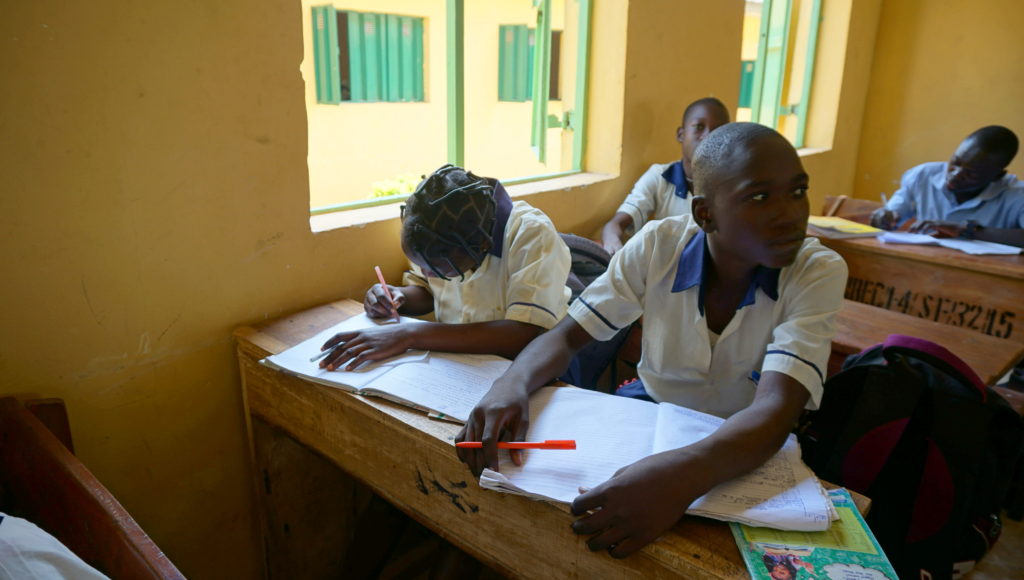
Given that government does not fully cover the direct costs, parents bear a proportion of the costs of education. Although contributions from parents are expected to be small, this can still present a significant burden depending on households’ income level. Some of the costs reportedly paid by pupils in public schools in Nigeria are shown in Table 3. On average, these costs added up to N25800. For poor households that live below N700 a day, these associated costs amounts to a significant burden to sending their children to school. Essentially, the associated costs of education is the monetary cost that parents were alluding to for children dropping out  or not attending school at all.

A further dissection of the costs paid in public schools in Nigeria reveals another dynamics at play. Government has not been sufficiently funding the institutional and direct costs components as promised in the UBE Act. Some of the reported expenses are for items supposedly cover under the free education programme. For example, school development levy, school supplies and to some extent textbook and exercise books are part of the institutional and indirect costs promised under the UBE Act. Invariably, school administrators are using various creative means to transfer the shortfall in government funding to parents.

Read More Download PDF