Internally Generated Revenue (IGR) for the 36 states and the Federal Capital Territory (FCT) increased by 15.78 percent in the first half of 2019 relative to the second half of 2018. IGR increased from ₦596.91 to ₦691.11 billion in the review period.1 Income tax (62.45 percent) was the major source of revenue for the states. Other sources of internal revenue for the states include road tax, revenue from MDAs, direct assessment, and other forms of taxes. Further disaggregated data shows Lagos state generated the most revenue, accounting for 29.6 percent of the total internal revenue generated. Rivers, FCT, Delta, Ogun, Kaduna and Akwa Ibom generated over ₦20 billion each in the first six months of 2019. Gombe, Yobe, Taraba and Borno – all north eastern states – generated the least (less than ₦4 billion each) in the review period. In as much as states intend to increase the level of IGR generated, careful consideration should be made with regards to taxing households and firms in order not to undermine productivity and in turn, economic growth. Other sources of revenues from ‘state-owned’ enterprises such as recreational centres and real estates can be explored. Particularly, revenues from tourism can be strengthened.
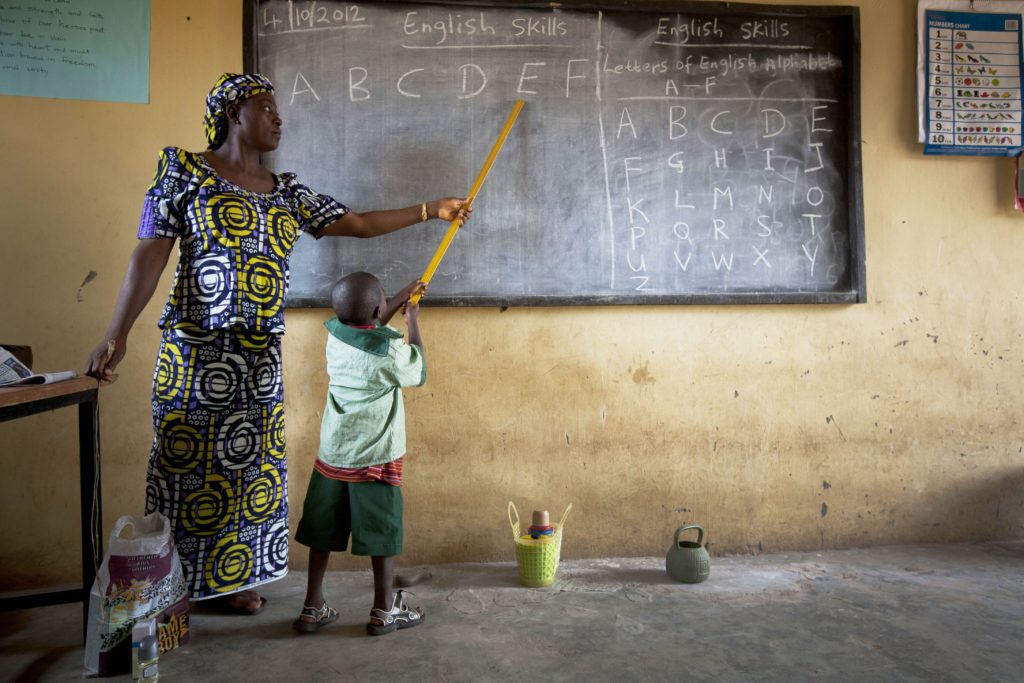
Education is acknowledged largely as a significant tool because it equips students with the functional skills for decent living and generates human capital that can spur economic development. Education has many levels, each of which is essential in its distinctiveness and therefore requires adequate public investment.In Nigeria, government’s policy design and investment focuses mainly on three levels: primary, secondary and tertiary education. In fact, it is not far-fetched to assume that most Nigerians think these are the only levels of education. Government policy, in part, feeds into this narrative with the division of the education system into structures like 6-5-2-3 or more recently 6-3-3-4, in which only primary, secondary and tertiary education are emphasized.
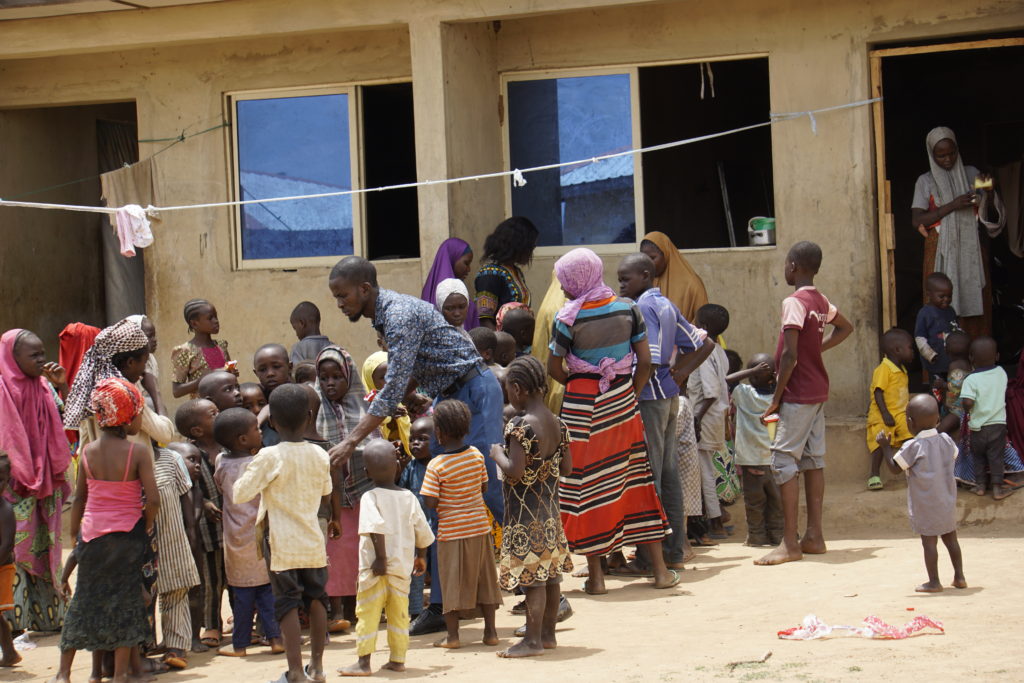
However, there is a fourth level of education—the Early Childhood Education (ECE) which starts from birth through the pre-school, until the child enters the primary level of education. ECE was officially recognized in Nigeria in the 2013 National Policy on Education, with the introduction of 1-6-3-3-4 system. The additional one year covers ECE and was designed to be free and compulsory, thereby extending basic education from 9 to 10 years. According to National Policy of Education (2013), the goal of the ECE is to facilitate transition from home to school and prepare children for primary level of education. This belated recognition of ECE has not raised its status in any significant way. As shown in Figure 1a, among the pupils enrolled in Primary 1 to Junior Secondary School in 2015, only 45% have attended pre-school. It is also telling that the pattern of pre-school attendance reflects the typical dimension of exclusion in education in Nigeria. Specifically, about 75% of those that have not attended pre-school are from rural areas, while non-attendance is highest among children from the poorest households (Figure 1b). Overall, this data suggests that the majority of children transit directly from home into primary school. While home and family education is an important component of ECE, attending pre-school could ensure seamless transition to primary education.
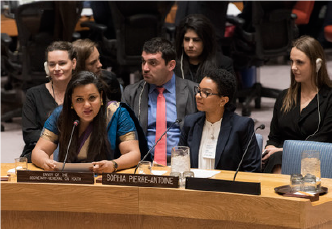
The share of Africa’s youth in the world is expected to increase to a staggering 42 percent by 2030 and is projected to continue to grow throughout the remainder of the 21st century, more than doubling from current levels by 2055. Data on direct conflict casualties suggests that more than 90 percent of all deaths occur among young adult males. Today, some 50 percent of the 1.4 billion people living in countries impacted by crises and fragility are under the age of 20. The Security Council has recognized that an estimated 408 million youth (ages 15-29) reside in settings affected by armed conflict or organized violence whereby 1 out of 4 youth globally are affected by armed conflict. These figures are gut-wrenching but indispensable for our understanding of peacebuilding in today’s age. With a global population of over 1.8 billion, young people— though disproportionally affected by armed conflict and organized violence—could potentially employ the unique capacity and ability to take on our planet’s most deep routed conflicts. Their inclusion and leadership are therefore imperative to the successful pursuit of peacebuilding.
The massive expansion of education access throughout the world in the past few decades signalled a positive progress for global development through human capital accumulation. However, this same growth highlighted the substantial deficiency in the learning that schools are unable to deliver to the children that pass through them. In short, massive expansion in schooling has not delivered quality education, a situation that United Nations Educational, Scientific and Cultural Organization (UNESCO, 2013) termed a global “learning crisis”. The disconnect between schooling and learning in the 21st Century also informed the global aspiration to improve learning outcomes, as captured in SDG 4.
With the global attention now centered on SDG implementation, policymakers and researchers are focused on data for measuring learning outcomes. Measuring performance against SDG 4 entails assessing the extent to which targets set on inclusive and quality of education have been met. However, as the 2017 Goalkeepers Report shows, there is notable conceptual problem and data gap in measuring the quality of education (see also Unterhalter, 2019).
On the conceptual level, there is lack of consensus on the appropriate indicator of quality education. Education quality is a multidimensional concept and encompasses educational inputs, processes and learning outcomes. This concern is apparent even in the SDG system, particularly, in the Tier Classification of Global SDG indicators developed by the Inter-agency and Expert Group on SDG Indicators (IAEG-SDGs). This means that additional work is needed to establish methodology and create an internationally comparable statistic (UN Statistical Commission, 2018).
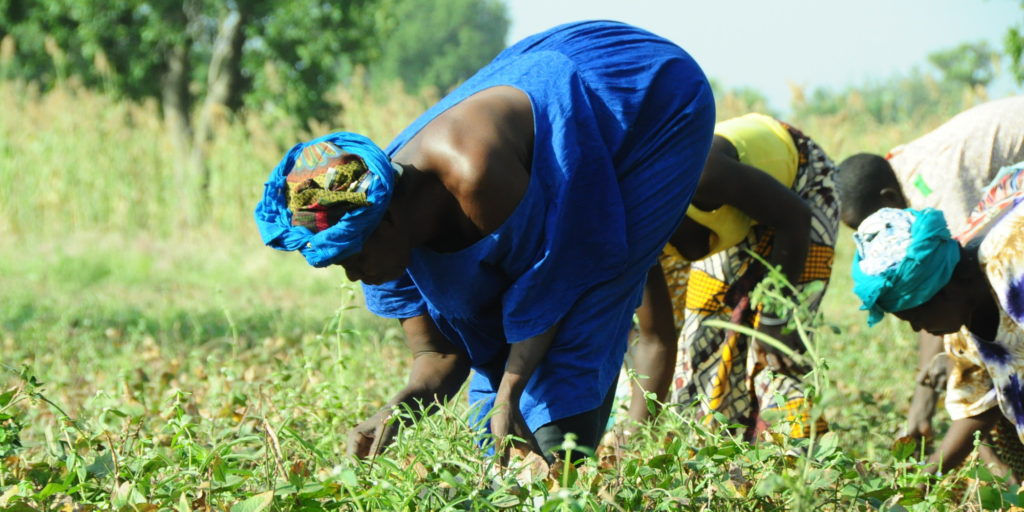
As a policy objective, the attainment of food security in Nigeria began facing challenges prior to independence when oil exportation began in 1958. But the challenges became pronounced and persistent after the commencement of large-scale oil exports in the early 1970s, when the country nearly abandoned agriculture in pursuit of newfound oil wealth. Self-sufficiency in food production and agricultural export earnings, aided by widespread cultivation of food crops and regional specialisation in cash crops – the cocoa mountains in the west, the oil palm and kernel heaps in the east, and groundnut pyramids in the north – began to diminish and disappear respectively. Within a few years after independence in 1960, the agricultural sector transitioned from a net foreign exchange earner to net foreign exchange drain.
Market indices at the Nigeria Stock Exchange closed downward in the trading week ended October 4, 2019. The bourse recorded a meagre 2.48 percent decrease in twin market indices– All Share Index and Market Capitalization. Both indices closed at 26,987.45 and N13.137 trillion respectively.1 All of other market indices depreciated with the exception of NSE Insurance and NSE Industrial Goods Indices. The worst hit was Consumer Goods Index NSE Banking Index which declined by 4.92 percent and 3.94 percent respectively, while the NSE Insurance Index increased by the most percentage of 5.71percent. The depreciation can be linked to profit taking on gains made the previous week.2 We expect market sentiment to turn around as discerning investors start buying stocks that are now trading at lower levels. We also expect that the swift approval of the 2020 budget will have a positive impact on investor’s sentiment, consumer spending and companies’ earnings; and thus on the future market value of the outstanding shares, especially in the consumer goods market.
The Central Bank of Nigeria (CBN) reviewed upward the minimum Loan to Deposit Ratio (LDR) target for all Deposit Money Banks (DMBs) from 60 percent to 65 percent.1 This is to sustain the momentum gained from a 5.33 percent (N829.40 billion) increase in the industry gross credit between end of May 2019 and 26th September 2019. If Nigerian banks abide by the new regulation, this should translate to increased lending to Nigerian businesses thereby supporting private sector growth. Regulatory enforcement or incentives may be needed to ensure that banks follow through with the regulation, as many of the biggest banks fell short of the regulator’s initial 60 per cent LDR threshold.
The government’s new fiscal projections have been revealed in the Medium-Term Expenditure Framework (MTEF) 2020-20221. The GDP growth projection was revised downwards from 3.6% to 2.9% for the 2020 fiscal year. Benchmark crude price was also revised from $60 to $55 per barrel, which could weigh on expected revenues. However, while recurrent expenditure is expected to rise in 2020, capital expenditure is projected to fall. The new MTEF shows a projected budgeted increase in recurrent expenditure from NGN4.3 trillion in 2019 to NGN4.7 trillion in 2020 (excluding debt service payments); and downward revision of capital expenditure to NGN1.7 trillion in 2020. While the early design of the MTEF could influence a return to the January-December budget cycle which will improve budgetary predictability for line ministries, the reduction in capital expenditure will likely lead to a deterioration in the much-needed infrastructure and other long-term investment. Failure to meet these needs will likely hinder economic growth in the long run.
The federal government has proposed an increase in Value Added Tax (VAT), from the current 5% to 7.2%3. The increment is linked to the implementation of Nigeria’s new minimum wage which has informed the need for an increase in revenue, particularly from taxation. Although the new policy awaits approval by the National Assembly, it is expected that the additional revenue obtained would help states in meeting their wage payment obligations given the frequent difficulties in salary payment for some states. The additional tax burden has the potential to change people’s economic behaviour by making them save more. Moreover, the VAT rate of other lower middle-income African countries including Cote d’Ivoire, Senegal and Lesotho at 20%, 18% and 15% respectively is significantly higher than Nigeria’s proposed VAT rate. However, households and firms will be negatively affected as the proposed increase would reduce the disposable income of consumers, and a portion of the recent gains in minimum wage will be eroded.