Publications

Follow via RSS

Nigeria Economic Update (Issue 6)

The market indices at the Nigerian Stock Exchange (NSE) closed downward in the trading week ended 7th February, 2020. The bearish market recorded a decline in the All-Share Index (ASI) and market capitalization index by 2.69% and 1.61%, closing at 28,067.09 points and N14.618 trillion respectively1. All other market indices depreciated with the exception of the NSE Insurance and NSE Alternative Securities Market (ASeM) Index. The worst hit were the NSE Industrial Good Index and NSE-Meristem Value Index which declined by 4.07% and 3.94% respectively. Significant losses were recorded in both medium and large capitalized stocks such as MTN Nigeria and Nestle Nigeria. Given the global economic slowdown due to the coronavirus outbreak as well as banks reluctance in lending to the real sector, the NSE market is expected to continue on a downward trend. While investors are advised to take advantage of the lower price of equities by purchasing shares of listed companies, the Securities Exchange Commission should adopt more robust and strong regulations, specifically the recapitalization of capital market operators. This will strengthen the resilience of operators and ensure that Nigeria’s capital market is globally competitive. 

Read More Download PDF

Nigeria Economic Update (Issue 5)

The manufacturing Purchasing Managers’ Index (PMI) declined in January to 59.2, indicating a 2.63% fall from the month of December1. The slowdown in sectoral expansion was driven by a decline in the non-metallic mineral products, printing and related support activities. Similarly, slower growth was also observed in the non-manufacturing PMI which fell to 59.6, a 5% decline from the preceding month. In the same vein, the Confidence Index (CI) in the month of January which indicates the respondent’s level of optimism on the overall macroeconomy tapered at 28.3 index points. However, the outlook for February is more optimistic at 61.4 index points and is driven mainly by prospects in the service and industrial sectors2. Going forward, we expect that the drop in the PMI will be reversed, at least minimally, as banks continue to lend to the real sector. However, the extent to which the increment will be sustained will depend on inflation levels as well as job creation growth rate in the short to medium-term.

Read More Download PDF

Building the Resilience of Internally Displaced Persons in Nigeria

Internal displacement has become an unlikely source of rapid urbanization. Specifically, as people affected by violent conflict in rural areas flee to seek refuge, they are finding cities to be an attractive destination. In Nigeria, violent conflict that leads to displacement mainly occurs in rural areas and locations where the reach of government and its institutions are limited—the seemingly ungoverned spaces enabling perpetrators of violence to operate. Cities, on the other hand, have more government presence and are able to be more resilient to sustained insurgent activities that lead to mass displacement.

Read More Download PDF

Nigeria Economic Update (Issue 04)

Consumer prices for the month of December 2019 increased by 0.13 percentage points from the preceding month which stood at 11.85% 1. This rate was 0.54% percentage points higher than December 2018. The rise in inflation was driven by a rise across all components, with the core sub-index growing by 0.34% to 9.33% and food sub-index by 0.19% to 14.67% over a month. The rise in inflation was driven in part by an increase in access to credit, as indicated in the Central Bank of Nigeria Credit Condition Survey. The survey conducted notes that there was an increase in supply of secured loans to households which was expected to increase in Q1 2020 as well as a rise in overall credit supply to the corporate sector2. Inflation is expected to rise in the coming months given that the closure of the Nigeria-Benin border has driven food prices upwards resulting in cost-push inflation. In addition, the CBN’s directive to commercial banks to give out 60% of their deposits as loans to the real sector could potentially lead to demand-pull inflation. Given that food inflation is at the core of the rising inflation, initiatives should be put in place by both state and non-state actors to increase the productivity of farmers in order to transition farmers from smallholder to large-scale farming. 

Read More Download PDF

Nigeria Economic Update (Issue 03)

Consumer prices for the month of December 2019 increased by 0.13 percentage points from the preceding month which stood at 11.85% 1. As such, inflation has increased for four consecutive months and the current rate is 0.54% percentage points higher than the inflation rate in December 2018. The rise in inflation was driven by a rise across all components, with the core sub-index growing by 0.34% to 9.33% and food sub-index by 0.19% to 14.67% over a month. The rising inflation is underscored by an increase in access to credit, as indicated in the Central Bank of Nigeria Credit Condition Survey. The survey conducted notes that there was an increase in supply of secured loans to households which was expected to increase in Q1 2020 as well as a rise in overall credit supply to the corporate sector2. In addition, the closure of the Nigeria-Benin border is likely to have driven food prices up due to a reduced supply of staple foods including rice and frozen food. Going forward, we expect a continuous rise in inflation as government directives to close the border and increase lending to the private sector are in effect

Read More Download PDF

Nigeria Economic Update (Issue 02)

Recently, oil price surpassed US$70 per barrel due to the heightened threat to energy facilities in the Middle East. As the tension between the United States and Iran increases with the US threatening to attack Iran’s oil installations, there has been a significant rise in oil prices from US$64 to US$72 between December 2019 and January 20203. Given that Nigeria’s oil price benchmark for the 2020 budget is US$57 per barrel, there are likely to be significant gains into the Excess Crude Account in the first quarter. Although the government will benefit from the rise in oil prices in the form of increased oil revenue and foreign exchange reserves, the cost of petrol subsidy will also increase. In order to take advantage of the price increase, the government should ramp up local production and begin the process of fuel subsidy removal.   

Read More Download PDF

Nigeria Economic Update (Issue 01)

The 2020 global gender gap report released by the World Economic Forum (WEF) shows that Nigeria ranks 128 out of 153 countries, indicating a 5-point increase from the 2018 ranking and consequently narrowing the gender gap. This rise towards gender parity was driven by improved economic participation and opportunities for females. Nigeria has so far closed 63.5% of its gender gap 4 but still stands to improve its efforts in balancing education, health, political and income disparities. This is as the nation continues to underperform against contemporaries within the region like Ghana. An increase in the economic engagement of women has the potential to not only increase household income but also induce stronger economic growth. To further narrow the gender gap, backward religious, cultural and social norms that limit the participation of women in the economy, and hinder girls from accessing education should be eliminated.

Read More Download PDF

Economic Implications of the Recent Border Closure

By Basil Anthony Abia

In Brief
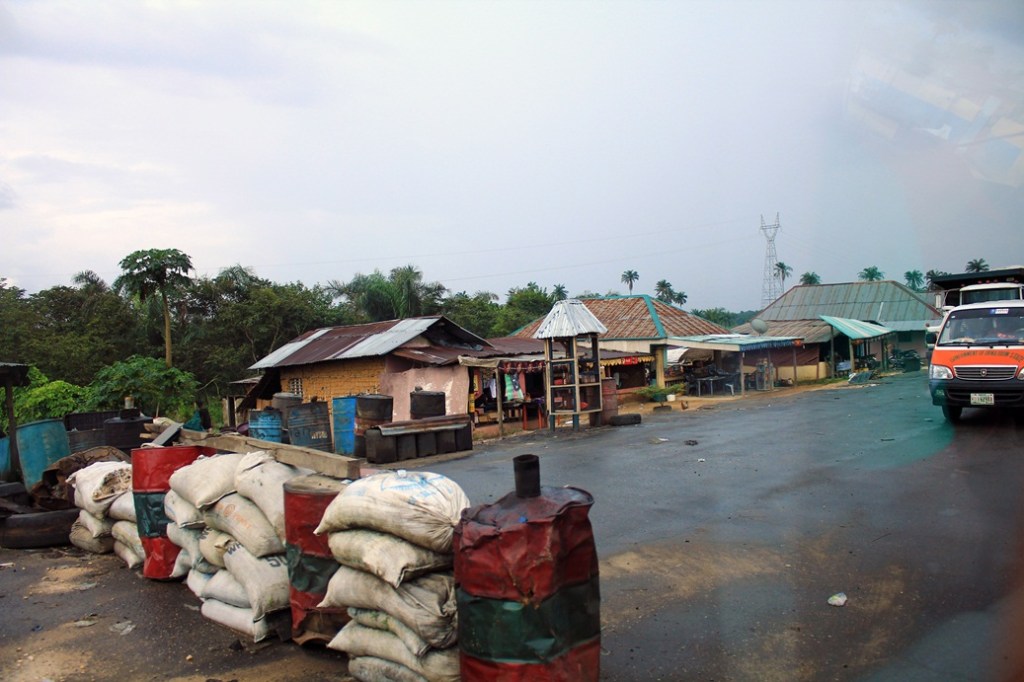
On 20 August 2019, Nigeria partially closed its land borders with Benin, Togo, Niger, Cameroon and Chad – citing the irate level of smuggling of goods into the country, especially staple food commodities like rice, cooking (vegetable) oil, poultry, tomato, flour and pasta. The closure of Nigeria’s land borders has now been fully consolidated – with further restrictions on import and export of goods through land borders.

Numbers
Since the border closure announcement and its immediate implementation in August, inflation has been on the rise.
The latest consumer price index (CPI) report released by the National Bureau of Statistics (NBS) in November 2019 proved that the year-on-year food inflation rate increased from 13.2% in August 2019 to 13.51% in September 2019 and then from 13.51% in September 2019 to 14.09% in October 2019. This was a 1.33% month-on-month increase – with rice, poultry products, frozen fish, cooking oil/fats and bread/cereals recording the highest increase in cost prices nationally. A huge contrast with regards to decelerating food inflation rates usually recorded during a harvest season.
With the food sub index of the CPI recording an 18-month high in October 2019, it unsurprisingly contributed to the rise in CPI from 11.24% in September 2019 to 11.61% in October 2019.

Context
Staple food commodities like rice, vegetable (cooking) oil, frozen fish, poultry products and packed beef are among the highest hit on the national spectrum in terms of the inflation in food prices since the enforcement of Nigeria’s land border policy.
Rice as one of the main national staple food commodity unsurprisingly has claimed its place as a topic for constant national debate. With context to its massive demand, inability of domestic supply to meet demand, cultural reverence and taste preference, it is inevitable to discuss the land border closure without talking about rice.
The United States Department of Agriculture (USDA) estimates that local demand for rice in Nigeria alone is at 7.3 million metric tonnes. Currently, local production stands at 4.8 million metric tonnes yearly. This suggests that the inability of domestic supply to meet local food demand will cause an inflation of food prices when and if food imports are proscribed.
With Benin and Togo posturing themselves as entrepôt states to Nigeria - where Nigeria’s manufacturing and agro production distortions are actively exploited, Nigeria’s consumption habits over the last three decades has been shaped by its over-dependence on imports from the re-exports of these two neighboring entrepôt states (in particular) into the country.
Given the significance of food import via the entrepôt states for meeting the observed supply gap, abrupt closure of the land border cut that supply channel, further entrenching the observed supply gap. This is where the excess demand is now driving up prices.
For a country with the highest number of extremely poor people in the world, any significant spike in food inflation can cause devastating effects to its already poor population, making social upward mobility more difficult. Hence, policies that further reduce purchasing power predispose the poor to higher vulnerability.
The core question on the national discourse table is what exactly this land border closure aims to achieve – government claims the policy will help curb smuggling of goods through its land borders thereby bolstering domestic food production and national productivity levels in all sectors.
This goal of the government in particular, indirectly implies the ineffectiveness of its customs and immigration service especially with the inability of the country to protect its borders and effectively enforce import restrictions on certain goods. It is not likely that this border policy will achieve its end-goal in the short-term or in the long-term as even with the blanket ban on imports through its land borders, bolstering domestic food production and raising national productivity levels almost immediately will be extremely difficult to attain due to the structural problems abound in the country.

Getting it right
To achieve this set out goal of curbing smuggling and bolstering domestic capacity to attain national productivity at all levels, there should be a multi-pronged approach from government: to improve the capacities of its customs and immigration services, embark on land reforms, improve access to micro and macro-credit for farmers and entrepreneurs, enhance accessibility to affordable and reliable electricity as well as incentivize private sector investments. This is the first step to getting things right – by ensuring government policies improve lives.

Conclusion
With Nigerians already feeling the negative consequences of the land border closure – rising food inflation which in turn is reducing their relative purchasing power, it is important for government to rethink its border policy as it doesn’t sufficiently address the causal factors for irate smuggling and dwindling national productivity in the country.


Read More

Nigeria Economic Update (Issue 50)

The total value of Nigeria’s merchandise trade grew in 2019Q3 by 6.8% to ₦9,187 billion, when compared to 2019Q2. The growth translated to a 1.33% rise relative to 2018Q3. Exports grew quarter-on-quarter by 15% to ₦5,288.5 billion, contrastingly imports decreased by 2.70% to ₦3,899.1 billion3. The imports decline was driven by a fall in the value of imported agricultural products (-4.01%), raw material imports ( -4.64%), and solid material import (-31.73%) while the export growth was largely driven by a rise in manufactured goods (839.44%). The increase in balance of trade surplus could be linked to the government’s policies: Nigeria-Benin border closure; prohibition of imports and ineligibility for foreign exchange at CBN’s official window; and enforcing the patronage of Made in Nigeria products. This trade surplus implies that there is surplus foreign exchange which could improve the value of the Naira in the global markets and there is a higher demand for local goods which should increase domestic employment. However, improvements in the competitiveness of export sectors, through improving infrastructure, curbing multiple taxation, and cutting down on bureaucratic bottlenecks, will lead to a less artificial and more sustainable increase in the balance of trade surplus.

Read More Download PDF