



AI & Gender – Bridging the gap

The rapid growth of AI is swiftly changing the world of work and business. Embedded in this growth is its potential to create new opportunities for gender equality. However, if not properly engaged or utilized, AI also has the capacity to reinforce gender bias, stereotypes, and discrimination. AI is gaining a lot of attention through advancements in machine learning and the increasing use of algorithms for pattern recognition. It is used across various fields and sectors to shape our economic, political, cultural, and social interactions; used in areas such as approval of bank loans, job recruitment, medical diagnostics, etc.

World leaders and governments are showing their commitment to the growth of AI by investing heavily in it. The US government’s federal spending on AI rose to almost $1billion in 2020 - which is about a 50% increase from its spendings in 2018 and the Canadian government also invested about $125million in its AI strategy in 2017. The private sector on the other hand has a leading position in investment in AI. Global total AI investment by the private sector was over $50billion in 2021 with Nvidia Corp and Alphabet Inc (Google) in the forefront, owning a large portion of about 50% of the total investment. However, with the issues of accountability and privacy violation prevalent in the present digital platform operation, leaving the powerful tool of AI unchecked can foster some of social issues in the digital space including gender discrimination. Therefore, in order to truly advance gender equality and women’s empowerment, gender considerations and issues alongside regulatory policies need to be mainstreamed in AI.

Gender Bias and AI

The gender bias found in AI takes up two forms. Bias in terms of the exclusion of women from the AI sector and Bias found in the building of algorithms. Gender equality in the workplace has been a critical issue for decades. About 80% of the male gender make up the workforce of the AI industry with only about 18% female machine learning researchers. It should be of great concern that women make up only a small percentage of the technological workforce; an industry that is seen as a force for societal transformation.

The first steps in building algorithms are the selections of training datasets. AI-generated patterns, predictions and recommended actions are reflections of the accuracy, universality and reliability of the data sets used, as well as the inherent assumptions and biases of the developers of the algorithms employed. Although one can say that AI is as good as the people behind it, it is important to note that one of the potentials of AI lies in its capacity to generate new solutions within the limits of inputs received. This is a fundamental aspect that needs to be kept in mind while training and implementing AI solutions for better gender equality.  Preventing gender biases in software applications, therefore, calls for better corporate governance that includes diversity in hiring and retention practices and enabling a work culture where gender equality principles are explicit and prioritise accountability.

Diverse teams made up of both men and women are not just better at recognizing skewed data, but they're also more likely to spot issues that could have or result in negative societal outcomes. Thus, emphasising the need for higher participation of women and gender experts in the process of principle formulations at the foundation level, and an improvement in the representation of women in technical roles and in the boardrooms of tech companies. Talent acquisition, as well as women empowerment, will therefore be critical in bridging the gender gap in AI and helping women gain their ground in the industry.

The way forward in bridging the gap

Considering the two forms of gender bias mentioned above, the following are highlights of key issues and proposed recommendations that need to be addressed in order to bridge the gender gap in the AI industry.

  • In the building of algorithms, an inclusive unbiased dataset needs be used as AI learn from historical patterns by predicting the future based on the past. Therefore, using historical records to train AI without being cautious about these biases is like repeating history, but this time with a more powerful tool.
  • Women need to be given opportunities to play an active role in shaping the next generation of technologies, so diversity is considered, and stereotypes are not reproduced.
  • Capacity building and empowerment of women through education at the grass-root level to help them break into the AI sector. Creating awareness of the AI industry for girls in schools to spark their interest and also providing support for women making career change to easily transition into the sector.
  • Creation of a robust and gender-inclusive AI guidelines, principles, and codes of ethics within the technology industry to help regulate activities in the sector.
Read More

Developing an effective data governance framework to deliver African digital potentials

Rapid digitalization has the potential to enhance structural transformation among African countries as well as galvanize progress on regional developments like the recent African Continental Free Trade Area. However, these benefits are not guaranteed given the multipronged threats in the digital space that can limit trust and curtail the adoption of such innovations. Indeed, the platform-based business model that dominates the digital economy raises fundamental issues about data protection and citizens’ privacy. Likewise, the monopoly market structure that characterizes the digital platforms implies a winner-takes-all paradigm, leaving less for developing economies. Rising cybercrime, ransomware, and digital identity theft pose significant threats: African economies lost over $3.5 billion through cyberattacks in 2017 alone. The more worrisome threat emanates from the rise in the number of African states with spyware, surveillance, censorship, and internet shutdowns. This trend is affecting trust in the digital space.

Read more

Read More

Africa: Key issues to track in 2022


Africa enters 2022 with a long and urgent to-do list. In this blog, Adedeji Adeniran joins other experts to outline key political, economic, security and health issues the continent must contend with as it maps its COVID-19 recovery and post-pandemic reality.

TRADE

Africa remains underrepresented in global trade, accounting for 2.19% of global exports and 2.85% of global imports in 2020. The African Continental Free Trade Area (AfCFTA) can reverse this trend if it is effectively implemented. Launched in January 2021, the agreement is a crucial step towards boosting regional trade and economic development, but full trading activity is yet to commence due to ongoing negotiations on various protocols.

Concluding negotiations on the agreement on rules of origin (the “legal provisions used to determine the nationality of a product in the context of international trade”) and protocols on trade in e-commence and services is a priority. While these are unavoidably complex, the strain on economic growth due to COVID-19 necessitates the acceleration of the AfCFTA.

The newly launched Pan-African Payment and Settlement System (PAPSS) holds potential: the platform, developed by Afreximbank and the AfCFTA Secretariat, is expected to bolster intra-African trade by facilitating simpler and secure cross-border payments and reducing payment transaction costs by $5 billion annually. The African Trade Gateway, AfCFTA Adjustment Facility and Trade Finance Facility are also expected to take off, making 2022 a promising year for the effective operation and success of regional economic initiatives. However, it will take much longer for the continent to fully recover from the economic shocks of the pandemic.

Read More

Read More

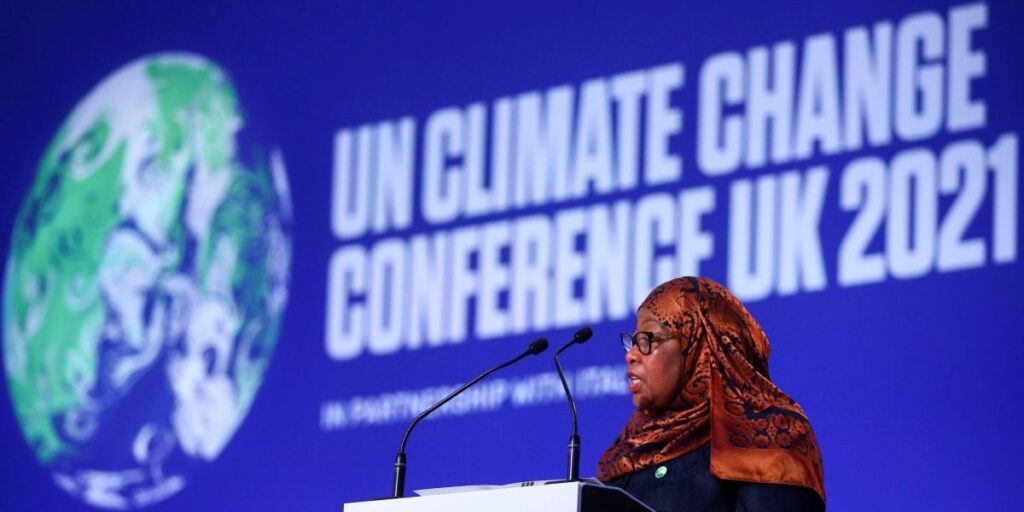
COP26: Why reducing carbon emissions is not enough

The efforts by world leaders – or lack thereof – has left us with only a 60% chance of limiting global temperature rise to 1.5ºC by 2050. A chance that the African countries and Small Island Developing States cannot afford to take. Their unfavourable positioning in the climate crisis will cause a continuation of escalating sovereign debt and climate-induced loss and damage, and as a consequence vulnerable communities will pay the highest price.

The goal of COP26 was clear: the summit was meant to achieve a deal to provide a fighting chance to avert the worst impacts of climate change. While, initially stronger commitments were tabled, it was significantly watered down to reflect contentious wording on the fossil fuel sector and weak agreements on financial support to poor and vulnerable nations. The lack of adequate action has left the majority of people dissatisfied.

Global climate action since the Paris Agreement in 2015 has been disappointing. As the UN Secretary General, António Guterres, noted in his opening speech at the COP26, the last published report on Nationally Determined Contributions (commitments by each country to reduce carbon emissions, NDCs) shows that current commitments by the parties still condemned the world to a calamitous 2.7 ºC increase.

COP26 delivered new climate change mitigation commitments (such as the Glasgow Climate Pact, Pledge to End Deforestation by 2030, The Global Methane Pledge, and the Pledge to Phase out Coal) and financing pledges ($130 Trillion Global Finance Pledge, $10.5 Billion Fund for Emerging Economies, and $1.7 Billion to Indigenous Peoples). Yet, the outcomes have been grounded with the same narrative that has failed to yield any tangible results to date: a narrative that is rooted in economic imperatives and not equality.

Read more

Read More

An Update on the Nigerian Electrification Project: Electrifying Nigeria’s most underserved


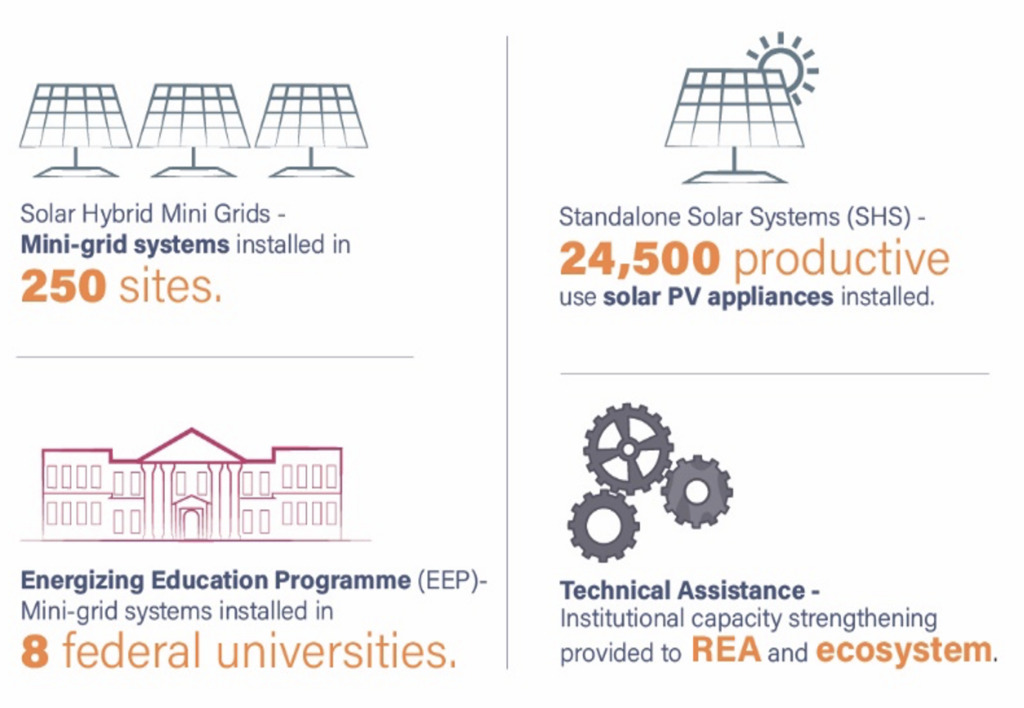
The Nigerian Electrification Project (NEP) is a federal government scheme designed in 2018 with the World Bank, the African Development Bank (AfDB), and other partners to provide energy access to under- and unserved communities in Nigeria using renewable sources. It is a private sector-driven nationwide initiative implemented by the country’s Rural Electrification Agency (REA). The Project promotes electricity access for households, micro, small, and medium enterprises (MSMEs), and public education institutions. It specifically aims to provide cost-effective power to 250,000 MSMEs and 1 million households through off-grid and mini-grid systems by 2023 via four main components:1

  1. Solar Hybrid Mini-grids – Mini-grid systems installed in 250 sites.
  2. Standalone Solar Systems (SHS) – 24,500 productive use solar PV appliances installed.
  3. Energizing Education Programme (EEP) – Mini-grids installed in 8 federal universities.
  4. Technical Assistance – Institutional capacity strengthening provided to REA and private organizations in the ecosystem by international partners.2

Read more- Energy for Growth Hub

Read More