Featured

The 2020 National Budget: right cycle is great, but implementation is better

The reasons for underperformance of budgets are beyond wrong cycle or under-collection of oil revenue. But rather the biggest issues lie in over-ambitious projections, under-performing non-oil revenue and unspent funds by MDAs

Budget cycle in Nigeria is expected to run from January and December. In practise however, budgets are nearly never passed until late into the second quarter of the year. The irregularities in cycle has affected budget implementation and credibility. It is therefore reassuring that efforts are being make to get the budget cycle right with the 2020 national budget. Already, the appropriation bill presentation is the earliest in the last 10years. The parliament has also rolled out plans to ensure speedy passage of the appropriation bill by November and possible assent in December.

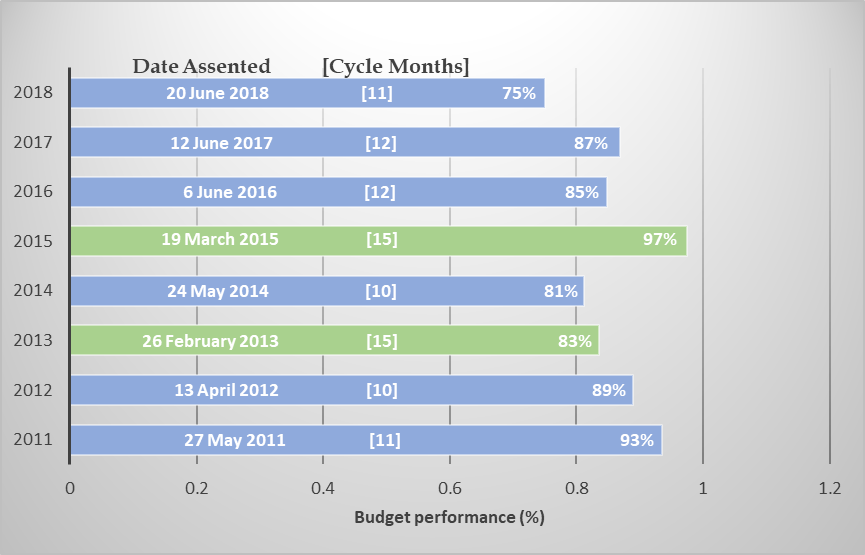
Beyond cycle normalisation, budget implementation remains a key challenge. Particularly, experience over the years reveal that the nation’s budget has consistently underperformed even when the budgets are passed into law early. The budgets have been described as ’incredible’ with the government’s inability to consistently and accurately meet both its revenue and expenditure targets. Looking at the budgets for the past eight years between 2011 and 2018 reveal that those for 2013 and 2015 were signed and passed into law in the first quarter of these years. In addition, the budget cycle for both years lasted for 15 months, which is more than the number of legislated months for a normal cycle. However, the budget implementation performance for these years are not quite different from other years when the budgets were passed much later (see Figure 1).

Figure 1:        Budget performance, cycle and date assented

Note: cycle indicates the number of months between the passage of current and succeeding years’ budget.

Source: National budget implementation reports 2011 – 2018

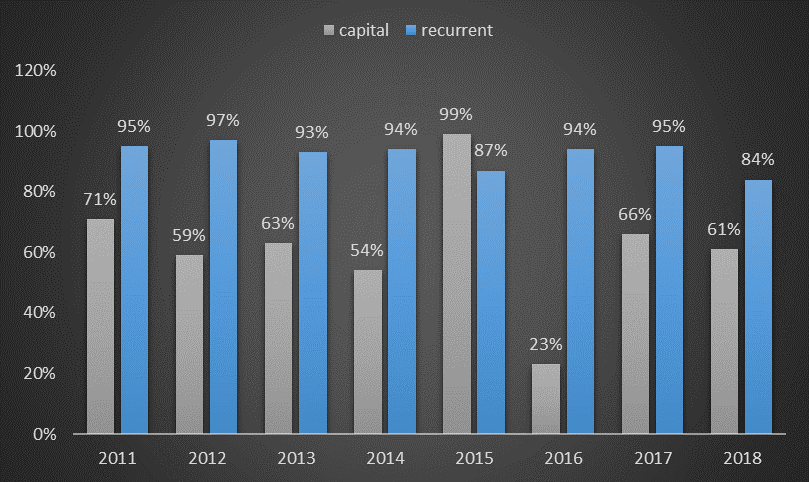
The biggest underperformance issues are on the capital side of the budget with most of the underspending related to capital expenditure. The average actual spending performance of recurrent expenditures against budgeted values between 2011 and 2018 stood at about 92.3%, while the capital is just around 62%. The degree of implementation of Nigeria’s capital spending clearly depict the inability to deliver on public services and achieve developmental objectives. Hence, meeting the nation’s commitments of achieving the Sustainable Development Goals (SDGs) could be an illusion since SDG action begins with credible budgets.

Figure 2:        Capital and recurrent spending performance

Source: National budget implementation reports 2011 – 2018

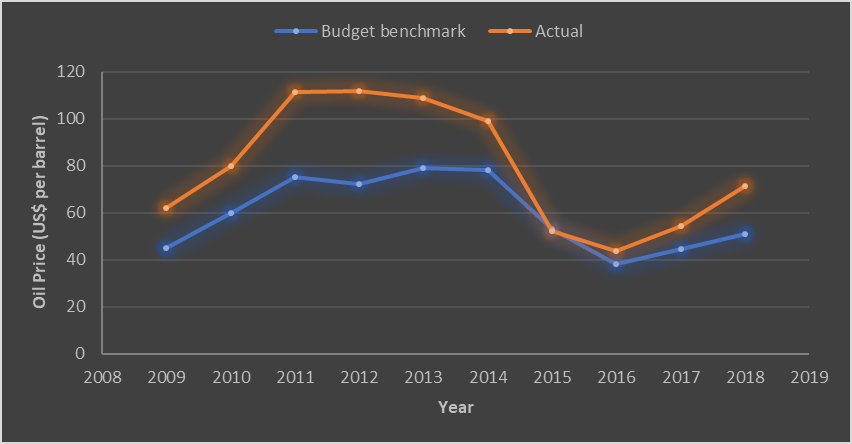
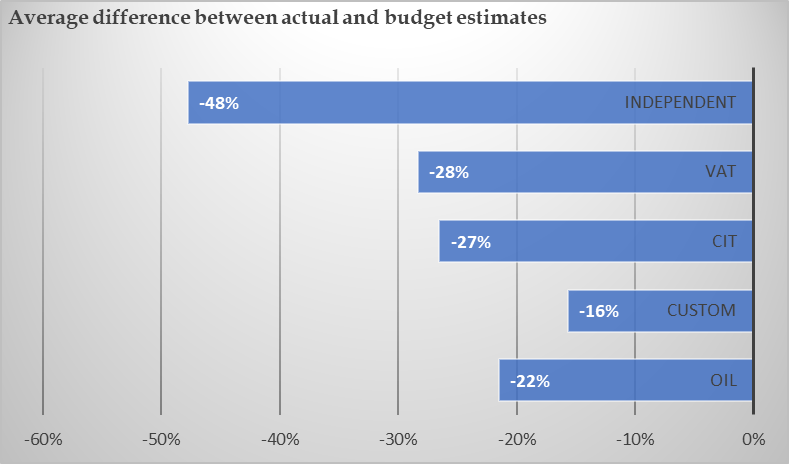
Over the years, the reason mainly explained for these underperformances is under-collection of oil revenue as a result of fluctuations in oil price or decline in oil production, and sometimes both. However, revenue performance between 2011 and 2018 reveals that oil revenue collections was about 78% over these years, with average difference of about 22% between the actual and budget projection. Further scrutiny reveals that the under collections of oil revenue were mainly as a result of poor production projections and not price variations. The Oil Price-Based Fiscal Rule (OPFR) which has been in operation since 2004 has ensured that volatilities in international crude oil price are curtailed by setting an oil price benchmark that is below the projected international rate (see Figure 3). Therefore, the problems associated with budget underperformance are explained by other factors.

Figure 3:        Average annual oil price (actual versus budget estimate benchmark)

Source: National budget office and United States  Energy Information Administration

Underperformances of estimated revenue were mainly recorded in the non-oil revenue sources which include collections for Value Added Tax (VAT), Company Income Tax (CIT) and revenue from independent sources (Figure 4). The reasons for the underperformances of non-oil revenues could be that the revenue projections were high and unrealistic or there are leakages and non-remittances by revenue collectors. Others include are weak administrative and monitoring mechanisms, defective and bureaucratic procurement systems that often lead to unnecessary delay in capital spending, and weak legislative oversight among others.

Figure 4: Revenue collection underperformance (2011 – 2018)

Source: National budget implementation reports 2011 – 2018

Improving budget performance to achieve optimum implementation and thus achieve budget credibility requires a combination of different tasks and priorities. Some of these have been well documented in extant articles and literature. However, we attempt to reiterate some of these proposed solutions. First, the projections of revenue and expenditure should be targeted towards realisable estimates to ensure optimum performance. For example, the capital spending estimate for 2015 was reduced by about 50% from 2016 estimates. The capital expenditure performance recorded for that year stood at the record highest of 99%.

In addition, the introduction of a clear, concise and publicly accessible ex-ante and ex-post budget reports in addition to improved institutional coordination throughout the budgetary cycle, from conception to implementation, could enhance the credibility of the budget. Furthermore, synchronisation of published details of revenue and expenditure reports that capture actual against the budget that is consistent with international standards would further ensure performance monitoring, effective implementation and comparative analysis.

Finally, prevalence of unspent funds by Ministries, Agencies and Departments (MDAs) has further contributed to the implementation gaps in capital spending. Unspent and returned capital vote by MDAs have consequential implications on fiscal governance and performance of the budget, especially capital spending. Hence, the incidences of unspent budgets should be abated. Failure to implement budgets by MDAs, when funds are allocated and available, could be viewed as fraud and abdication of responsibility, and such should be treated accordingly.

Read More

Efficiency of Food Reserves in Enhancing Food Security in Developing Countries: The Nigerian Experience

As a policy objective, the attainment of food security in Nigeria began facing challenges prior to independence when oil exportation began in 1958. But the challenges became pronounced and persistent after the commencement of large-scale oil exports in the early 1970s, when the country nearly abandoned agriculture in pursuit of newfound oil wealth. Self-sufficiency in food production and agricultural export earnings, aided by widespread cultivation of food crops and regional specialisation in cash crops – the cocoa mountains in the west, the oil palm and kernel heaps in the east, and groundnut pyramids in the north – began to diminish and disappear respectively. Within a few years after independence in 1960, the agricultural sector transitioned from a net foreign exchange earner to net foreign exchange drain.

Read More Download PDF

The Subnational Political Resource Curse: Allocations, Internally Generated Revenue and Spending Priorities in Nigeria

Oil wealth comes with a caveat-depend on it excessively and be buffeted by oil market volatility. The 2014 oil price crash revealed that Nigeria did not heed this warning. The country’s expenditure forecasts are based on an assumed oil price so that the government was caught flatfooted when the crash began around June. Under duress, public officials eventually revealed how financially irresponsible governance was during the years of plenty: after a tussle with the President, State Governors shared oil profits stowed in a “rainy day” account called the Excess Crude Account (ECA) amongst themselves; they allegedly also hindered the growth of the country’s Sovereign Wealth Fund. It does not seem like those hard-won funds were spent in the public’s interest-reports detailing several state governments’ inability to fund public investments and pay public servants’ salaries have continued to arise into 2018.

Read More Download PDF

Building political will for policy change: the role of CSOs in Nigeria

The presence/extent of political will is a key determinant of the success or failure of policies. It is captured by the capability of political actors to achieve the implementation of policies which they prescribed or supported. Political will can be verbally expressed, observed through institutional changes, or demonstrated by budgetary commitments by state actors (Shiffman, 2007; Fox, Goldberg, Gore & Barnighausen, 2011).+ Importantly, the application of political will in achieving policy change usually involves other stakeholders, beyond state actors. Thus, the success in policymaking really depends on a complex interplay of varying degrees of interests, motivations, and beliefs; competencies and skills; coordination abilities and strategic decision-making; among many others.

In societies with huge governance and institutional deficits, political will can play an active role in navigating the challenges to achieve the desirable policy goal/change. However, political will has been generally weak in most societies in Africa, where several constraining factors limit the ability to genuinely move for policy change. In the absence of strong political will, the influence of non-state actors in providing policy support for social and political change becomes critical. In particular, Civil Society Organisations (CSOs) and Trade Associations have been the driving force behind some of the policy decisions in Africa. These non-state actors are generally abreast of the issues the general public faces, and therefore they can mobilise action around issues that protect the interest of citizens.

So while the state bears the ultimate responsibility for effecting policy change, non-state actors may trigger political will, or support an existing one. The likelihood of political will effecting policy change(s) can well depend on the role played by these non-state actors. Following some tenets of Brinkerhoff and Kulibaba’s (1999) conceptual framework for political will for anti-corruption reforms, this piece highlights two indicators of political will: the locus of the initiative and the mobilisation of stakeholders. + It throws light on two separate instances where the influence of non-state actors can drive the build-up of political will for policy change – in tobacco taxes, and trade policies in Nigeria.

Tax increase on tobacco products

Tobacco use has been long proven to be hazardous to the health of both primary and secondary consumers. Governments across the world have made several efforts to curb the use of tobacco through measures such as taxation, publicising the dangers of tobacco smoking, banning use in public spaces, among others. While measures such as these are typically government-driven, non-state actors can play notable roles in shaping their design, implementation, and evaluation. Usually, the loci of initiative of tobacco control measures are government ministries, particularly the Health and Finance ones (see Danishevski et al., 2008; Tam and Walbeek, 2014; and Hoe et al., 2016).+ However, in Nigeria, the recent tobacco control legislation was mainly driven by CSOs, particularly the Nigerian Tobacco Control Alliance (NTCA) – the umbrella organisation dedicated to tobacco control in Nigeria.

NTCA consists of domestic civil society groups, research organisations, Community-Based Organisations (CBOs), Faith-Based Organisations (FBOs), international organisations and professionals, and their activities are mostly donor funded – by Bloomberg Philanthropies and Campaign for Tobacco Free Kids (CTFK). The Alliance mobilised diverse stakeholders and was able to effect the tobacco policy change by harnessing the respective competencies of the members – mostly through evidence-based research, advocacy, and awareness creation. This section provides chronological narrative of the key activities/events that led to the tobacco tax policy change.

As the targeted policy change was to increase excise taxes, evidence-based research became critical in the tobacco control campaign of the Alliance. A report by the Nigerian Tobacco Research Group (NTRG) revealed the tobacco industry was targeting children with promotions, advertisements and the sale of tobacco products around schools as part of their marketing strategy. With such evidence, and the increasing momentum towards tobacco control across the globe, the Alliance became more motivated to explore ways to discourage both tobacco consumption and initiation of use. This coincided with a period when the Nigerian government, particularly the Ministry of Finance, was exploring alternative sources of non-oil revenue. Taxation, which has been proven to be the most effective control measure, became the focus. The Alliance then reached out to the Centre for the Study of the Economies of Africa (CSEA), which had conducted a study on tobacco tax simulations, to join the group in order to provide the much-needed evidence to inform their advocacy efforts.

The Alliance was notably vibrant in their advocacy for the tax increment, and were able to achieve buy-ins from the relevant stakeholders and the public. Reports, articles, and press releases highlighting the growing dominance of the tobacco industry in Nigeria, as well as their marketing strategies were released to the public. In addition, the Alliance educated the public in general and young people in particular on the dangers associated with tobacco use and second-hand smoking. It was revealed that tobacco use kills more than 7 million people globally each year, and developing countries like Nigeria will contribute 80 percent of these deaths by 2030 (World Bank, 2019).+ Furthermore, the potential impacts of substantial increments in tobacco tax on public health and the government revenue base were made known to the wider public.

As the momentum for reduced tobacco consumption and higher government revenue was building, a workshop of the Technical Working Group on Tobacco Control became the critical platform for the push for an increase in excise taxes on tobacco products. The workshop gathered policymakers and tobacco taxation experts from relevant government ministries and agencies including the Ministry of Health, Ministry of Finance, Ministry of Budget and Planning, and the Federal Inland Revenue Service; as well as from ECOWAS, CSOs, research institutes, and the media. The group noted that there were huge shortfalls in the tax rate at the time when compared to the WHO-recommended excise tax burden of 70 percent, and stressed the need for stronger tobacco control laws. They deliberated on the appropriate excise tax that would reduce tobacco consumption on one hand, and increase government revenue on the other (Win-Win), using evidence from tobacco tax simulations presented by research organisations.

Four months after the workshop, the Nigerian government announced a new tax policy for tobacco products and alcohol beverages. While the new policy maintains the current 20 percent ad valorem-based excise duty rate on tobacco products, it introduces an additional N58 (US$ 0.19) specific tax on a pack of cigarettes which will be implemented over three years (N20 in 2018; N20 in 2019; and N18 in 2020). Although the increment puts the excise tax burden at 16.4 percent, which is still way below the WHO-recommended excise tax burden of 70 percent, it signifies a major milestone in the campaign against tobacco use – a notable success.

Opting out of the EU-West Africa EPA

In April 2014, the Nigerian government opted out of the EU-West Africa Economic Partnership Agreement (EPA) which comprises of the 15 ECOWAS states and Mauritania. The EU-West Africa EPA aims to facilitate free trade, greater regional integration, and economic development while, protecting infant industries in West Africa. The economic anchor of the Agreement is the immediate removal of 100 percent of the custom duties for West African goods entering into European Union member states, and the gradual removal of up to 75 percent of tariff lines for products from EU into West Africa. It is noteworthy to mention that most West African countries including Nigeria participated in the trade negotiations for about ten years, but Nigeria opted out after the negotiations had been finalised.

The Nigerian government opted out of signing the EPA for the principal reason that the CSOs, particularly trade unions, were not in support of the EPA. At the 2016 Plenary of the European Union Parliament in Strasbourg, France, President Buhari stated that “…the Manufacturers Association of Nigeria (MAN) and Associated Trade Unions, raised concerns over the negative impact of the EPAs on Nigeria’s industrialisation programme”. + The concerns centred around the potential negative impact of the EPA on the country’s revenue base and balance of payment position, noting that the influx of goods into the Nigerian market at a significantly reduced tariff would lead to losses in government revenue and increased imports. The Manufacturers Association of Nigeria (MAN) which represents about 2,000 private and public companies, as well as the National Association of Nigerian Traders (NANTS), built the momentum against the Agreement by effectively mobilising stakeholders to provide evidence-based analyses, lobby key interest parties, and organise various media campaigns.

The core of the analyses is that on one hand, Nigeria will not benefit from the EPA, as the majority (95 percent) of its exports to the EU is oil and gas which is not subject to import duty; and that local manufacturers have limited capacity to produce and export industrial goods to the EU. On the other hand, EU countries will import cheaper finished products thereby rendering the existing manufacturing industries uncompetitive, and hindering the country’s ongoing industrialisation programme. As a result, Nigeria will continue to be an importer of processed goods, an exporter of unprocessed raw materials, and will suffer revenue losses. The coalition of organised private sector groups led by MAN, estimated that the revenue losses due to the tariff removal will amount to US$1.3 trillion.

In an attempt to legitimise their stance, MAN enlisted the support of prominent national and international figures and provided them the platform to engage with other stakeholders. At the 2015 general meeting of MAN, Thabo Mbeki, South Africa’s former president, highlighted that signing the EPA had negative implications on the economies of African countries. Similarly, at the 2017 general meeting of MAN, Benjamin Mkapa, Tanzania’s former president stated that the Agreement is counterproductive. Nigeria’s former Minister of State for Finance, Ambassador Bashir Yuguda, in a discussion with MAN advised the government to reconsider its position towards the EPA.

The position of Nigeria’s organised private sector as well as the views of the prominent individuals were repeatedly published in major newspapers including The Guardian, Punch, Leadership and Thisday.  Particularly, NANTS ran a periodic publication on EPA-related issues in its Regional Trade Advocacy Series in one of Nigeria’s major newspapers – the Vanguard. Interviews with CSO groups were also aired on leading TV channels and radio stations such as the Nigerian Television Authority (NTA), African Independent Television (AIT), and Cool FM.

These aforementioned activities of MAN and NANTS resulted in a general disapproval of the EPA among industrialists and the working class. With the use of evidence-based studies, support from prominent individuals, and widespread dissemination activities, the civil society provided a clear and extensive review of the implications of signing the EPA, and narrowed the government’s options towards rejecting the Agreement.

Tying the two instances together

The two instances presents some notable parallels that can explain how political will for policy change can be built, as well as the critical role of CSOs. In both cases, the composition of the Alliance or coalition was a key determinant of the successful outcome. The size and diversity of the Alliance improved the collective capacity of the group in making their claims, exerting influence, and achieving their overall aim. The inclusion of a wide array of actors such as CSOs, research organisations, and international partners in the NTCA brought together champions that could spearhead the group’s agenda; experts to provide evidence-based analyses, and donors to fund the group’s activities. Similarly, the large size of MAN (over 2,000 members) provided clout for the favourable results.

Despite the fact that both groups possessed a strong drive towards a specific policy stance, their motives seemed to have differed considerably. While the position of NTCA seemed to be driven by genuine disapproval for incessant tobacco use and the negative health implications, the agitation from MAN and NANTS was largely driven by their fear of competition from imported goods if the EPA was signed. Thus the NTCA were mostly anti-tobacco advocates aiming for a tobacco-free society, while MAN and NANTS were essentially trying to protect themselves from potentially harmful competition.

In both cases, the use of credible evidence that was able to demonstrate the magnitude of improvement in public health in the case of tobacco taxation, and the public revenue losses in the case of the EPA, played a critical role as a tool to drive the advocacy efforts. CSEA, a partner of the NTCA, conducted a study on tobacco tax simulations which showed that increments in line with the WHO-recommended tobacco tax rate would result in substantial improvements in public health and government revenue. Likewise, research by the MAN-led coalition concluded that the revenue losses to the government as a result of signing the EPA would be significant. However, the robustness of both evidence differs slightly. While the tobacco tax simulation model was detailed and robust, and has been applied in several countries, the limited information on how MAN arrived at the size of revenue losses makes the quality of the evidence debatable.+

The advocacy and outreach mechanisms in both cases were similar. The choice of media channels was strategic, and dissemination activities were persistent. Leading newspapers, TV stations and radio channels were utilised on a regular basis to share pertinent information. The ability to use diverse media outlets to push their agenda and share the progress was instrumental in capturing the interest and the support of the public as well as highly-placed individuals. In addition, organising round table discussions were instrumental in keeping members of the alliance informed on recent events and future activities.

In sum, although there is no silver bullet in the approaches to building political will for policy change, these two instances have highlighted the importance of CSOs in building a strong and competent coalition, leveraging on evidence-based analyses, and undertaking rigorous dissemination activities in achieving successful outcomes.

  This article was first published for On Think Tanks

Read More

Is a debt crisis looming in Africa?

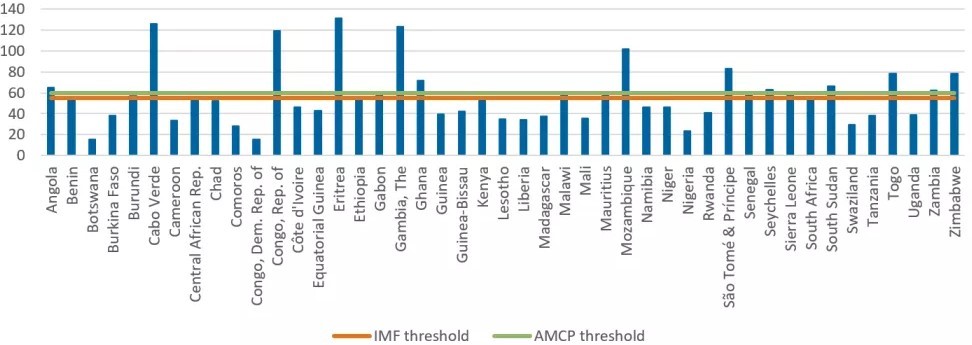
concerns about an impending debt crisis in Africa are rising alongside the region’s growing debt levels. As of 2017, 19 African countries have exceeded the 60 percent debt-to-GDP threshold set by the African Monetary Co-operation Program (AMCP) for developing economies, while 24 countries have surpassed the 55 percent debt-to-GDP ratio suggested by the International Monetary Fund. Surpassing this threshold means that these countries are highly vulnerable to economic changes and their governments have a reduced ability to provide support to the economy in the event of a recession.

While debt is a global issue, Africa’s past debt crises have been devastating, creating the need to cautiously monitor this recent debt buildup. There are parallels between the present rising debt in Africa  and the Heavily Indebted Poor Countries (HIPC) initiative period that proffer solutions for prevent another crisis.

Figure 1: Government debt as a percent of GDP for African countries, 2017


Source: IMF, 2018. Regional Economic Outlook

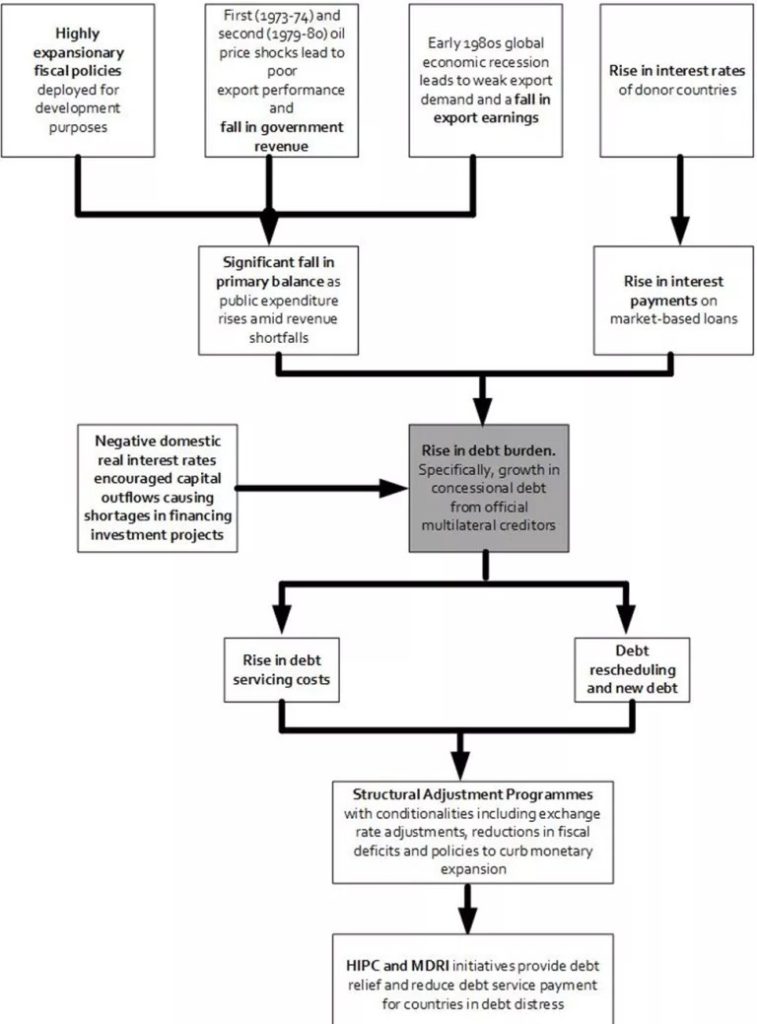
 The events that led to HIPC and the Multilateral Debt Relief Initiative (MDRI) started in the 1960s from a public spending spree by recently independent countries to stimulate their economies through rapid investment in industry and infrastructure projects (Figure 2). Commodity booms and heavy use of external debt supported this spending as policy leaders relied on future export earnings and economic growth to improve the capacity to service the debt. Notably, those countries did not reduce expenditures during negative commodity shocks and instead took on more loans.Three key factors drove the subsequent debt crisis—the 1980s global recession, the rise in interest rates in developed countries, and a decline in real net capital inflows, which was largely due to the real negative interest rate in many countries.

As a result, the external debt-to-gross national income (GNI) ratio for the continent rose from 49 percent in 1980 to 104 percent in 1987. The World Bank’s Structural Adjustment Program attempted to tackle the problems by reducing fiscal deficits through expenditure cuts, but these austerity measures had severe, adverse impacts on social spending (and thus on livelihoods), and resulted in large current account deficits, astronomical inflation, and depressed currencies. This situation led the World Bank and the IMF to establish the HIPC initiative in 1996 to provide debt relief and reduce debt service payments of up to 80 percent for eligible countries.

Figure 2. Description of events leading to Africa’s indebtedness in the 1970s and early 1980s

In addition, in 2005 the IMF initiated the MDRI, which provided full debt relief on eligible debt. Under HIPC and MDRI, 36 countries, including 30 African ones, reached the completion point (the phase at which total debt relief is received) resulting in debt relief of $99 billion by the end of 2017. Between 1999 and 2008 alone, HIPC and MDRI reduced the external debt-to-GNI ratio for the region from 119 percent to 45 percent.

IS AFRICA HEADING BACK TO THE HIPC ERA?

Not quite…but the present composition of debt is worrisome.

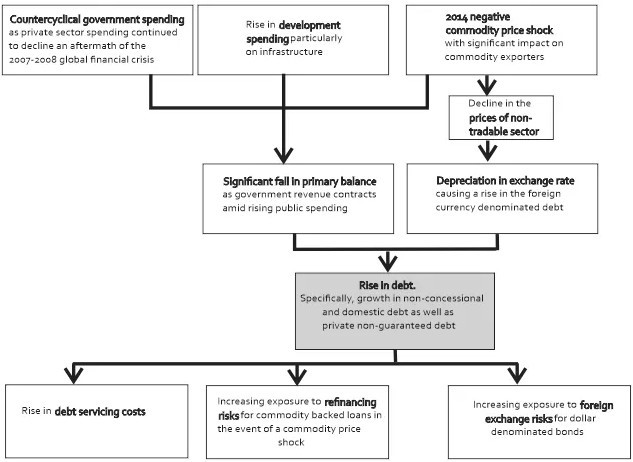
The drivers of the present rising debt situation are similar to, but not the same as, that of the HIPC era (see Figure 3). In the wake of the 2007-2008 global financial crisis, governments deployed countercyclical spending to compensate for depressed private sector spending.

Another key driver was the huge rise in public expenditure on infrastructure—an effort to close the huge infrastructure gap (Africa needs to spend $93 billion annually from 2009 to 2020 to close its infrastructure gap).Of greatest magnitude was the 2014 negative commodity price shock, which dramatically reduced government revenues.

Figure 3. Description of events leading to the present debt situation


The aforementioned factors led to a decline in primary balance  from 3.9 percent of GDP between 2006 and 2008 to -6.9 percent of GDP by 2015 with countries borrowing excessively to meet public expenditure. The commodity price shock caused a depreciation in the exchange rate for several countries. Following the depreciation, foreign currency- denominated debt increased significantly.

A distinctive feature of the ongoing rising debt problem is the composition of debt. Countries are tilting away from official multilateral creditors who come with stringent conditions and toward non-concessional debt with relatively higher interest rates and lower maturities. This trend raises concerns around debt sustainability given the possibility of higher refinancing risks—particularly for commodity-backed loans in the event of a commodity price shock—and foreign exchange risks.

Furthermore, private non-guaranteed debt has grown: Between 2006 and 2017, private sector external loans tripled from $35 billion to $110 billion. This growth could result in a balance of payment problems as the private sector competes with the public sector for foreign exchange. Also, it may increase the government’s exposure to risks associated with contingent liabilities in the event of a default.

Another noteworthy trend is that countries witnessing a deepening of their financial markets are increasingly borrowing from their domestic debt market. South Africa, Kenya, and Nigeria, among others, have been issuing long-term bonds for large capital projects such as roads and hospitals. While tapping into the domestic debt market provides a sound alternative and does not expose the country to foreign exchange risk, it has the potential to crowd out private sector borrowing, thus hampering investment and output growth.

WHAT CAN BE DONE?

The rising debt burden across the continent is clearly a concern for borrowers, lenders, and the broader international community. Nevertheless, it is important to note that the present debt level is far below that of the HIPC era: In 2017, public debt as a percent of GDP in sub-Saharan Africa was 45.9 percent relative to the 117 percent external debt-to- GNI ratio of 1995. Also noteworthy is that sovereign debt financing is inevitable given that African countries budgetary resources are insufficient to finance their vast development agenda. Thus, in ensuring that all stakeholders become more prudent, we recommend the following:

1.   Better debt management

 Despite the spike in sovereign borrowing, sub-Saharan Africa’s performance in debt management has consistently declined from 3.34 in 2014 to 3.08 in 2017 (on a rating scale from 1 to 6). For those without, authorities need to design and implement formal and legal frameworks for debt management that stipulate borrowing targets and preferences for borrowing sources. Countries can tap into the support programs provided by the IMF and the World Bank. Also, establishing systems and processes to ensure up-to-date debt recording and timely debt service payments is necessary for maintaining accountability,

transparency, and sustainable debt levels. With the characteristics of debt changing significantly (e.g., the rise of nontraditional lenders, growth in domestic debt, an increase in private nonguaranteed debt), debt management authorities must utilize more sophisticated means to better analyze the costs and risks of these changes. Overall, these sound debt management practices should be extended to the subnational level and state-owned enterprises to ensure more comprehensive management.

2.   The issuance of “debt-management” financial instruments

Local authorities should issue debt instruments that can better manage the debt level. For instance, the issuance of the sukuk bond— Islamic bonds that allow investors to generate returns by having a share in the ownership of the asset linked to the investment rather than earning interest from the bond—that is tied to capital projects in Nigeria curtail the improper use of debt. Also, they should consider a state-contingent debt instrument that links debt service to predefined macroeconomic variables, such as GDP growth and changes in commodity prices. Thus, shocks that negatively impact fiscal space, such as economic recession, will not increase the debt service burden of the issuing country.

3.   More responsible lending

A debt crisis poses risks to borrowers and lenders alike. For this reason, lenders should focus on making more responsible lending decisions following due process in authorizing loans and possibly stipulating limits. Presently, the codes of conduct that address irresponsible lending such as the G-20’s Operational Guidelines for Sustainable Financing (2017) and the OECD’s Recommendation on Sustainable Lending Practices and Officially Supported Exports Credits (2018) are only binding on traditional creditors. A first step should be the development of new codes or a revision of existing ones to adjust to nontraditional actors. In addition, these codes should be enshrined in law so that participating countries adhere to them. Better coordination, more engagement, and increased information-sharing between traditional and nontraditional lenders is also crucial.

4.   Streamlining procedures 

The World Bank and IMF impose numerous, stringent, and time-consuming conditions on developing countries in order to access development finance, many of which advocate for controversial reforms such as privatization and trade liberalization policies that are not in accordance with the will of the developing country. Streamlining the lending process to reduce the number and scope of conditions to respect national sovereignty and reduce the burden associated with accessing loans is of the utmost importance. The World Bank could also increase the lending program to middle-income countries that still face development challenges like inequality, unplanned urbanization, and a weak private sector. Better engagement with these countries will enable them to consolidate their development gains and make substantial economic and social progress.

This article was first published on Brookings Institute Website
Read More