Featured

CSEA Participates in the TTI Exchange 2018 (TTIX)

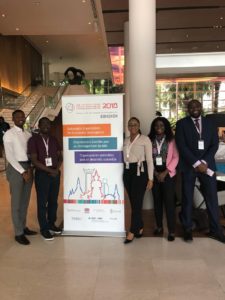
CSEA participated in the TTI Exchange 2018 (TTIX), held in Pullman Bangkok King Power Hotel, on 12 – 14 November 2018. The event focused on the theme Sustainable Organisations for Sustainable Development:  Into the Future – How Can Think Tanks Continue to Contribute to Building More Equitable and Prosperous Societies?.

For a decade, the Think Tank Initiative (TTI) has continued to provide organizational and capacity support for 43 policy research institutions in 20 developing countries. The TTIX also brought together representatives of thinktanks, policymakers, donors, and other research-to-policy actors for a final Exchange to mark the last year of the program.

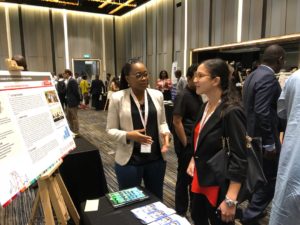
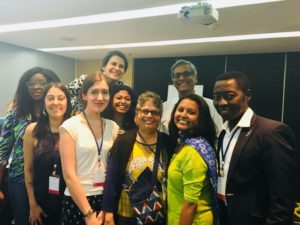
CSEA was represented by Executive Director, Dr. Chukwuka Onyekwena; Senior Research fellow, Dr. Adedeji Adeniran; Research Fellow, Precious Chukwuemelie Akanonu; Research Associate, Joseph Ishaku and Communications/Institutional Advncement Officer, Drusilla David. The team participated in various strategic sessions, with Dr. Onyekwena as a topic Convener in the session on Think tank strategies in policy windows. Precious Akanonu facilitated CSEA’s booth at the Think Tanks Making a Difference: A Market Place to showcase CSEA research, policy engagement, and outreach.


On Think Tanks –Think Tank Initiative (OTT-TTI) Young Leaders

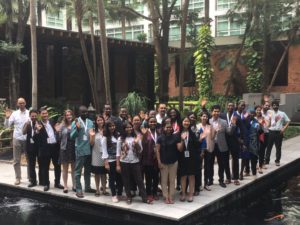
Joseph Ishaku and Drusilla David were among 24 Young Leaders who were selected for the first stage of the 2018 OTT-TTI Fellowship Programme. They joined other young leaders at the TTIX, to participate in the various sessions, which also provided opportunities for them to attend specific workshops and have mentorship opportunities. The OTT-TTI Fellowship is a partnership between TTI and On Think Tanks (OTT) to support the leadership capabilities among the new generation of think tankers, and to help them in becoming real agents of change.

Southern Voice Conference

CSEA also participated in the Southern Voice Conference which held subsequently, on November 15 and 16, 2018 in Bangkok. The meeting convened think tank experts from around the globe to discuss the network’s current and future agenda on policy issues related to sustainable development and the 2030 Agenda. CSEA team was represented by Dr. Chukwuka Onyekwena, Dr. Adedeji Adeniran and Drusilla David.

The issues of focus included cross-cutting themes for the implementation of the SDGs, relevant to all countries and policy areas for the topics: ensuring no one is left behind, dealing with synergies and trade-offs among different policy areas of the 2030 agenda, exploring the connections between global and national policies, and promoting effective development cooperation.

This conference also included a workshop among communication experts from the network to plan outreach and communication strategies for the flagship initiative “State of the SDGs“.

Read More

Educational Performance in Nigeria: Dimensions, Drivers and Implications for SDGs

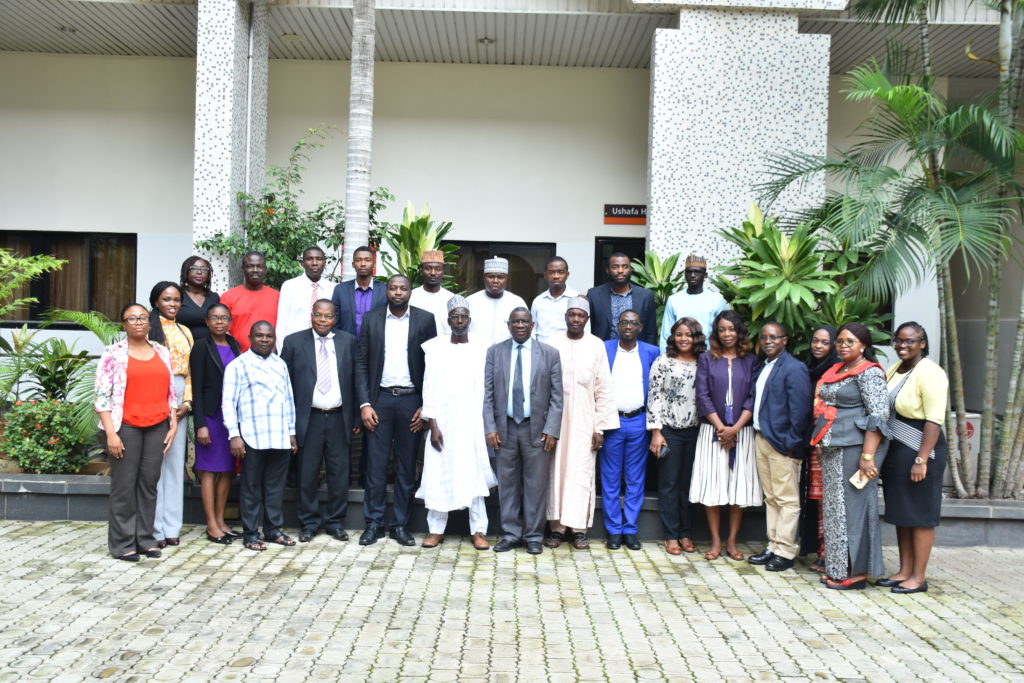
On Wednesday, August 28, 2018, the Centre for the Study of the Economies of Africa, CSEA, organized a round-table discussion within the framework of Southern Voice's study on the State of the SDGs (SVSS). The theme of the workshop was Educational Performance in Nigeria: Dimensions, Drivers and Implications for SDGs, and Demand for Education and Systems Change in Nigeria. The meeting was held at the Ushafa Hall of Rockview Royale Hotel, Abuja Nigeria.

The specific objectives of the meeting was to:

  • Identify the dimension of exclusion in quality education outcomes;
  • Examine the key drivers of exclusion in quality education outcomes;
  • Evaluate the state of key means on implementation in achieving quality education and to;
  • Provide policymakers with insight on excluded groups that require more attention in the educational sector.

CSEA's Executive Director, Dr. Chukwuka Onyekwena who welcomed participants to the meeting explained that the meeting was based on an on-going research project supported by SVSS. He introduced the participants to the central theme of the workshop and noted that the meeting would highlight more details on Nigeria's Education System.

Dr. Adedeji Adeniran, Senior Research Fellow, CSEA, gave the first presentation on 'Quality Education in Nigeria: Who are the excluded and why? Dr. Adedeji noted that Nigeria recorded an impressive performance under the Millennium Development Goals (MDGs). Under the MDGs, Nigeria successfully expanded access to education with a gross enrolment rate of over 80%. Gender gap significantly reduced across regions, wealth level and place of residence. In the South- East, South-South and South- West, females have become the advantaged group with enrolment surpassing that of the males. The Survival rate—which measures the percentage of a cohort of students enrolled in the first grade of a given level or cycle of education in a given school year who are expected to reach a given grade, regardless of repetition—also significantly increased under the MDGs.

However, while expansion of access of education has increased over the years, quality of education is declining. For instance, youth literacy rate stood at 56%, a continuation of the downward spiral from 71.2% in 1991 to 69% in 2003 to 66.4% in 2008 and 56% in 2017.

Preliminary Evidence on Declining Quality Education

Quality Education by Region: The North-Central have the lowest quality of education, followed by the North-East and the South-South. These regions are below the National Mean of 0.57 percent. The South-East have the highest access to quality education, with the South- West and North- West following closely behind.

Quality Education by Household Wealth and Region: Across the regions, the richest households have greater access to quality education being above the National Mean of 0.57 percent. Among the poorest households, the South- South and the South- West have the worst outcomes.

Dr. Adedeji also looked at the access to quality education by people in urban states and also across gender lines. [caption id="attachment_4603" align="alignnone" width="300"] Dr. Adedeji Adeniran[/caption]

Dr. Grace Onubedo, Senior Research Fellow, CSEA gave the second presentation on 'Understanding Synergies, Trade offs and Global Systemic Issues in Meeting SDG4 in Nigeria'.  The presentation was focused on defining the interconnectivity and relationship the SDG has with the other 17 SDGs.

Education and Poverty Reduction: study by Global Report revealed that there would be a 12% reduction in poverty if every child left school with basic reading skills. Also, a UNICEF study revealed that the years of schooling has an impact on education. For instance, an extra year of schooling increases the income of individuals by 10% and the increases the income of women by 20%. Studies have further revealed that a child has a 27% chance of being employed if the mother of such child is educated.

Education and Hunger: Studies revealed that the population of children with stunted growth would reduce by 1. 7 million if all women completed primary education, and 12.2 million if all women completed primary education.

Dr. Onubedo also looked at the impact of Education on health, equality and justice, peace, sustainable development, sustainable growth, environment and partnerships.

Some Workshop Suggestions and Recommendations
  • The purpose of education has to be defined in Nigeria by Government and stakeholders in order to gain the necessary interest and investment required for the achievement of SDG4.
  • Government as well as development partners need to approach education as an investment. Education offers the highest value for the least input although it usually takes time.
  • Education may need to be incentivized in order to reduce brain-drain and retain the best of minds in the country.
  • Education for children with special needs like altruism need to be prioritized on the education agenda for inclusive quality education. There is a plethora of information online on education for children with special needs which can be accessed and harnessed for inclusive quality education.
  • Areas of the current education system such as the learning assessment system, the teacher’s management system and the school-based management committees (SBMCs) need to be measured and strengthened.
  • In improving quality of education, infrastructure has to be provided in order to meet up with the expansion of access.
 

Read More Download PDF Download PDF

The Socioeconomic Implications of Exclusion of the Girl child in Education

Throughout the world, millions of girls are being deprived of a fundamental right – the right to education. This all-important right set forth in the Universal Declaration of Human Rights of 1984 has been reinforced, recognized as a global priority, and incorporated into developmental agendas over the past decades. Developed nations have made tremendous progressive commitments towards achieving high rates in girl child education. However, the reality in most developing nations, including Nigeria, seems to be far-fetched. Statistics show that more than half of the 10.5 million out-of-school children in Nigeria are girls – the highest in the world, meaning that for every 5 out-of-school children, 3 are girls. Many  girls who are enrolled in school at an early stage, drop out on short notice even before completing primary school. Despite the alarming level of neglect in educating the girl child, only a few initiatives such as the  UNICEF’s G4G initiative[1] have provided support for the girl child in Nigeria.

Although, marginal progress has been made in enrollment rates - perhaps not so much of a feat to be celebrated- constraints such as social exclusion, cost, distance, poverty, gender inequality, traditional influences and early marriage, parental literacy continue to sideline many girls from getting an education. In Northern Nigeria, gender norms and stereotypes which define girls primarily by their function as wives and mothers often exclude them from decision-making processes and community involvements. They therefore reach adult age without control over many areas of their lives.

In reaching the SDG 4, it is pertinent to consider all possible ways to achieve this important goal; girl-child education is such a crucial part of the ways to achieve the goal. Evidence has been mounting on the pivotal role that educating a girl plays in improving economic and social outcomes, for herself, the family and the society. The yields from investing in girls’ education are substantial.  This piece seeks to explore the potential economic and social losses resulting from the girl child education.

What Economic Rewards will be lost by not educating the girl child?

Failure to provide sustainable access to education for girls have a strong causal impact on individual earnings, labor productivity and economic growth. A World Bank report reveals that a country’s growth increases by 0.3 percent when the share of girls completing secondary school are increased by just 1 percent. Even more significantly, increasing the number of girls with strong literacy skills (a measure of quality education) boosts economic growth by a significant 2 percent. Thus, access to and successful completion of at least secondary education for girls contribute significant to the acquisition of skills necessary for the labor force, influencing prospects for sustained growth. This is particularly important for Nigeria whose growth rate has shrunk in recent years, and needs all possible ways to boost it.

Considering that women are often down the pyramid in the informal sector, more access and years of schooling can take them up the pyramid and increase their expected level of earnings.  Existing research shows that better-educated women earn more, have better jobs and invest their earnings into their families. In fact, every additional year a girl spends in school increases her future wages by up to 10 percent. The gap in gender education attainment has cost the Nigerian economy $538 in Purchasing power parity per working-age female, translating to a total of $17 billion foregone earnings. As a tool for poverty alleviation, girls’ education triggers better productivity, reduced illiteracy rate and ultimately reduced poverty rate.

Are there Social Costs of Not Investing in Girls’ Education?

Education serves as a strong and important indicator of whether a girl will marry as a child. The UNICEF reports that in Nigeria, 44 percent of girls are married off before they turn 18 – violating the age limit for marriage set in the Child Rights Act of 2003. Also, the Nigerian government has projected to reduce child marriage by 40 percent by 2020 and totally eliminate the practice by 2030, yet, just a few years to the deadlines, this National strategy is being threatened by poor educational attainment for girls. Progress report on the strategy suggests that Child marriage declined only 9 percent in 14 years (2003-2017). More so, girls without education are up to six times more likely to be married off as children than girls who stay in school up to secondary level. Thus, educating girls and investing in girls’ education are critical strategies for the prevention of child marriage, without which the strategy may not be achievable and may worsen in the coming decades, given the potential surge in population.

Furthermore, higher levels of education for girls have been associated with reduction in early births, smaller families and healthier households. If all girls had at least a secondary school education, early births will reduce by a significant 59 percent. On one hand, this presents smaller number of children and families to cater for. On the other hand, educated girls who become mothers are better informed to ensure their children benefit from adequate education, immunization and nutrition.  A UNESCO report suggest that in low-income countries, if all girls are educated up to primary level, the number of children who experience stunting would reduce by 1.7 million. For completing secondary school, the number rises to 12.2 million; and commits to achieving the SDG 2 on improved nutrition.

On the demand for gender equality and fairness, educating girls equip them with the needed knowledge to lend their voices in political and gender-based issues. Educated women are more likely to involve themselves in political processes, contribute to effective governance in the society and voice out on issues around sexual harassment, gender discrimination and domestic violence.

CONCLUSION

Nigeria must pay more attention to girl-child education as it may well be the highest-return investment available in the developing world as well as a lifeline to record high percentage of success in developmental processes. The pay-offs for the girl child, her family, her community and the society at large are too enormous to be neglected. All hands must be on deck to ensure that every Nigerian girl not only has access to education but is supported to remain in school.

[1]The target is to enroll one million Nigerian girls in school and support them to remain in school


Read More

Africa’s Rising Debt: Implications for Development Finance

On Thursday, August 16, 2018, the Centre for the Study of the Economies of Africa (CSEA) and the South African Institute of International Affairs (SAIIA) with support from Download File">Global Economic Governance Africa (GEGAfrica) organized a one day workshop on Africa’s Rising Debt: Implications for Development Finance. The workshop was held at Bon Stratton Hotel Asokoro, Abuja.

The main objective of the workshop was to disseminate the findings of CSEA’s study on Africa’s Rising Debt: Implications for Development Finance, as well as to receive feedback from relevant stakeholders including policy-makers, economists, academia and CSO’s. Specifically, the objectives of the event were

to:

  • Illustrate the current status of debt in Africa;
  • Illustrate the implications of Africa’s debt for fiscal sustainability taking into cognizance African developmental needs;
  • Recommend viable debt management strategies for policymakers within Africa.

CSEA's Executive Director, Dr. Chukwuka Onyekwena who welcomed participants to the workshop explained that rising debt and sustainability issues had re-emerged in Africa. He specifically highlighted the 2017 IMF debt sustainability report which indicated that 18 African countries were in high rate debt crisis. Dr. Chukwuka noted a significant rise in debt financing, exchange rate volatility and epileptic economic growth as key drivers of Africa's rising debt.

[caption id="attachment_4387" align="aligncenter" width="768"]" alt="" width="768" height="512" />                 Dr. Chukwuka Onyekwena, CSEA[/caption]

CSEA's Senior Research Fellow, Dr. Adedeji Adeniran gave a first presentation on 'Nigeria’s Debt Profile: Sustainability Assessment and Emerging Concerns'. He stated that sovereign debt was inevitable because of issues such as tax smoothing due to exogenous shocks, imbalances in timing between inflows and outflows, spurring growth of key economic sectors and financing public sector investment. He, however, noted that persistent and unsustainable debt can create economic problems and result in economic distortions and negative growth if not effectively managed. He outlined external shocks, weak macroeconomic environment and inconsistent exchange rate as some of Nigeria's debt management and sustainability challenges.

[caption id="attachment_4388" align="aligncenter" width="768"]" alt="" width="768" height="512" />                     Dr. Adedeji Adeniran, CSEA[/caption]

David Nabena from Nigerian Governor's Forum gave a presentation on "Sub-national borrowing and debt management". He opined that managing revenue volatility and achieving fiscal independence has always been challenging for successive governments in Nigeria because of huge oil dependence. Mr. Nabena noted that although policy responses in the last two (2) years have targeted fiscal stability, risks have remained. This, he said, signalled a call for stronger fiscal consolidation and policy adjustments including managing public sector employment.  He also stressed the importance of implementing recommended actions of the fiscal sustainability plan on sustainable debt management. He advocated for greater spending efficiency and realistic budgeting. He also called for increased monitoring and impact evaluation, proper debt management, raising of domestic revenues and maintaining an environment of high investment and growth.

[caption id="attachment_4389" align="aligncenter" width="768"]" alt="" width="768" height="512" /> Mr. David Nabena, Nigerian Governors Forum[/caption]

CSEA's Research Associate, Mma Amara Ekeruche gave the final presentation on an "Overview of African Debt and Government Responses". She noted that debt sustainability in Africa is emerging as a concern because of rise in the size of debt, worsening debt servicing capacity and increased risks posed by the changing debt characteristics. She gave an insight into the debt drivers as well as the changing characteristics of Africa's debt. The rationale behind debt was to invest in projects that have the capacity to generate revenue to service the debt in the long term. However, there has been a general poor allocation to capital projects with some countries like South Africa allocating less than 5%. She noted poor cost-risk analysis, institutional challenges and data-related inefficiencies as some of the challenges African governments have been faced with in their debt management strategies.

[caption id="attachment_4390" align="aligncenter" width="768"]" alt="" width="768" height="512" />               Mma Amara Ekeruche, CSEA[/caption]

Policy Recommendations

Participants at the workshop which include representatives from the World Bank, the African Development Bank (AfDB), the Debt Management Office (DMO), Nigeria Governors Forum (NGF), Heinrich Böll Stiftung, Ministry of Budget and National Planning, Revenue Mobilization and Fiscal Commission, the Academia, Research Institutes, Civil Society Organizations agreed on the following recommendations:

  • International finance institutions must ensure responsible lending
  • African Government must take full responsibility for their debt management strategies
  • African Governments should work to reduce private sector financing
  • There is need to exercise caution in private sector financing because it is more expensive than MDBs and private sector lenders are less likely to forgive debts or restructure loans.
  • MDBs should engage countries to adopt root-based fiscal policies
  • The terms of borrowing from other countries like China needs to be fully negotiated and understood by the borrowing government.
  • Independent Debt Management Offices should be established. The DMO's responsibilities should be expanded to include monitoring utilization of debts.

Click on the download button to read the full  Communiqué.

" alt="" width="1024" height="683" /> " alt="" width="1024" height="683" /> " alt="" width="1024" height="683" /> " alt="" width="1024" height="683" /> " alt="" width="1024" height="683" /> " alt="" width="1024" height="683" /> " alt="" width="1024" height="683" /> " alt="" width="1024" height="683" /> " alt="" width="1024" height="683" /> " alt="" width="1024" height="683" /> " alt="" width="1024" height="683" /> " alt="" width="1024" height="683" /> " alt="" width="1024" height="683" /> " alt="" width="1024" height="683" /> " alt="" width="1024" height="683" /> " alt="" width="1024" height="683" /> " alt="" width="1024" height="683" /> " alt="" width="1024" height="683" /> " alt="" width="1024" height="683" /> " alt="" width="1024" height="683" /> " alt="" width="1024" height="683" /> " alt="" width="1024" height="683" /> " alt="" width="1024" height="683" /> " alt="" width="1024" height="683" /> " alt="" width="1024" height="683" /> " alt="" width="1024" height="683" /> " alt="" width="1024" height="683" /> " alt="" width="1024" height="683" /> " alt="" width="1024" height="683" /> " alt="" width="1024" height="683" /> " alt="" width="1024" height="683" /> " alt="" width="1024" height="683" /> " alt="" width="1024" height="683" /> " alt="" width="1024" height="683" /> " alt="" width="1024" height="683" /> " alt="" width="1024" height="683" /> " alt="" width="1024" height="683" /> " alt="" width="1024" height="683" /> " alt="" width="1024" height="683" /> " alt="" width="1024" height="683" /> " alt="" width="1024" height="683" /> " alt="" width="1024" height="683" /> " alt="" width="1024" height="683" /> " alt="" width="1024" height="683" /> " alt="" width="1024" height="683" /> " alt="" width="1024" height="683" />

Read More Download PDF

Improving Youth Employability in Nigeria: Making a Case for Inclusive Skill Development

In September 2015, World Leaders at the United Nations Special summit adopted what has been described as “the most inclusive development agenda the world has ever seen” – the 2030 agenda for sustainable development. The 17 ambitious goals provide the impetus for countries and communities to tackle confronting challenges, including those in the world of work – highlighted in goal 8 (full and productive employment and decent work for all). Goal 8 is of critical importance for Nigeria given that while education serves partly as a means to getting a decent job, especially for young people, inclusive skill development and training are indispensable in order to keep up with the changing employment needs at the labour market.

The youth are important to economic growth and development because they have the potentials to be innovative, willing to take risks, and the ability to learn and adapt in a changing world. In low and lower-middle income countries like Nigeria, the role of youths in economic productivity and sustainable development cannot be overemphasized. Nigeria, with its increasing population, more than half of which are young people under the age of 24 and a fifth of which are youths (15-24), have a potential to benefit from Download File">demographic dividends. This implies that a growing number of young people potentially in the workforce could trigger a boost in economic productivity.

However, the labour market in Nigeria is characterized by a significant mismatch between skills demanded by employers and those possessed by these young prospective workers, which has led to an increase in youth unemployment rates. Graduates of tertiary institutions remain unemployed for up to Download File">five years after graduation, partly because they lack market-relevant skills, and also because job creation has not kept up with the increase in the young adult population. Typical of most developing nations, Nigeria has experienced significant increases in youth unemployment rates over the past decade, with an average rate of Download File">21.73 percent between 2014 and 2017. Furthermore, the National Bureau of Statistics (NBS) places the number of unemployed youths at 6 million or 33.1 percent of total unemployed Nigerians in 2017---almost double the number in 2012 and representing the largest unemployed age group in Nigeria. The unemployed population in Nigeria is further increased with the number of underemployed youths, even larger when adding the number of underemployed youths.

The problem of high unemployment and low employability for young people results from deficiencies in the supply and demand sides. Contributory factors include dysfunctional educational system reflected in a failure to pass-on market relevant knowledge and skills to prospective young job-seekers, and poor teacher training among others. Moreover, young Nigerians who manage to possess few marketable skills are also confronted with the lack of vibrant industries to absorb them, a situation aggravated by flawed and inconsistent economic policies. In this article, solutions are suggested to bridge the current skill gaps in Nigeria--- this is important to meet the SDG 8 and offers significant economic payoffs for Nigeria.

WAY FORWARD: SUPPLY SIDE

The Nigerian education system and curricula need significant reforms. Incorporating and re-integrating work-based learning models into the curriculum, as well as having career professionals as role models in the classroom present crucial steps towards improving youth employability. These could be complemented by programs and courses with practical market values similar to vocational schools in other economies. Replicating Germany’s Download File">dual education system, where young people have access to a combination of vocational education and work-practice education, could function as affordable and realistic path to meaningful employment.

Youths should see mentorship as a crucial support strategy for a successful career. Voluntarily seeking out mentors – those who are further ahead of their careers and have been fortunate to obtain good jobs and successful careers – allows for the development of non-cognitive skills necessary for successful employment. Mentors can enhance youth employability in two key ways: enhancing career readiness skills and providing guidance for professional challenges. More importantly, youths can stay engaged academically while preparing for a career path.

In order to gain work experience prerequisite for employment, the youth in Nigeria can also volunteer at jobs while in school. As an equal experience provider, volunteering in one’s field of interest, even if unpaid, prepares the young adult to join the labour market even before graduating from school by developing hands-on experience and networks within the industry. The aim is to have the record in their resumes as relevant work experience, and also to gain a deeper understanding of the skills required in the workplace.

WAY FORWARD: DEMAND SIDE

Investment in apprenticeship and work-readiness programs in collaboration with well-certified and credible training partners will provide new entry points for young people, tailor their talent to match the needs of firms and clear the hurdle of having no job experience. Rejuvenating the Nigerian GIS (Graduate Internship Scheme) is a step in the right direction, but the focus should be on sustaining these efforts over the long term. For instance, the National Directorate of Employment (NDE) can draw learning outcomes from the Download File">GAN (Global Apprenticeships Network) initiative in Switzerland- a program used to advocate and commit to actions around skills development and youth employability, through a coalition of stakeholders. Further, these collaborations could replace unpaid work-readiness programs, and provide soft loans for young people interested in entrepreneurship. While such programs are a foundation for career development, unpaid placements can leave young people embittered towards the concept of work.

Labour unions can effectively intervene through well-intentioned youth employment protection labour laws. In Nigeria, Download File">three out of four young people employed informally do not have access to employment-related protections, health insurance and other benefits. Without protective laws, active young job-seekers may not be enthusiastic about joining the labour market for fear of physical risks and uncertainty.


CONCLUSION

For many young Nigerians, entrance into the workforce is becoming far more challenging than expected. The growing misalignment between the demand and supply for skills means that both employers (demand side) and prospective young employees (supply side) must be willing to play their roles simultaneously to curb the dearth of youth employability in Nigeria.

Read More