Recent evidence suggests that the Nigerian economy has entered 2026 with the weight of a hard-won stabilisation and rising structural fragility. This transition follows the Central Bank of Nigeria (CBN) implementation of several reforms since March 2023. Specifically, the CBN cleared the $7 billion backlog of verified foreign exchange obligations. Inherited in September 2023, settling the residual balance and announcing full clearance in March 2024, following an independent audit by Deloitte Consulting to verify the legitimacy of claims. The CBN also launched a banking sector recapitalisation programme in March 2024, requiring banks to meet substantially higher minimum paid-up share capital thresholds by 31 March 2026.” At the close of the programme, the Nigerian Securities and Exchange Commission (SEC) confirmed that 33 of Nigeria’s 37 banks had met the revised minimum capital requirements, with N4.65 trillion raised in aggregate.
It also allowed the naira to float under a unified, market-driven foreign exchange framework. In addition, the removal of the long-standing fuel subsidy to eliminate a structural fiscal drain also created conditions that generated substantial inflationary pressure.” Moreover, evidence indicates that the foreign exchange reserves recovered substantially, inflation began moderating after a substantial spike, and the manufacturing sector posted predominantly expansionary but uneven PMI readings throughout 2025.
However, analysis points out that Nigeria’s Central Bank now faces a dilemma that those reforms could not resolve. On the one hand, consistently raising monetary policy rates compounds and starves productive investment in real sectors already under severe structural constraints. On the other hand, cutting policy rates risks capital flight. In this light, this article argues that the interaction effects of the four unresolved structural failures in Nigeria’s financial sector, energy sector, manufacturing sector, and fiscal policy have made the monetary policy rate (MPR) a blunt and often less effective instrument.
Summary
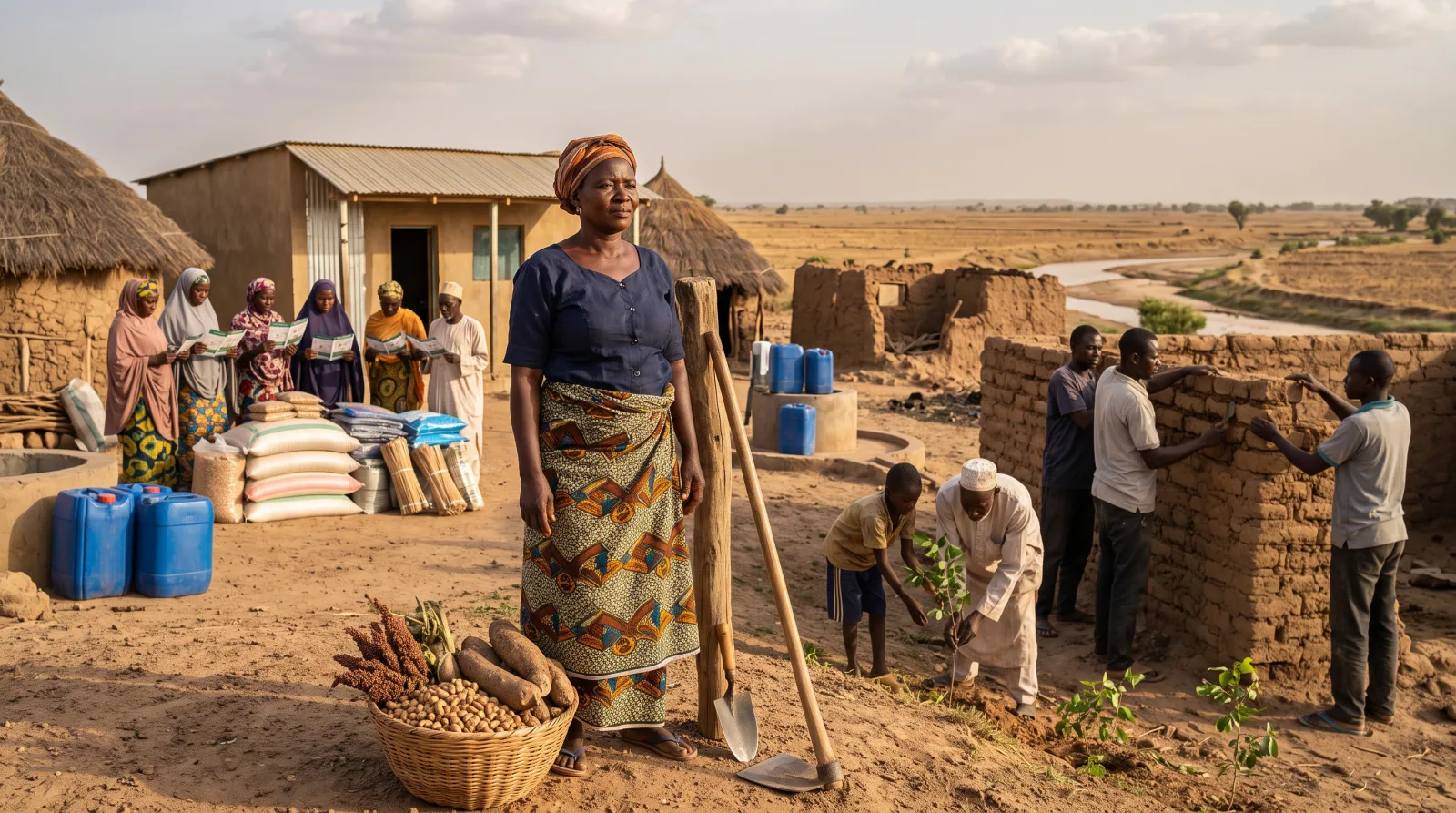
Northern Nigeria faces a growing resilience deficit as climate shocks, conflict, and economic instability converge, exposing households to repeated crises that erode livelihoods and deepen poverty. Despite existing policies on disaster management, social protection, and climate adaptation, responses remain largely reactive, focusing on relief rather than strengthening households’ ability to anticipate, absorb, and recover from shocks. Drawing on recent research, this policy brief argues for an integrated resilience system linking early warning, anticipatory action, adaptive social protection, and livelihood recovery. Lessons from sub-Saharan Africa highlight the importance of coordinated institutions, predictable financing, and shock-responsive systems to build lasting resilience.
Key messages
1. Northern Nigeria is increasingly exposed to overlapping climate hazards, conflict and economic shocks that repeatedly erode household assets, livelihoods and resilience.
2. Current disaster risk management and social protection systems remain largely reactive, with limited coverage, delayed financing and weak coordination, reducing their effectiveness in protecting vulnerable households before shocks occur.
3. Nigeria requires an integrated resilience system that links early warning, pre-arranged financing, adaptive social protection and timely livelihood recovery.
4. Strengthening resilience will require scaling up anticipatory action, expanding adaptive social protection, integrating livelihood recovery into existing programmes, and adopting conflict-sensitive climate responses supported by stronger institutional coordination and more predictable financing.
5. Greater political commitment, stronger coordination and sustained financing are also needed to transform systems into a coherent, shock-responsive resilience architecture.
This study, first published HERE, was developed by the Chronic Poverty Advisory Network, represented institutionally by the Centre for the Study of the Economies of Africa and the Institute of Development Studies.
The authors are grateful to the FCDO, particularly the Data and Evidence to end Extreme Poverty (DEEP) programme, for financial support. DEEP is funded by the UK government’s Foreign, Commonwealth & Development Office (FCDO) through its Global Research and Technology Development portfolio. The author’s views expressed in this publication do not necessarily reflect the views of FCDO.
Authorship: Adedeji Adeniran, Vidya Diwakar and Jamilu Ilyasu.

Data from Stanbic IBTC’s June 2026 Purchasing Managers’ Index (PMI®) report indicate that Nigeria’s private sector recorded a notable improvement in May 2026, with the headline index rising to 54.1 from 52.4 in April 2026. This represents the strongest monthly expansion since August 2025 and marks the fourth consecutive month in which private-sector activity has remained above the 50-point threshold, signaling sustained growth. The improvement was driven primarily by stronger demand and an increase in new orders, with the relevant index rising to 57.0 points from 54.6 points in the previous month. Firms attributed the increase in demand to the introduction of new products and responded by expanding inventories at a robust pace. On the price front, higher fuel costs, partly associated with the outbreak of conflict in the Middle East, continued to exert upward pressure on input costs and output prices. Nevertheless, inflationary pressures eased for the second consecutive month, with input-cost inflation falling to a three-month low and output-price inflation moderating to its weakest level since February. The sustained expansion in the PMI points to strengthening private-sector momentum and resilient demand as the economy enters the second half of the year. However, persistent cost pressures arising from fuel prices, coupled with subdued job creation due to power shortages and inadequate infrastructure, highlight structural constraints that could hinder economic recovery and long-term growth. To sustain the current momentum, policymakers should prioritise measures to address energy and electricity supply challenges while also investing in critical infrastructure to support private-sector expansion.
According to the National Bureau of Statistics (NBS) April 2026 premium motor spirit (petrol) price watch report, the average retail price of premium motor spirit (petrol) in April 2026 was ₦1,532.93, up 23.69 percent from ₦1,239.33 in April 2025. Month-on-month, the April average rose 18.97 percent from ₦1,288.54 in March 2026. By state, Yobe recorded the highest average retail price at ₦1,599.05, followed closely by Edo (₦1,595.74) and Bauchi (₦1,589.07). The lowest averages were in Niger (₦1,403.89), Sokoto (₦1,404.16), and Katsina (₦1,406.28). Regionally, the South-South zone had the highest average retail price at ₦1,566.76, while the North-West zone recorded the lowest at ₦1,508.81. While rising prices are expected in the wake of the U.S.-Israel-Iran conflict, the sharp increase underscores Nigeria’s continued vulnerability to external oil market shocks despite its status as a major oil-producing nation. Besides, the current increase in PMS prices could erode the gains from the recent moderation in inflationary pressures. It could also further weaken household purchasing power by increasing the prices of goods and services, including transport fares. Thus, strengthening economic resilience will require ensuring that domestic refineries operate at optimal capacity, establishing and maintaining a strategic petroleum reserve, and attracting greater investment into the oil sector through infrastructure improvements and sustained efforts to curb crude oil theft and pipeline vandalism. In addition, targeted social protection measures should be expanded to support vulnerable households and cushion the adverse welfare effects of the price shock.
The Central Bank of Nigeria’s (CBN) Monetary Policy Committee (MPC), at its 305th meeting held on 19–20 May 2026, retained the Monetary Policy Rate (MPR) at 26.5 percent. The Committee also maintained the asymmetric corridor around the MPR at +50/-450 basis points, while retaining the Cash Reserve Ratio (CRR) at 45.0 percent for Deposit Money Banks, 16.0 percent for Merchant Banks, and 75.0 percent for non-Treasury Single Account (non-TSA) public sector deposits. The decision to maintain policy rates reflects the CBN’s cautious approach to balancing inflation control with broader macroeconomic stability objectives. By sustaining a tight monetary policy stance, the MPC aims to reinforce ongoing efforts to moderate inflationary pressures, stabilise the exchange rate, and manage liquidity conditions within the financial system. The decision also underscores persistent concerns regarding elevated inflation, despite the recent moderation in month-on-month price increases. However, high borrowing costs may continue to constrain private sector credit growth, investment, and business expansion, particularly among small and medium-sized enterprises. To achieve more sustainable inflation control, monetary tightening should be complemented by fiscal and structural measures to address supply-side drivers of inflation, particularly food insecurity, logistics bottlenecks, and rising energy costs. The government should also prioritise policies that enhance productivity and support domestic production to sustainably ease inflationary pressures while minimising the adverse effects of high interest rates on economic growth, employment, and private-sector development.
The National Bureau of Statistics’ (NBS) LPG Price Watch shows that cooking gas prices increased in March 2026 for all cylinder sizes. The average retail price for refilling a 5kg cylinder rose by 12.60 percent month-on-month from ₦6,799.18 in February 2026 to ₦7,655.73 in March 2026, while also recording a 4.55 percent increase year-on-year. Similarly, the average retail price for refilling a 12.5kg cylinder increased by 15.62 percent month-on-month from ₦16,997.94 in February 2026 to ₦19,652.83 in March 2026, and by 6.48 percent year on-year. State-level analysis shows significant variation in prices. For the 5kg cylinder, Kaduna recorded the highest average retail price at ₦9,212.21, followed by Lagos and Taraba, while Bauchi recorded the lowest at ₦6,295.40. For the 12.5kg cylinder, Nasarawa recorded the highest average retail price at ₦23,418.12, followed by Kaduna and Akwa Ibom, while Bauchi again recorded the lowest at ₦15,738.50. Based on zonal analysis, the North-West recorded the highest average retail prices for both a 5kg and a 12.5kg cylinder sizes, while the South-South recorded the lowest for refilling a 5kg cylinder and the South-East recorded the lowest for refilling a 12.5kg cylinder. Given the increase in the price of cooking gas, this could further worsen the cost-of-living pressure on households given current economic conditions. Specifically, it could raise household living expenses, deepen energy poverty among vulnerable households, and encourage the use of harmful fuels such as charcoal and firewood, with negative consequences for public health, environmental sustainability, and overall household welfare. To address these challenges, the government should improve domestic gas supply, support local LPG production, invest in distribution infrastructure across the country, and provide social protection measures, particularly for vulnerable households
The National Bureau of Statistics’ Transport Fare Watch for March 2026 revealed that transport costs in Nigeria increased significantly across major categories, reflecting persistent inflationary and energy-related pressures. Intra-city bus fares rose by 14.86 percent month on month to ₦1,373.49, while intercity transport fares increased by 17.95 percent to ₦9,564.12. Airfares also increased by 2.33 percent to ₦157,224.05, while motorcycle (Okada) and water transport fares rose by 9.05 percent and 4.59 percent respectively. On a year-on year basis, transport costs recorded substantial increases, particularly for Okada fares, which rose by 57.37 percent, and intra-city bus transport, which increased by 41.33 percent. Regional analysis indicated that the South-West recorded the highest fares for intra-city bus and motorcycle transport, while the South-South recorded the highest water transport fares. The sustained rise in transport fares was driven largely by elevated fuel and energy costs, exchange-rate pressures affecting vehicle maintenance and aviation operations, and broader inflationary conditions in the economy. Rising transportation costs continue to increase household expenditure, weaken purchasing power, and intensify cost-of-living pressures, particularly for low-income households. In addition, higher intercity transport fares may further worsen food inflation by increasing logistics and distribution costs across supply chains. To moderate transport-driven inflation, the government should strengthen investment in affordable public transportation, rehabilitate critical road infrastructure, and accelerate the adoption of alternative-energy transport systems, such as compressed natural gas (CNG)-powered buses. Sustained exchange rate stability and measures aimed at easing fuel price pressures will also be essential for reducing transportation costs and supporting broader price stability.
According to foreign exchange market data from the Central Bank of Nigeria (CBN), the naira averaged ₦1,361.22 per US dollar in April 2026, representing a 1.3% month-on-month appreciation from ₦1,379.32 per US dollar recorded in March. This follows a period of depreciation linked to global geopolitical tensions, particularly the United States-Israeli/Iran war, which began at the end of February 2026. During that period, the naira weakened by 1.7%, falling from an average of ₦1,355.53 per US dollar in February to ₦1,379.32 per US dollar in March. The modest recovery in April coincided with a 1.7% decline in foreign reserves, from US $49.24 billion at the end of March to US $48.37 billion as of 29 April, suggesting that reserves may have been utilised to support the currency. While the recent exchange rate appreciation is a positive development, the sustainability of the naira’s strength will depend on consistent foreign exchange inflows and favourable macroeconomic conditions. To consolidate these gains, policymakers should prioritise measures aimed at strengthening foreign exchange supplies, particularly by enhancing export capacity and attracting stable capital inflows. This will require targeted investments in export-enabling infrastructure, including roads, ports, and storage facilities, alongside sustained support for domestic manufacturing. In addition, maintaining transparency in foreign exchange market operations and ensuring timely access to foreign currency will be critical to strengthening investor confidence and promoting market stability.
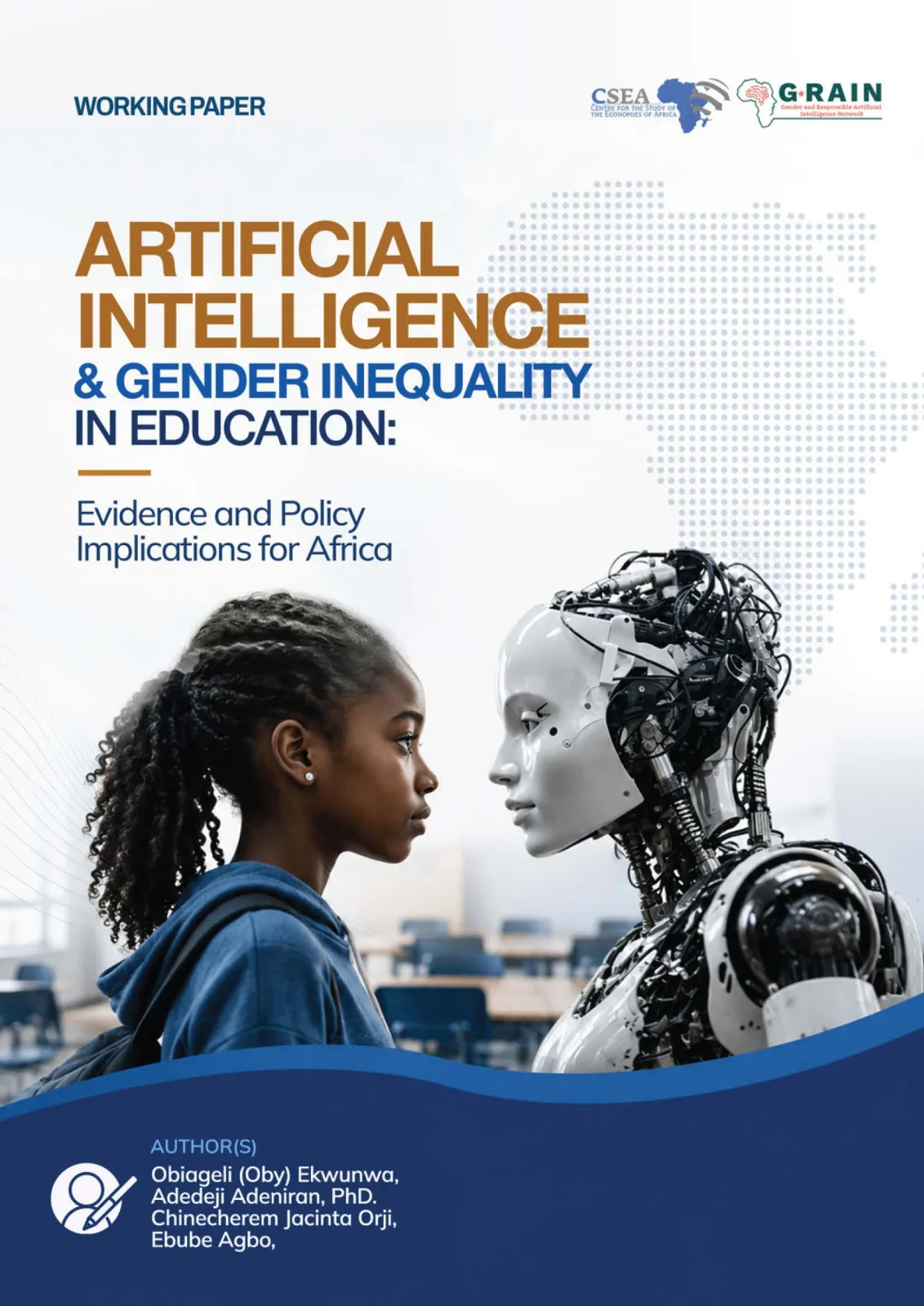
Recent evidence indicates that the emergence of Artificial Intelligence (AI) is rapidly transforming education. However, evidence on the effectiveness of AI interventions in addressing gender inequality in education remains limited. In this regard, this study conducts a Systematic Literature Review on the role of AI in addressing gender inequality in education and draws implications for Africa. This study applies the PRISMA systematic review approach and synthesises evidence from peer-reviewed articles obtained from Scopus, Web of Science, and Google Scholar for the period 2015–2025. The review centred around themes: STEM and non-STEM fields; inclusive education for marginalised learners; algorithmic bias and equity concerns; and attitudes, confidence, and digital skills. The findings indicate that the adoption of AI can be a potent instrument for reducing gender gaps and expanding access to education, particularly for girls and women with disabilities. However, the review also suggests that the scalability of AI potentials has remained a significant challenge in Africa due to inadequate technological infrastructure and ingrained gender norms that often restrict its equitable implementation. One of the implications of these findings for Africa is that it points out that the implementation of ethical and responsible AI in the education sector by prioritising gender-sensitive design and infrastructure investment can be a potent tool for enhancing female participation in AI-enabled learning environments on the continent. In addition, this study contributes to the literature by providing a structured synthesis of global evidence and highlighting the contextual constraints that shape AI effectiveness in Africa.