Publications

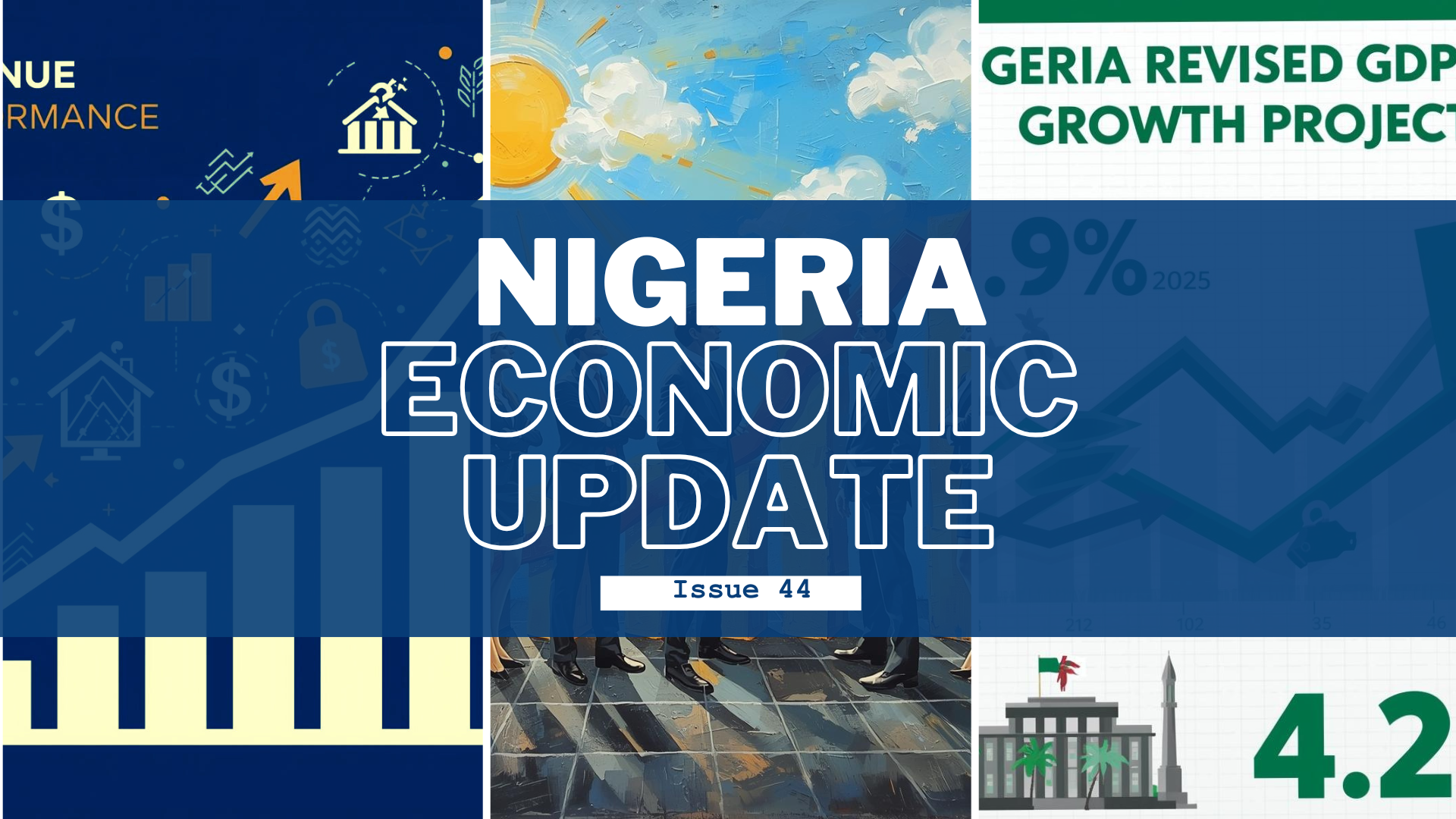
Nigeria Economic Update, Issue 44

The International Monetary Fund, in its October 2025 World Economic Outlook report, revised Nigeria’s GDP growth projections to 3.9% in 2025 and 4.2% in 2026. These figures represent increases of 0.5 and 1.0 percentage points, respectively, from the previously projected 3.4% and 3.2% in July 2025. These upward revisions reflect improving economic conditions, including increased oil production, stronger investor confidence, and a supportive fiscal stance. The improved outlook for 2025 and 2026 is also attributed to reduced uncertainty and the limited impact of U.S. tariffs on Nigeria, given the country’s relatively low exposure to volatile global trade dynamics. While Nigeria’s growth forecast was revised upward, the growth forecast for Sub-Saharan Africa is expected to remain unchanged at 4.1% in 2025, rising modestly by 0.3 percentage points to 4.4% in 2026. Despite steady economic conditions, the outlook remains fragile, with risks tilted to the downside. For Nigeria, the revised growth forecast indicates strengthening macroeconomic stability, but the economy remains heavily reliant on oil revenues, making it vulnerable to price fluctuations and production shocks. To ensure sustainable growth, the government must reduce dependence on oil by investing in other sectors such as manufacturing, agriculture, and services. In addition, targeted reforms that enhance government transparency and ensure regulatory consistency are essential to boost investor confidence.

Read More Download PDF

Exploring the Role of Institutional Quality in the Crowding-Out Effect of Military Expenditure on Health Expenditure and Outcomes in Africa

This study revisits the long-standing debate on the guns-versus-butter phenomenon, that spending on military activity crowds out non-military expenditure. By focusing on Africa, we conjecture the crowding-out effect of military expenditure on health expenditure beyond government health expenditure, but also private and out-of-pocket health expenditure, and health outcomes. The empirical analysis based on the dynamic two-step system generalized method of moments reveals that omitting institutional quality measures biases the estimated crowding-out effects of military expenditure. After the inclusion, the results indicate that a 10 % increase in military expenditure leads to a 0.40 % decline in government health expenditure, accompanied by 0.01 % and 0.30 % increases in private and out-of-pocket health expenditure, respectively. Regarding health outcomes, the same increase in military expenditure results in a 0.20 % rise in maternal mortality, while infant mortality and life expectancy decline by 0.09 % and 0.01 %, respectively. Further analysis reveals that including the interaction term of military expenditure and institutional quality only reverses the crowding-out effect on government health expenditure and not on private and out-of-pocket health expenditure. For health outcomes, the favorable effect of the interaction term is only evident in reducing infant and maternal mortality rates. We offer policy recommendations to improve fiscal spending on the health sector in Africa as a paramount measure to improve human capital development and provide areas for further empirical contributions.

Read More

Read More

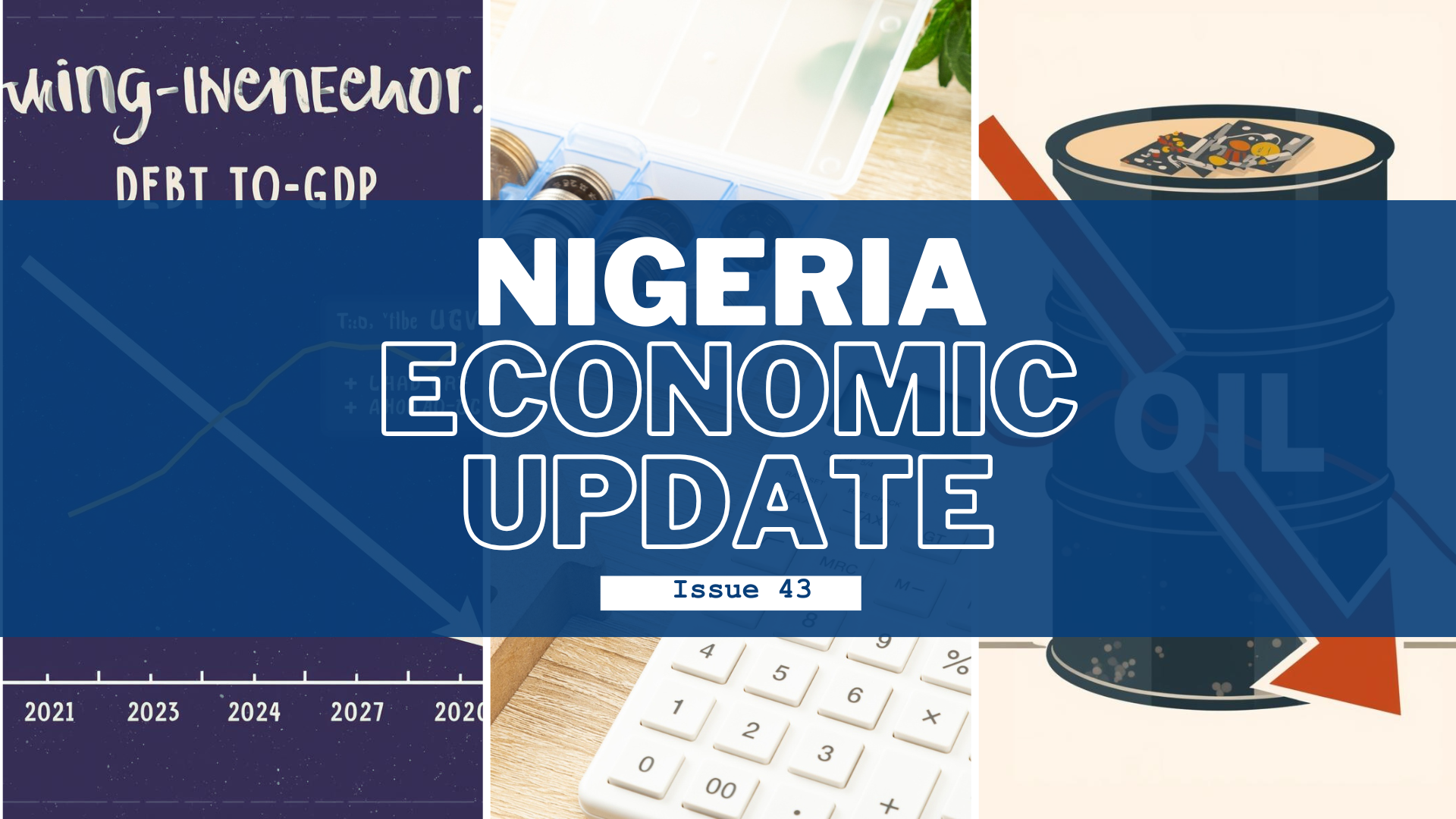
Nigeria Economic Update, Issue 43

The October 2025 report from the Organisation of Petroleum Exporting Countries (OPEC) indicated that Nigeria's oil production declined by 0.045 million barrels per day (bpd), falling from 1.434 million bpd in August 2025 to 1.39 million bpd in September 2025. This represents a 3.1% decline and marks the second consecutive month of reduced output, bringing the average third-quarter production to 1.444 million bpd – down 2.5% from 1.481 million bpd in the second quarter. The production level is 7.3% below Nigeria’s OPEC quota of 1.5 million bpd and 33.8% below the national target of 2.1 million bpd. This consecutive decline in output is particularly concerning, given the nation's reliance on crude oil as its primary source of revenue.According to the Nigerian Upstream Petroleum Regulatory Commission (NUPRC), a three-day strike by the Petroleum and Natural Gas Senior Staff Association of Nigeria (PENGASSAN) contributed to the decline in oil production in September. To mitigate the risks associated with fluctuating oil revenues, policymakers should prioritise reforms that enhance alternative revenue sources, including the effective implementation of the tax reform bill.Restoring and efficiently operating local refineries will increase revenue and strengthen economic resilience. Furthermore, diversifying the economy away from oil by investing in sectors such as technology, mining, and agriculture, supported by loan incentives and capacity building for MSMEs in these sectors, will promote sustainable growth.

Read More Download PDF

CSEA 2024 Annual Report

2024 marked a year of impactful initiatives and collaborations for CSEA, focused on advancing sustainable development and shaping important policy discussions across Africa. We strengthened both global and national partnerships through strategic meetings with key stakeholders, including California’s Secretary of Transportation, Dr. Toks Omishakin and Dr. Christopher Bielecki Counselor at the U.S. Department of Agriculture's Foreign Agricultural Service (FAS) at the U.S. Consulate General in Nigeria. Other significant meetings included engagements with representatives from UNDP Nigeria, Mr Charles Ushie, the country director of PLAN International Nigeria and the president of the Nigerian Bar Association, Yakubu Chonoko Maikyau (SAN). We also engaged with the Deputy Head of Mission & Political Counsellor from the Embassy of the Republic of Korea, as well as a delegation from the International Trade Centre ahead of the launch event of the West African Competitiveness Observatory in Abuja. Our research continues to address critical challenges such as food insecurity, tobacco control, public procurement reforms, and macroeconomic resilience. Notable funded projects include the Soil Value Baseline Study by the International Fertilizer Development Center (IFDC), and the Socio-Economic Impact Assessment of flooding in Maiduguri, Borno State, commissioned by UNDP, as well as the research project on the implications of implementing the AfCFTA on tobacco control policies in West and Central Africa, commissioned by ACBF. We have also continued to receive the award to provide the Macro-fiscal brief for the Bill and Melinda Gates Foundation.

Read More Download PDF

Nigeria Economic Update, Issue 42

The World Bank’s Africa’s Pulse report on pathways to job creation in Africa (October 2025) indicated that Nigeria ranks highest among countries facing significant employment challenges. The report noted that only one in six workers in Sub-Saharan Africa holds a wage-paying job, compared to one in two in highincome countries. Despite a projected increase of over 620 million people in Sub-Saharan Africa’s labour force between 2025 and 2050, a 1 percentage point rise in GDP growth yields only a 0.04 percentage point increase in wage employment. The data also revealed that 98 million Nigerians experience employment challenges, a figure significantly higher than the 72 million recorded for the Democratic Republic of Congo, 67 million for Ethiopia, and 40 million for Tanzania. High levels of underemployment and informality persist in Nigeria, driven by limited firm/business growth, reliance on selfemployment, and weak labour bargaining power. The report emphasised that Africa’s growth trajectory remains positive but insufficiently inclusive. To leverage Nigeria’s growing youth population, government policies must prioritise productivity-enhancing investments in education and skills development, strengthen infrastructure and access to finance, and translate firm growth into sustainable employment opportunities to ensure that economic expansion benefits a broader segment of the population. 

Read More Download PDF

Nigeria Microeconomic Snapshot November 2025

The International Monetary Fund's October 2025 World Economic Outlook revised Nigeria's growth forecast upward to 3.9% in 2025 and 4.2% in 2026, an increase of 0.5 and 1.0 percentage points from earlier projections. The improved revision occured as a result of higher oil production, stronger investor confidence, and a supportive fiscal stance. 

Read More Download PDF

Nigeria Economic Update, Issue 41

The October 2025 Nigeria Development Update (NDU) report from the World Bank revealed that, between 2019 and 2023, average consumption decreased by 6.7%, particularly in urban areas. The report also indicated that the percentage of Nigerians unable to meet healthy caloric requirements, even if they spent their entire income on food, rose from 14% to 27% between 2019 and 2023, equivalent to 139 million Nigerians living in ultra-poverty in 2023.The World Bank report indicated that while the reforms (mainly exchange rate unification and subsidy removal) are addressing previous policy errors, significant improvements in living conditions will depend on sustained disinflation, more robust inclusive growth, enhanced public services, and consistent targeted assistance for the most vulnerable. The report also emphasised that macroeconomic reforms need to continue advancing to strengthen stability and protect against risks, given that the economic outlook remains vulnerable to both external and domestic risks. Thus, policymakers’ priority should include the transparent expansion of social protection programs to protect vulnerable households and the efficient implementation of the tax reform policies to lessen the tax burden, potentially boosting employment. Also, the informal economy should be supported through targeted credit schemes and steady and affordable energy.  

Read More Download PDF

Nigeria Economic Update, Issue 40

Data from the National Bureau of Statistics (NBS) show that Nigeria’s public debt stock, which includes external and domestic debt, stood at ₦149.38 trillion in the first quarter of 2025, indicating a growth of 3.27% quarter-onquarter from ₦144.66 trillion in Q4 2024. Total external debt stood at ₦70.63 trillion, while total domestic debt stood at ₦78.75 trillion in Q1 2025. The share of domestic debt to total public debt recorded the highest percentage, standing at 52.72%, while external debt accounted for 47.28% of total public debt in Q1 2025. State-wise, Lagos State recorded the highest domestic debt at ₦874.03 billion, followed by Rivers with ₦364.39 billion. Meanwhile, Jigawa and Ondo states recorded the lowest domestic debt stocks at ₦1.06 billion and ₦11.76 billion, respectively. The increase in debt stock occurred as a result of the depreciation of the Naira, which inflated the values of local currency borrowing and new borrowings from the federal government, intended for funding public expenditure. Rising debt stock implies increasing debt servicing costs, which strain government finances, especially as Nigeria makes efforts to stabilise the Naira and improve foreign exchange liquidity. Furthermore, while heavy reliance on domestic borrowing may reduce external vulnerability, it can crowd out private investments and push up domestic interest rates. Therefore, there is a need for the government to enhance debt management frameworks and control borrowing at both the federal and state levels. Furthermore, borrowings should be channelled toward growth-enhancing and revenue-generating projects, especially in productive sectors such as energy and manufacturing.  

Read More Download PDF

Nigeria Economic Update, Issue 39

The Central Bank of Nigeria's (CBN) Business Expectations Survey report for August 2025 reflects optimism regarding the macroeconomic outlook. The Confidence Index increased to 28.9 index points in August 2025 from 21.4 index points in July 2025. All sectors expressed positive expectations for the business outlook, with Services leading at 29.7 index points, Industry at 28.5 index points, and Agriculture at 27.1 index points. This optimistic trend is expected to continue over the next six months, with Industry projected to rise to 59.9 index points, Agriculture to 52.8 index points, and Services to 55.1 index points. This, therefore, reflects growing business confidence in the Nigerian economy. The Business Confidence Index (BCI) further highlights this positive sentiment, with Mining & Quarrying leading at 21.1 index points, followed by Agriculture at 17.5 index points, Non-Market Services at 16.8 index points, Market Services at 16.7 index points, Manufacturing at 8.5 index points, and Construction at 2.0 index points. These figures indicate strong confidence across sectors in the economy. However, despite the positive momentum, respondents identified the top three business constraints in the month under review, including Insecurity (71.2%), Insufficient Power Supply (69.5%), and High Interest Rates (68.6%), highlighting factors that continue to affect operational stability and profitability. To maintain positive business confidence, the government should focus on targeted policies that address the key operational challenges, improve business conditions, and create a more supportive environment for investment and growth. Addressing insecurity is crucial, as well as driving investment in energy infrastructure to provide affordable and steady electricity to firms 

Read More Download PDF