Publications

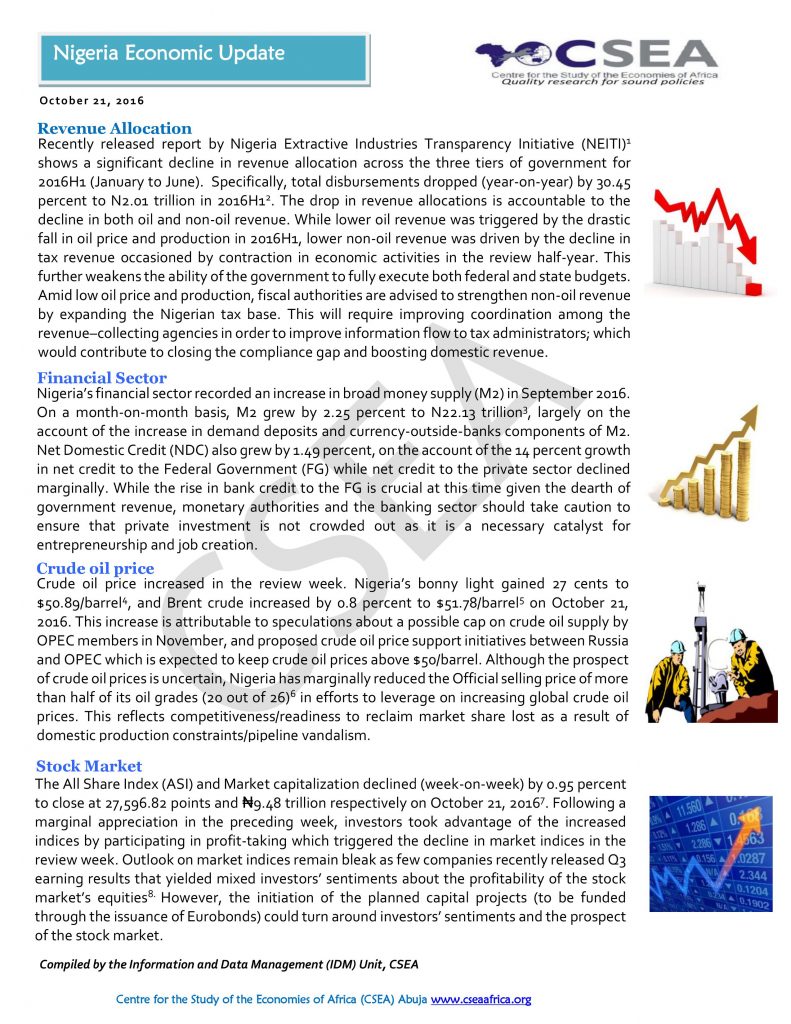
Nigeria Economic Update (Issue 45)

Recently released report by Nigeria Extractive Industries Transparency Initiative (NEITI)shows a significant decline in revenue allocation across the three tiers of government for 2016H1 (January to June). Specifically, total disbursements dropped (year-on-year) by 30.45 percent to N2.01 trillion in 2016H1. The drop in revenue allocations is accountable to the decline in both oil and non-oil revenue. While lower oil revenue was triggered by the drastic fall in oil price and production in 2016H1, lower non-oil revenue was driven by the decline in tax revenue occasioned by contraction in economic activities in the review half-year.
Read More Download DOCX

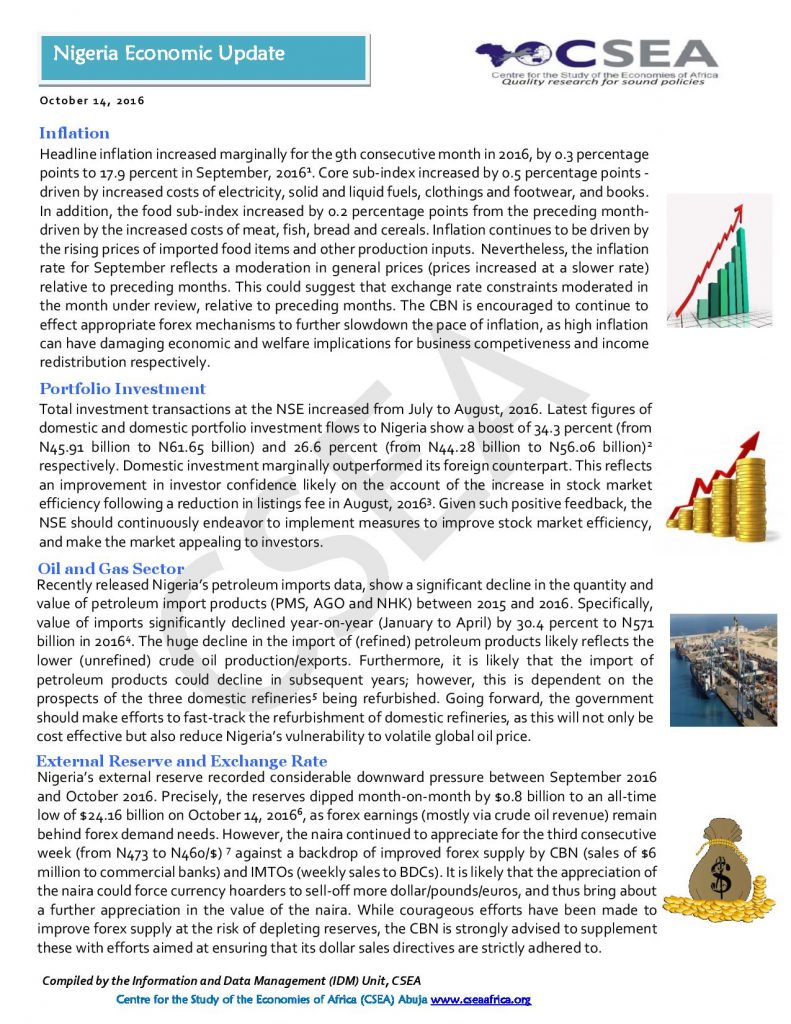
Nigeria Economic Update (Issue 44)

Recently released Nigerias petroleum imports data, show a significant decline in the quantity and value of petroleum import products (PMS, AGO and NHK) between 2015 and 2016. Specifically, value of imports significantly declined year-on-year (January to April) by 30.4 percent to N571 billion in 2016. The huge decline in the import of (refined) petroleum products likely reflects the lower (unrefined) crude oil production/exports. Furthermore, it is likely that the import of petroleum products could decline in subsequent years; however, this is dependent on the prospects of the three domestic refineriesbeing refurbished.
Read More Download PDF

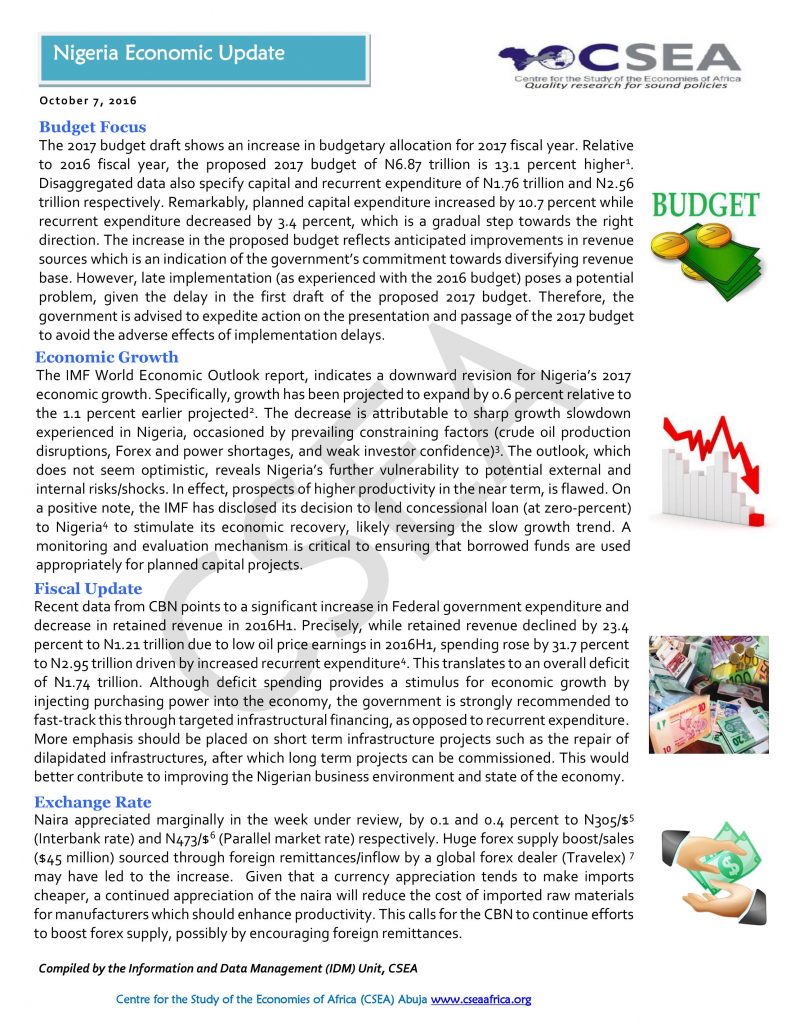
Nigeria Economic Update (Issue 43)

The IMF World Economic Outlook report, indicates a downward revision for Nigerias 2017 economic growth. Specifically, growth has been projected to expand by 0.6 percent relative to the 1.1 percent earlier projected. The decrease is attributable to sharp growth slowdown experienced in Nigeria, occasioned by prevailing constraining factors (crude oil production disruptions, Forex and power shortages, and weak investor confidence). The outlook, which does not seem optimistic, reveals Nigerias further vulnerability to potential external and internal risks/shocks.
Read More Download PDF

Nigeria Economic Chart Pack (2016H1)

The Nigeria Economic Chart Pack is a graphical display of relevant and periodic data to capture trends in the domestic economy. The report aims to illustrate the changes in economic trends with the aid of descriptive charts and a short note that describes the trend and drivers for the graphs.
Read More Download PDF

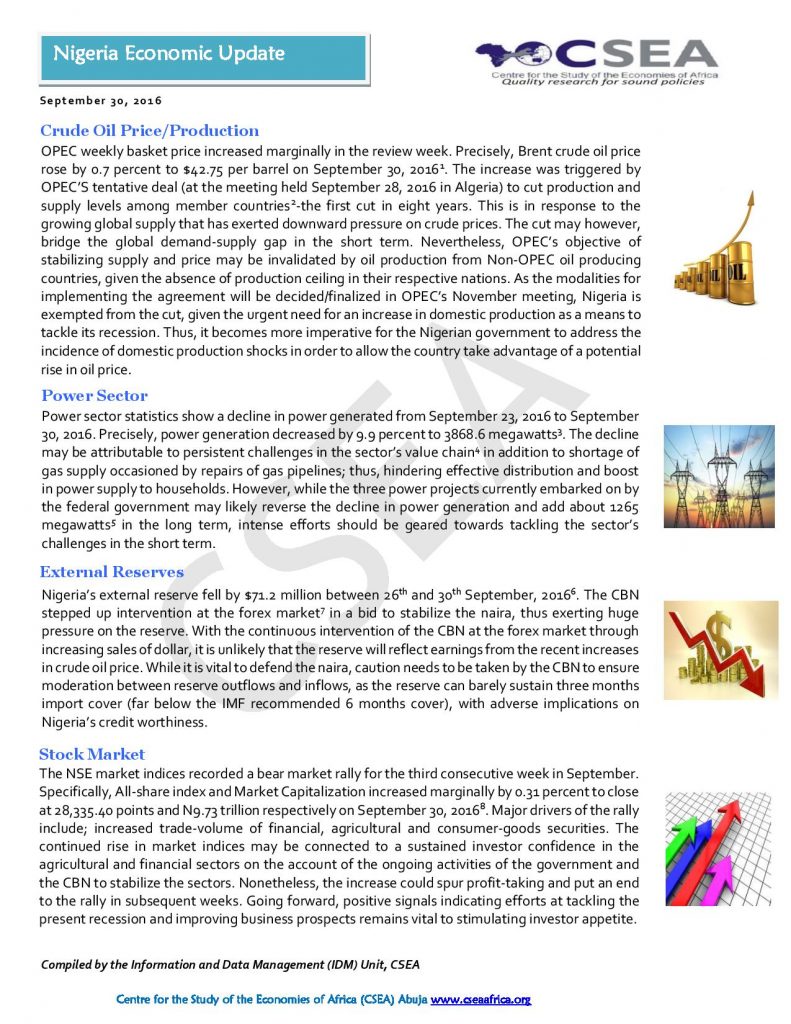
Nigeria Economic Update (Issue 42)

The NSE market indices recorded a bear market rally for the third consecutive week in September. Specifically, All-share index and Market Capitalization increased marginally by 0.31 percent to close at 28,335.40 points and N9.73 trillion respectively on September 30, 2016. Major drivers of the rally include; increased trade-volume of financial, agricultural and consumer-goods securities. The continued rise in market indices may be connected to a sustained investor confidence in the agricultural and financial sectors on the account of the ongoing activities of the government and the CBN to stabilize the sectors.
Read More Download PDF

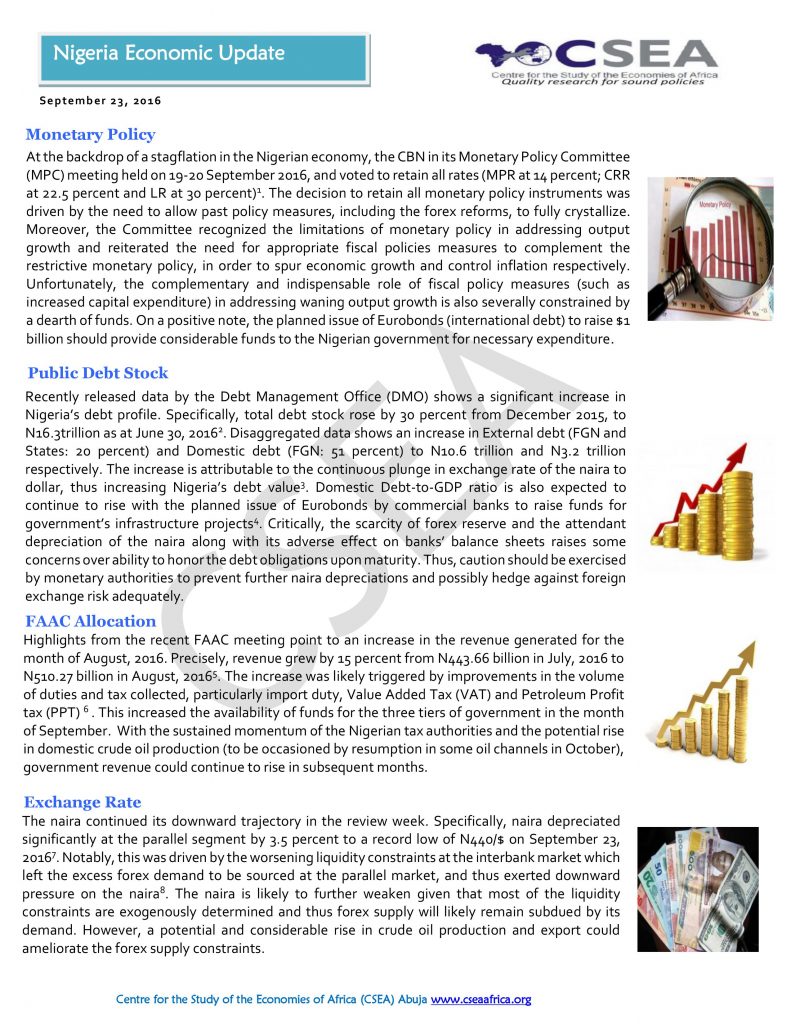
Nigeria Economic Update (Issue 41)

The naira continued its downward trajectory in the review week. Specifically, naira depreciated significantly at the parallel segment by 3.5 percent to a record low of N440/$ on September 23, 2016. Notably, this was driven by the worsening liquidity constraints at the interbank market which left the excess forex demand to be sourced at the parallel market, and thus exerted downward pressure on the naira. The naira is likely to further weaken given that most of the liquidity constraints are exogenously determined and thus forex supply will likely remain subdued by its demand.
Read More Download PDF

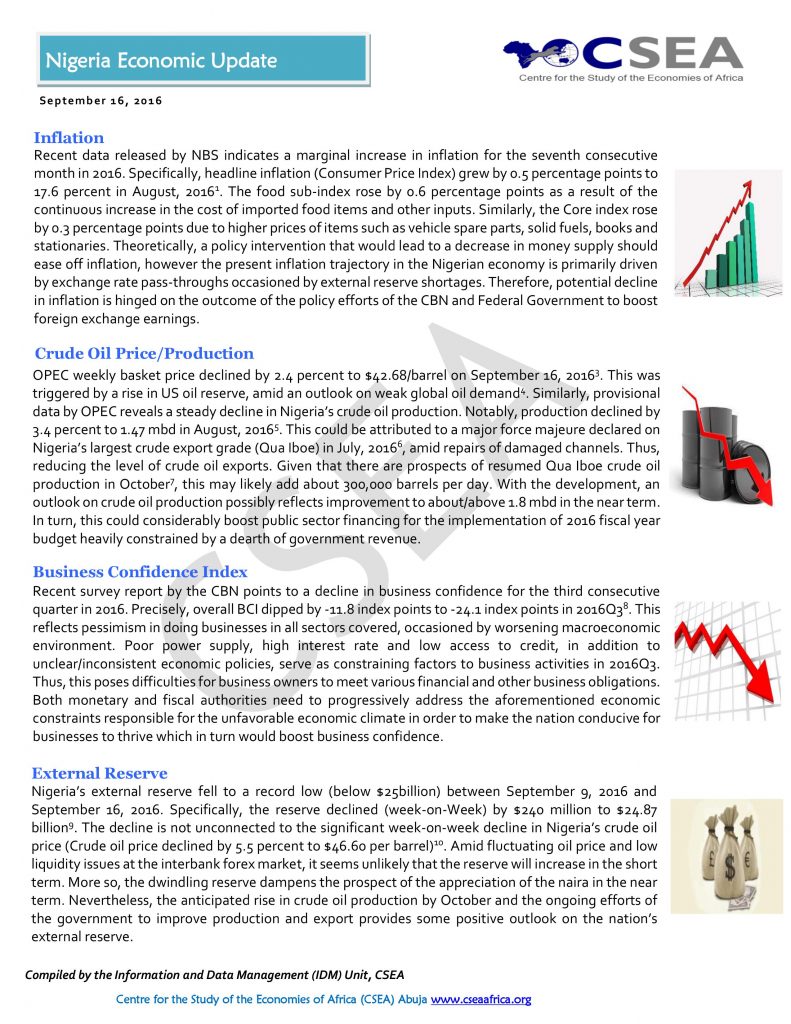
Nigeria Economic Update (Issue 40)

OPEC weekly basket price declined by 2.4 percent to $42.68/barrel on September 16, 2016. This was triggered by a rise in US oil reserve, amid an outlook on weak global oil demand. Similarly, provisional data by OPEC reveals a steady decline in Nigerias crude oil production. Notably, production declined by 3.4 percent to 1.47 mbd in August, 2016.
Read More Download PDF

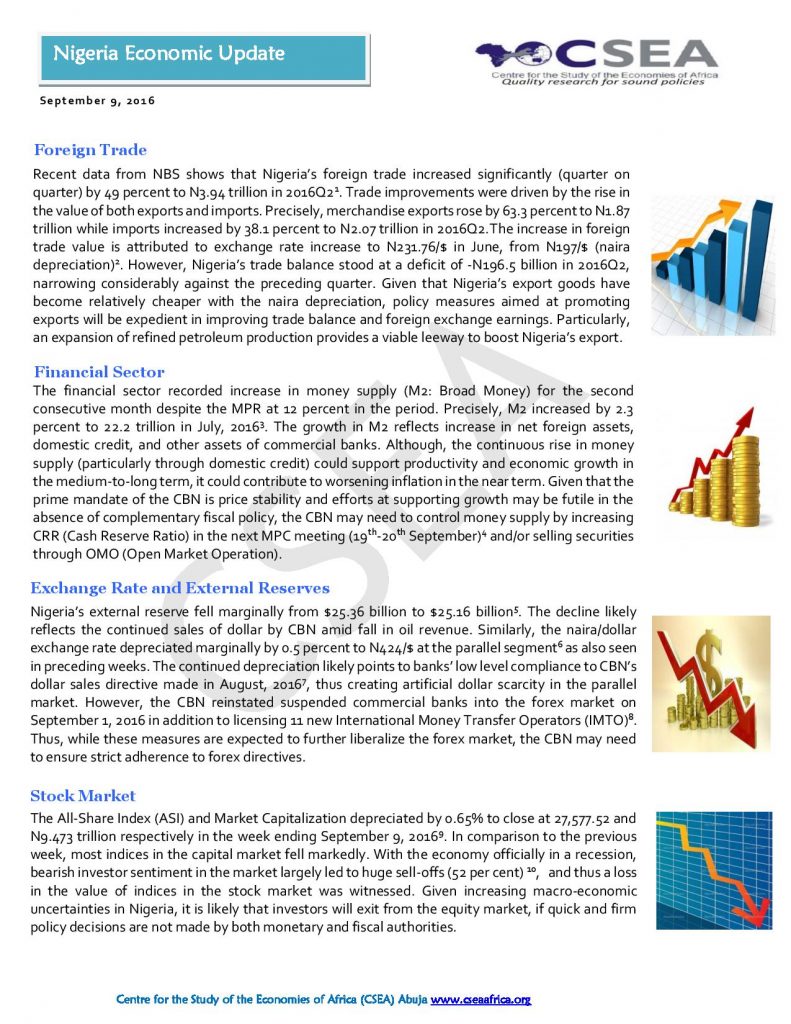
Nigeria Economic Update (Issue 39)

Nigerias external reserve fell marginally by from $25.36 billion to $25.16 billion. The decline likely reflects the continued sales of dollar by CBN amid fall in oil revenue. Similarly, the naira/dollar exchange rate depreciated marginally by 0.5 percent to N424/$ at the parallel segmentas also seen in preceding weeks. The continued depreciation likely points to banks low level compliance to CBNs dollar sales directive made in August, 2016, thus creating artificial dollar scarcity in the parallel market.
Read More Download PDF

Nigeria Economic Update (Issue 38)

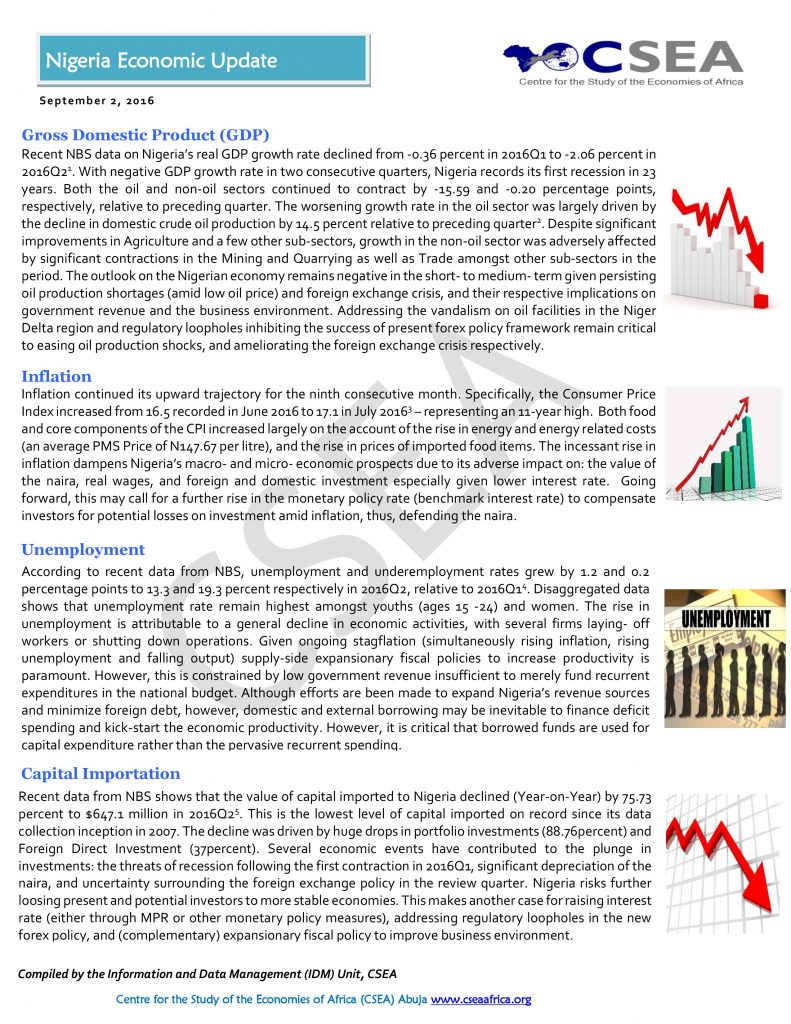
Recent NBS data on Nigerias real GDP growth rate declined from -0.36 percent in 2016Q1 to -2.06 percent in 2016Q2. With negative GDP growth rate in two consecutive quarters, Nigeria records its first recession in 23 years. Both the oil and non-oil sectors continued to contract by -15.59 and -0.20 percentage points, respectively, relative to preceding quarter. The worsening growth rate in the oil sector was largely driven by the decline in domestic crude oil production by 14.5 percent relative to preceding quarter
Read More Download PDF