Working Papers

  • Home
  • Working Papers

Electrification in Nigeria: Challenges and Way Forward

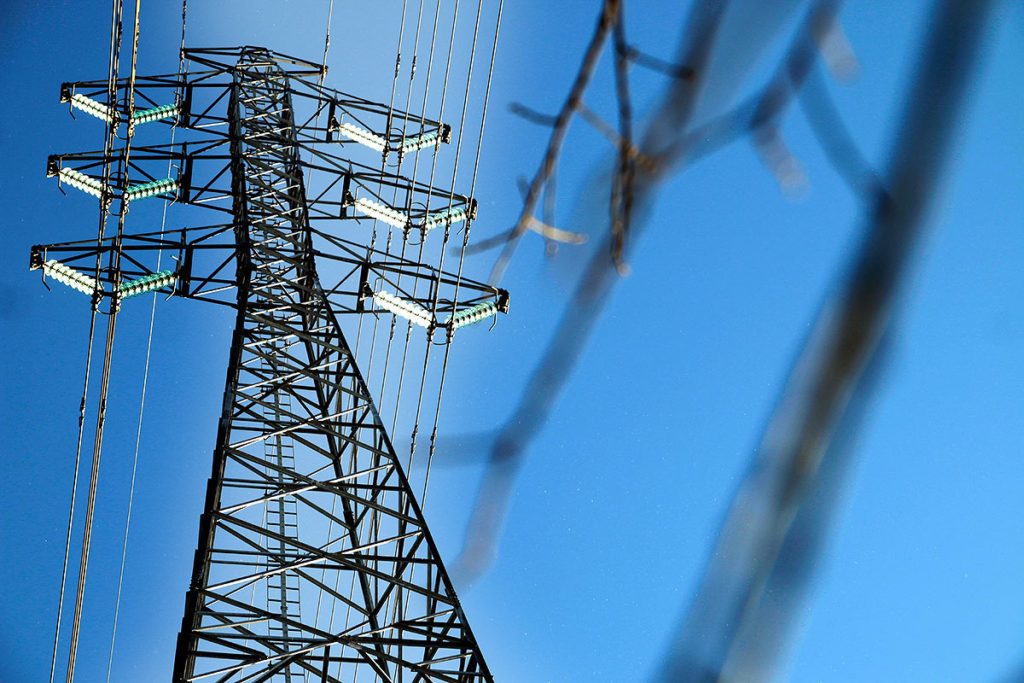
Although electricity has been generated in commercial quantities in Nigeria for over a century, the rate of electricity infrastructure development in the county is low and power supply remains inadequate. Prior to reforms, the central challenges of the Nigerian power sector was the vertically integrated monopoly of government in power generation, transmission and distribution. While the reforms was successful in privatizing the generation and distribution segments of the Nigerian Electricity Supply Industry (NESI), the overbearing problems in the sector persists –with privatization only changing the dimensions of the challenges.

Financing remain a major problem across all the segments of the NESI partly due to non-cost reflective tariff. Yet each segment of the NESI also faces its unique challenges. The generation segment is riffed with the problems of energy security and inefficiencies in other segments. The challenges in the transmission segment lies in the lack of modern transmission lines and equipment, gross mismanagement, poor maintenance of available infrastructure and inefficient grid design. Distribution companies face the problem of huge Aggregate Technical, Commercial, and Collection (ATC&C) losses.

In terms of electricity access, 46.09 percent of the Nigerian population remains unconnected to the national grid, representing 83.98 million people. Further, electricity demand is estimated at 24,380 MW as at 2015 compared to NESI’s available generation capacity of 7,139.6 MW. In terms of energy use, Nigeria has the lowest in the world – 80 percent below its energy use based on income levels.

In a bid to tackle aforementioned challenges, the Federal Government of Nigeria (FGN) set ambitious targets for the country’s energy mix. This should allow Nigeria exploit its potential for coal, solar, wind, biomass, as well as small and large hydroelectric power electric generation, while reducing the prevalence of self-generation, which constitute two-thirds of present energy mix. By 2020, the FGN targets to achieve up to 75 percent access to electricity by connecting 1.5 million households annually. While Nigeria’s energy mix targets are desirable, the prospect of success remain bleak on account of financial constraints, pricing policy and lack of policy coordination.

Improving electricity supply in Nigeria and addressing barriers to achieving the energy mix targets will entail: addressing payment risk, financing power sector investment, as well as improving the pricing and tariff structure, gas pricing and allocation, and market regulation.


Read More Download PDF Download PDF Download PDF

Consequences Of School Resources For Educational Achievement

This paper examines the determinants of educational achievement in a developing country context, Burkina Faso. We deviate from the extant literature by constructing an aggregate index of school quality from the observable school resources. Also, we account for school choice constraints, faced by children especially in rural areas, as it relates to the geographical inequalities in the distribution of quality schools. These treatments provide an unbiased estimates of the relevance of school resources for academic performance. The empirical approach is based on a two-stage procedure that accounts for supply constraints in school choice.
Read More Download PDF

Institutions And Sustainable Industrial-led Development In Sub-Saharan Africa

In 2015, economic growth in Sub-Saharan Africa (SSA) slowed to 3.4 percent from 4.6 percent the previous year. The economic slowdown in the region was the result of an interplay of several external and domestic factors such as lower commodity prices, slowdown in the economies of major trading partners, tightening borrowing conditions, political instability and conflict, electricity shortages and other infrastructure deficiencies (World Bank, 2016). This sluggish growth trends is in contrast to the impressive growth recorded in the region, over the past decade.
Read More Download PDF

Regional Trade For Inclusive Development In West Africa

This study examines the potential of regional trade in facilitating the achievement of inclusive development in the West African region. It employs descriptive analysis to examine the nature, composition and dimension of ECOWAS trade within the group and with the rest of the world, vis--vis three other Regional Economic Communities (RECs) in sub-Saharan Africa (SSA). From the preliminary study, it can be observed that the growth rate of West African economies is increasing, but the rising economic growth does not translate to improvement in inclusive development, as there was no significant reduction in poverty levels in the region. Further evidence reveals that extra-regional trade of the region is increasing at a very high rate, and also at a disproportionate rate with intra-regional trade, compared with SADC. This indicates the existence of opportunity to boost regional trade for inclusive development through conversion of part of the extra-regional trade into regional trade.
Read More Download PDF

Portfolio Diversification Between Developed And Less Developed Economies

This study examines the hedging effectiveness of portfolio investment diversification between developed and developing economies; with focus on the Nigerian stock asset vis--vis the stock assets of the United States (US) and United Kingdom (UK). Its main contribution is in the analysis of optimal portfolio diversification using optimal portfolio weight (OPW) and optimal hedging ratio (OHR). Empirical findings show that the OPW and OHR are low, which indicates impressive potential gains from combining Nigerian stock assets in an investment portfolio with US and UK stock assets. In addition, exchange rate volatility is found to pose stern limitation on the potential benefits of this portfolio diversification arrangement. It is therefore recommended that the monetary authority in Nigeria should pursue policies towards reducing exchange rate volatility to the barest minimum. This will possibly attract more investors from developed economies who might be willing to combine Nigerian stock in their investment portfolio to minimize portfolio risk.
Read More Download PDF