Working Papers

  • Home
  • Working Papers

The Role of Social Influence in Enforcing Tax Compliance: Experimental Evidence from Nigeria

Economic development is linked with increased state capacity including the ability to mobilise domestic tax resources. For many developing countries, high levels of informality are a major constraint in this regard. Yet, economic incentives like changing the tax rate or increasing the filling and audit rate can be ineffective in a highly informal economic structure.

In this paper, we explore possible roles for behavioural interventions such as sharing information about peers’ tax behaviour to engineer higher tax compliance. Based on an artefactual field experiment among own account workers in Nigeria, we find that information interventions can play an important role in ensuring tax compliance.

Specifically, targeting information around what people can directly observe can be a way to improve tax compliance. Providing information on punishment or good practices that appeal to feelings of morality yields higher tax compliance.

DOWNLOAD FULL PAPER

Read More Download PDF

COVID-19 in Africa: The implications for macroeconomic and socioeconomic dimensions

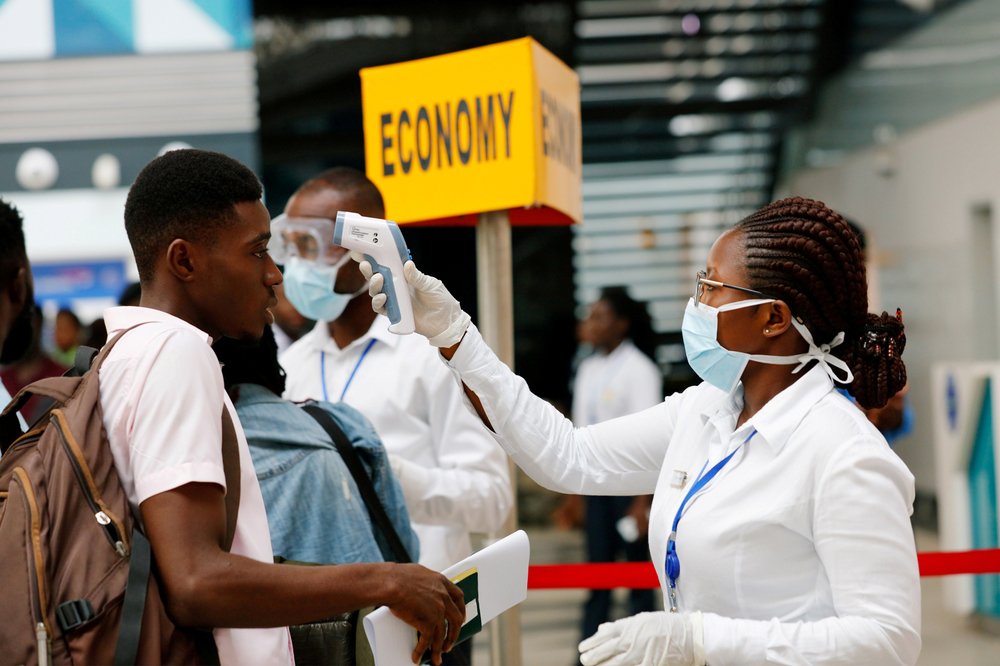
The COVID-19 outbreak began in December 2019 in the Wuhan city of China and has continued to spread globally. As of this writing, 28.2 million cases have been recorded globally with 910,000 deaths. Aside the health impact, the pandemic has led to an unprecedented disruption in economic activities, initiating a sudden demand, supply, and financial shock. The mitigation strategies put in place by governments across the world to curb the virus as well as the uncertainty associated with the pandemic has led to a reduction in the consumption of non-essential commodities. Meanwhile, disruptions to global supply chains in a closely connected world as well as the reduced demand have necessitated a slowdown in production. Furthermore, investors have become more risk averse with the prices of risk assets falling to levels experienced in the 2007-20008 global financial crisis.   To counteract the fall in private sector demand, stabilize the financial system, and ensure economic recovery, governments and central banks across the world have deployed a range of policies and programmes. Central banks are cutting policy rates and providing direct liquidity to the financial system. Federal and sub-national governments are providing tax relief, cash transfers, and employee retention schemes to alleviate the burden on affected individuals and businesses. Africa is not left behind as governments have increased spending plans (about 1.9% of their GDP) and central banks are adopting more accommodating monetary policies.

Read More Download PDF

Is Nigeria Experiencing a Learning Crisis: New Evidence from Curriculum-based Learning Assessment

The massive expansion of education access throughout the world in the past few decades signalled a positive progress for global development through human capital accumulation. However, this same growth highlighted the substantial deficiency in the learning that schools are unable to deliver to the children that pass through them. In short, massive expansion in schooling has not delivered quality education, a situation that United Nations Educational, Scientific and Cultural Organization (UNESCO, 2013) termed a global “learning crisis”. The disconnect between schooling and learning in the 21st Century also informed the global aspiration to improve learning outcomes, as captured in SDG 4.

With the global attention now centered on SDG implementation, policymakers and researchers are focused on data for measuring learning outcomes. Measuring performance against SDG 4 entails assessing the extent to which targets set on inclusive and quality of education have been met. However, as the 2017 Goalkeepers Report shows, there is notable conceptual problem and data gap in measuring the quality of education (see also Unterhalter, 2019).

On the conceptual level, there is lack of consensus on the appropriate indicator of quality education. Education quality is a multidimensional concept and encompasses educational inputs, processes and learning outcomes. This concern is apparent even in the SDG system, particularly, in the Tier Classification of Global SDG indicators developed by the Inter-agency and Expert Group on SDG Indicators (IAEG-SDGs). This means that additional work is needed to establish methodology and create an internationally comparable statistic (UN Statistical Commission, 2018).

Read More Download PDF

Efficiency of Food Reserves in Enhancing Food Security in Developing Countries: The Nigerian Experience

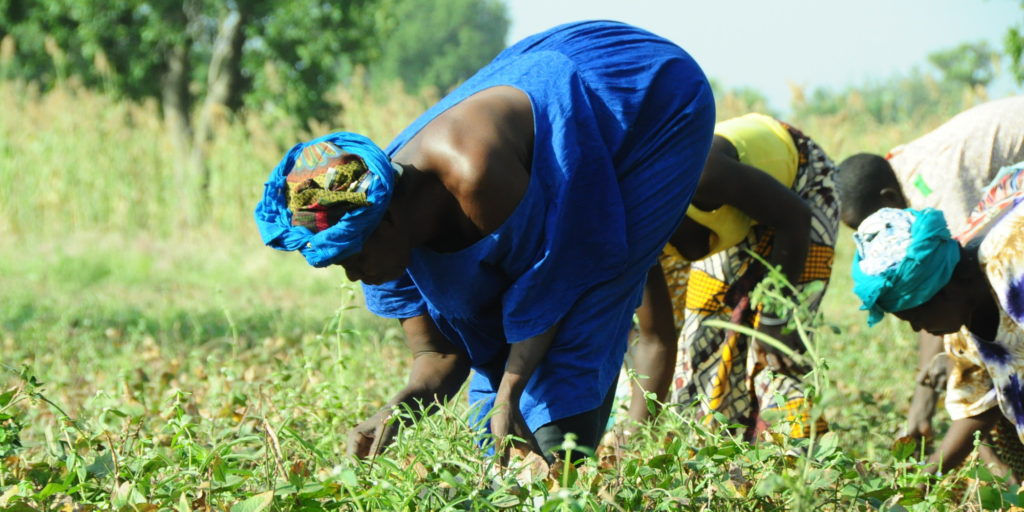
As a policy objective, the attainment of food security in Nigeria began facing challenges prior to independence when oil exportation began in 1958. But the challenges became pronounced and persistent after the commencement of large-scale oil exports in the early 1970s, when the country nearly abandoned agriculture in pursuit of newfound oil wealth. Self-sufficiency in food production and agricultural export earnings, aided by widespread cultivation of food crops and regional specialisation in cash crops – the cocoa mountains in the west, the oil palm and kernel heaps in the east, and groundnut pyramids in the north – began to diminish and disappear respectively. Within a few years after independence in 1960, the agricultural sector transitioned from a net foreign exchange earner to net foreign exchange drain.

Read More Download PDF

The Subnational Political Resource Curse: Allocations, Internally Generated Revenue and Spending Priorities in Nigeria

Oil wealth comes with a caveat-depend on it excessively and be buffeted by oil market volatility. The 2014 oil price crash revealed that Nigeria did not heed this warning. The country’s expenditure forecasts are based on an assumed oil price so that the government was caught flatfooted when the crash began around June. Under duress, public officials eventually revealed how financially irresponsible governance was during the years of plenty: after a tussle with the President, State Governors shared oil profits stowed in a “rainy day” account called the Excess Crude Account (ECA) amongst themselves; they allegedly also hindered the growth of the country’s Sovereign Wealth Fund. It does not seem like those hard-won funds were spent in the public’s interest-reports detailing several state governments’ inability to fund public investments and pay public servants’ salaries have continued to arise into 2018.

Read More Download PDF