 English
 Arab
Arab
 Deutsch
 Português
 China
China
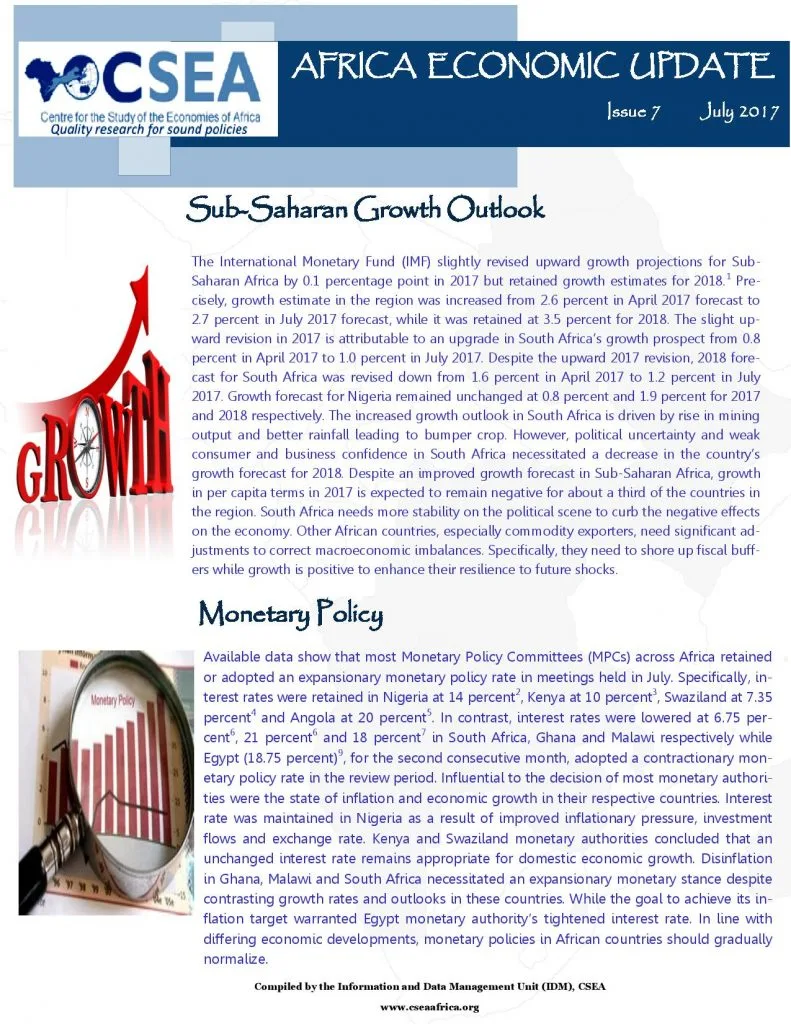
According to the International Monetary Fund's (IMF) July 2026 World Economic Outlook (WEO) Update, Nigeria's economic growth projection remains unchanged at 4.1% in 2026 and 4.3% in 2027, despite heightened global uncertainty arising from the ongoing conflict in the Middle East and disruptions to global energy markets. The IMF projects that growth in Sub-Saharan Africa will remain at 4.3% in 2026 and improve to 4.5% in 2027. However, growth prospects across the region vary significantly, depending on the individual countries' policy space, reform implementation, and exposure to external shocks. For Nigeria, improved macroeconomic stability and favourable terms-of[1]trade effects are expected to support economic growth, although higher prices for essential goods are likely to worsen poverty and food insecurity. While the stable growth outlook suggests that recent macroeconomic reforms are supporting economic resilience, rising living costs and food prices remain significant risks to inclusive growth. To sustain growth and cushion households from these pressures, the government should prioritise measures that boost domestic food production, improve agricultural productivity, and strengthen targeted social protection programmes. The government must also sustain reforms that ensure macroeconomic stability and encourage private investment through providing an enabling environment.
Download PDF