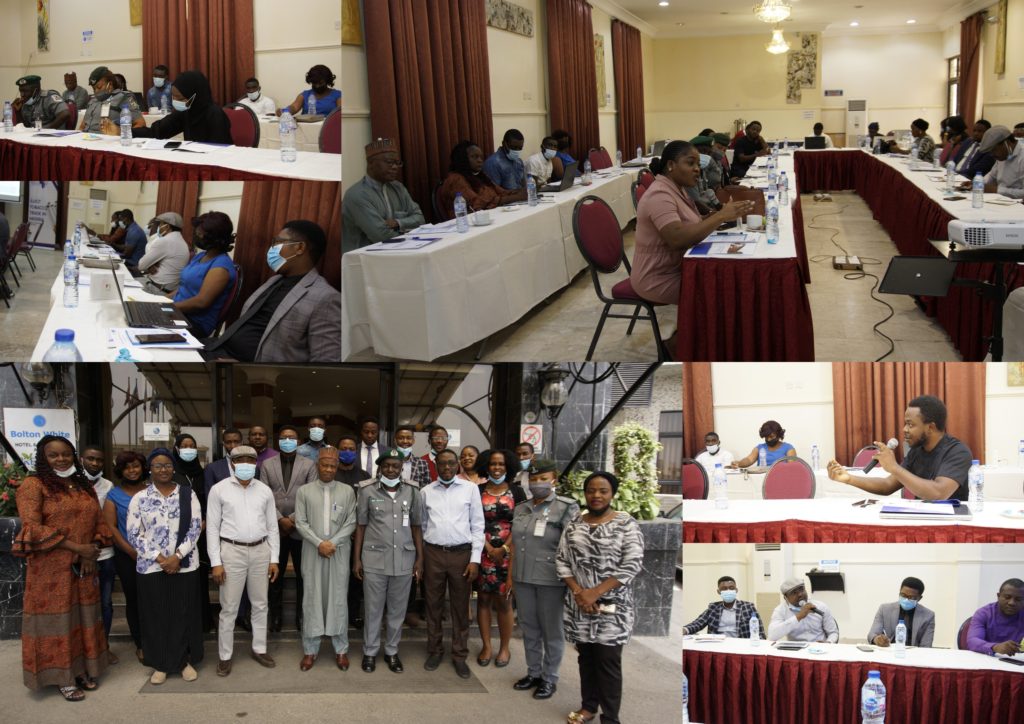
The Centre for the Study of the Economies of Africa (CSEA) organized a report dissemination workshop of our recently concluded research study on “Fostering Effective Tobacco Control Policy Implementation in Nigeria”, which was commissioned by the International Development Research Centre (IDRC), Canada. The overall aim of the research study is to provide research and advocacy toward the design and implementation of an effective tobacco control policy in Nigeria, using technical local evidence. Specifically, this workshop highlighted findings from our report titled, “The Health Burden and Economic Cost of Smoking in Nigeria”. It also provided a platform for participants to discuss in-depth, how research and advocacy can be linked more to policy during the second session tagged, “Developing research-advocacy-policymaking nexus on the Tobacco Control Programmes: Taking stock of progress, problems and potential solutions”.
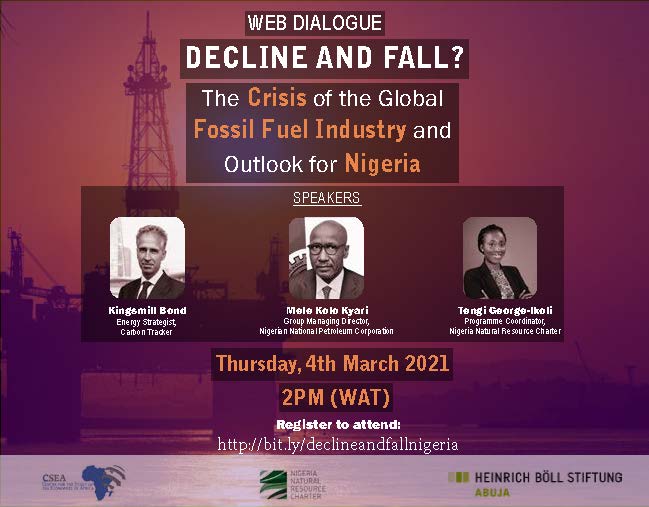
The Centre for the Study of the Economies of Africa (CSEA), in partnership with Heinrich Böll Stiftung and Nigeria Natural Resource Charter (NNRC), organized a webinar dialogue on March 4th 2021 to discuss “The crisis of Global Oil Industry and Outlook for Nigeria’s Development”. Key presentations at the dialogue were given by i) Kingsmill Bond, Energy Strategist, CarbonTracker, and ii) Tengi George-Ikoli, NNRC. The Chief Operating Officer (COO), NNPC Ventures and Business Development Directorate, Engineer Adeyemi Adetunji was a respondent at the dialogue and shared a presentation on “Repositioning The Energy Sector Through Balancing The Fossil- Renewable Energy Sources - Nigeria's Perspective For Sustainable Development”.
Civil Society
Organisations (CSOs) in Africa play a crucial role in enhancing transparency,
good governance and informing policy making. Amidst the impact of the COVID-19
pandemic, CSOs have continued to play key roles in information and evidence
generation, raising awareness, providing relief services, distribution of Personal
Protective Equipment (PPEs) and palliatives, combating misinformation, among
others.
However, CSOs in
Africa have continued to face challenges that often times limit their capacity
and ability to perform their functions. These challenges include but are not
limited to financial sustainability, inadequate capacity, and lack of
visibility.
To this end, the CSO Partner Navigator Project funded by the Rockefeller Foundation, with the Results for Development (R4D) and the Centre for the Study of the Economies of Africa (CSEA) as implementing partners is introducing an online platform that seeks to provide peer CSOs, government officials, funders, and global partners with information about the organizational capacity and effectiveness of CSOs based in Africa.
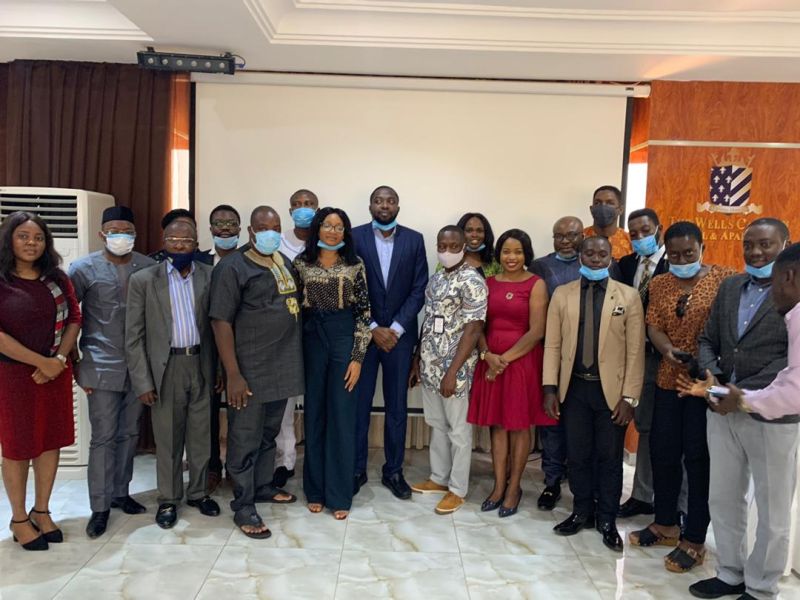
The CSO Partner Navigator Initiative workshop was organized to highlight the features of this platform and carry out the assessment phase/pilot survey of the initiative. The workshop was held on October 14, 2020 at the Wells Carlton Hotel, Abuja, Nigeria.
Click the link below to download the full report of the event
The Centre of the Study of the Economies of Africa (CSEA) in collaboration with the Center for International Private Enterprise (CIPE) and the Organized Private Sector organized a webinar to discuss the research methodology and gain insight from key stakeholders for the project , ‘Evaluating the Impact of the African Continental Free Trade Area Agreement (AfCFTA) on Nigerian Micro, Small, and Medium Enterprises (MSMEs) ’. The broad aim of the project is to highlight the economic outlook and growth potential of AfCFTA and to provide a cost-benefit analysis of the AfCFTA’s impact on MSMEs in Nigeria.
Dr. Chukwuka Onyewkena, Executive Director of CSEA, set
the tone for the Webinar with an introductory speech. He noted the relevance of
the AfCFTA in regional integration as a means to boost trade in the region and
invigorate productive capacity. However, the current Covid-19 pandemic has
shown the overreliance on importation and has made evident the relevance of
improving supply chains within the region.
Session One
The Background and Survey Presentation
In this session led by Dr. Adeniran Adedeji, Senior
Research Fellow at CSEA, the presentation focused on providing a background of economic
integration, highlighting the relevance of MSME’s within Nigeria, as well as
outlining the objectives of the study.
Within Africa, intra-regional trade accounts for 12%,
this is low compared to Latin America (17%) and the European region (68%). This
limited activity limits gains in ease of doing business, trade creation and
limits foreign investment. The widespread nature of economic integration means
the Nigeria is not unfamiliar with the criteria required to succeed within a
trade agreement. Currently a member of ECOWAS the nation has an opportunity to
learn from its actions and negotiate favorable terms for its nation.
Figure
1:ECOWAS
Experience in Economic Integration
MSME’s Account for 49.78% of GDP and employ 76.5% of
the total work force. Thus, the pivotal role of these enterprises mean that they
must be brought to the table to ensure inclusive and favorable decision making.
How do we achieve this? This can be
achieved by the evaluation of MSMSE’s to understand the policies against
comparative advantage and understand relative competitiveness. This objective
of this study is to examine the likely impact, threats and opportunities of the
AfCFTA on MSME’s within Nigeria. This is particularly relevant as the AfCFTA
has the potential to expose short term industry weaknesses and divert trade.
Survey of MSME
Four states have been selected for the survey. They
include: Abia, FCT, Kano and Lagos states. These states would provide a sample
total of 1,600. The survey would be conducted over 4 sectors: Wholesale/ Retail
trade, Agriculture, Manufacturing and Food service, and would be distributed to
cover location, industry and sectorial concentration.
The questionnaire would be divided into five sections with
focus on obtaining the required information:
Basic business information
International business operation
Export and import operations
Awareness and perception about AfCFTA
Gauging MSME’s competitive capacity to meet process
requirements of the AfCFTA
Session Two
The Computable General Equilibrium (CGE) Model Presentation
This session was led by a presentation from Lateef
Akanni, research associate at CSEA. The presentation focused on introducing the
CGE model, explaining its structure and noting the expected outcome. This Computable General Equilibrium (CGE) model
provides a quantitative means to note the impact of the AfCFTA on the MSME’s in the nation. The CGE model also offers a
computer-based simulation of the broad impact of the trade agreement.
The model would expose the:
output effect across sectors
employment (high & low skilled) effect across
sectors
Price effect across sectors
It would also provide a basis for dialogue with
Nigerian MSME stakeholders and policy makers as links between the AfCFTA
efficiency and distribution links would be revealed.
Model Structure
A base date would be utilized from the latest GTAP
data (2014) to reveal the impacts of the change from the AfCFTA.
Expected Outcomes
The Macroeconomic Outcomes will include how the AfCFTA
will propel change in income, gross domestic output wages, etc .
For Sector specific outcomes, the CGE model will
provide outcomes per sector such as output effects, employment effects and changes
in value of imports and exports.
Stakeholder
Comments
There is the need to include questions on
non-tariff barriers as SME’s may face other barriers which would be excluded by
limited questions in the questionnaire.
It is also important to include questions that will
elicit discussions on the impact of COVID-19 on MSMEs and present the questionnaire
in a precise format
It was suggested that the scope of the survey
area should be expanded to accommodate other areas in Nigeria most especially
Onitsha
It was also suggested that we leverage on the
online platform and other electronic means to reach out to respondents in an
effort to avoid the spread of the coronavirus.
Participants suggested that the study could
also address how the Nigeria MSMEs could operate their business online and
feature on the e-commerce platform.
Furthermore, CSEA should liaise more with
Nigeria’s AfCFTA secretariat to communicate output and inform their
negotiations of the AfCFTA protocols.
The participants concurred that while the CGE is the
best model to use for the analysis, the market analysis tool should also be employed
to compliment the CGE as well as other analysis.
This webinar was a successful attempt to curate the unique expertise of key stakeholders within the MSME sphere.
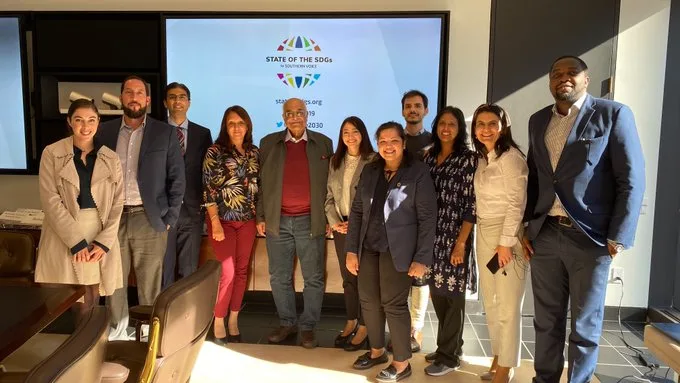
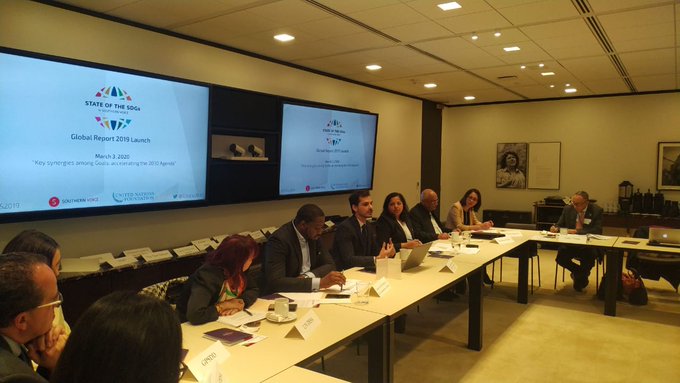
The Southern Voice launched the Global Report of its flagship initiative “State of the Sustainable Development Goals” (SVSS) in New York on March 2-3 2020.
The SVSS is an empirical research initiative that stands out for being conceptually innovative and policy-relevant, with a unique Global South perspective. The initiative explores barriers and solutions to fulfilling the ‘leaving no one behind’ promise that is central to the SDGs.
Dr. Chukwuka Onyekwena participated in the panel session on "Key synergies among Goals: accelerating the 2030 Agenda”. During the discussions, he noted that a lack of thorough understanding of the interactions between SDGs (and their targets) has prevented many countries from maximising synergies and minimising trade-offs. For instance in the case study from Nigeria,“The key untapped synergy in is the impact of educating women. Sociocultural practices in the North, which lead to a lack of enrollment of females in schools, are a major driver of the North-South gap in educational attainment,”
To download the full report of CSEA's research on Achieving Quality Education in Nigeria, click HERE.


 English
 Arab
Arab
 Deutsch
 Português
 China
China