Nigeria’s real GDP growth rate rose marginally Year-on-Year by 1.8 percent in 2018Q3, as against 1.5 percent recorded in the preceding quarter – a minor increase of 0.3 percentage points. Non-oil sector, the main driver of the overall GDP growth rate increase, improved to 2.36 percent, from 2.05 percent.
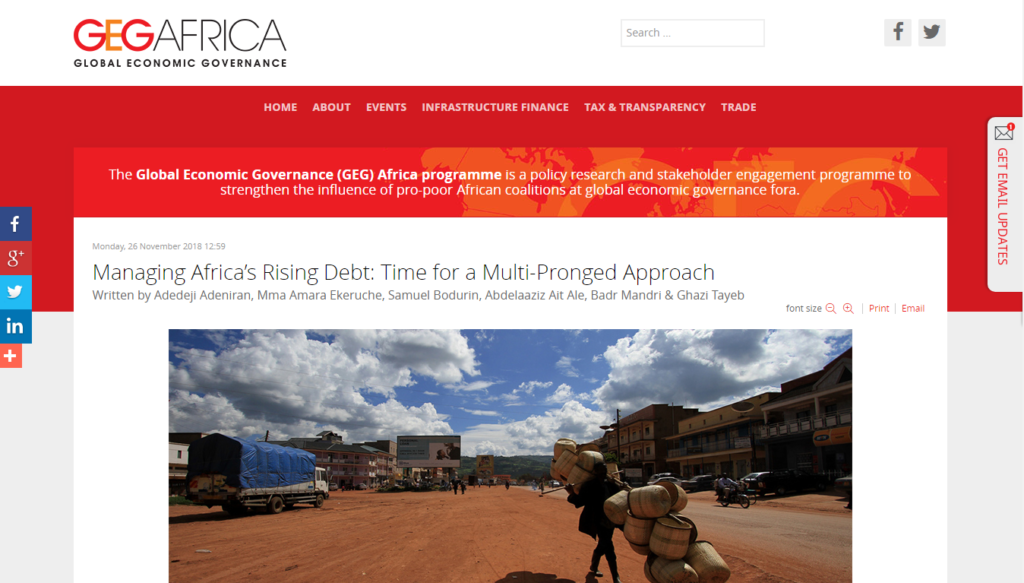
Debt sustainability in Africa has emerged as a key concern among policymakers and development finance institutions (DFIs). Currently, 19 out of 54 countries in Africa exceed the 60% debt-to-gross domestic product (GDP) threshold prescribed by the African Monetary Co-operation Programme (AMCP) and 24 countries have surpassed the 55% debt-to-GDP ratio suggested by the International Monetary Fund (IMF). Of concern is the changing structure of Africa’s debt: countries are tilting towards non-concessional and domestic debt with higher interest rates. Governments’ ease of access to and control over the domestic debt market is leading to excessive public debt accumulation and macroeconomic instability. Aside from the high interest rate and debt-servicing burden, excessive domestic debt also stifles credit to the private sector, the main engine of growth and job creation.
Read MoreThe T20 comprises think tanks that aim at developing research and evidence-based briefs and positions to guide governments in policy development. The T20 Africa Standing Group was established in 2017 to bring together think thanks from the G20 and African countries to work together on G20 policy matters. But as of now there is little information about T20 Africa’s influence and impact on G20-Africa related policies. Our recommendations are:
a) for T20 Africa to define success criteria for their group; b) establish a communication structure within T20 Africa; c) monitor and share status of every policy recommendation; d) collaborate with B20 and think tanks from the other engagement groups; e) conduct impact assessments during every G20 Presidency with the finance track; and f) develop a post-G20 Summit strategy to monitor and coordinate Africa-related policies and initiatives.
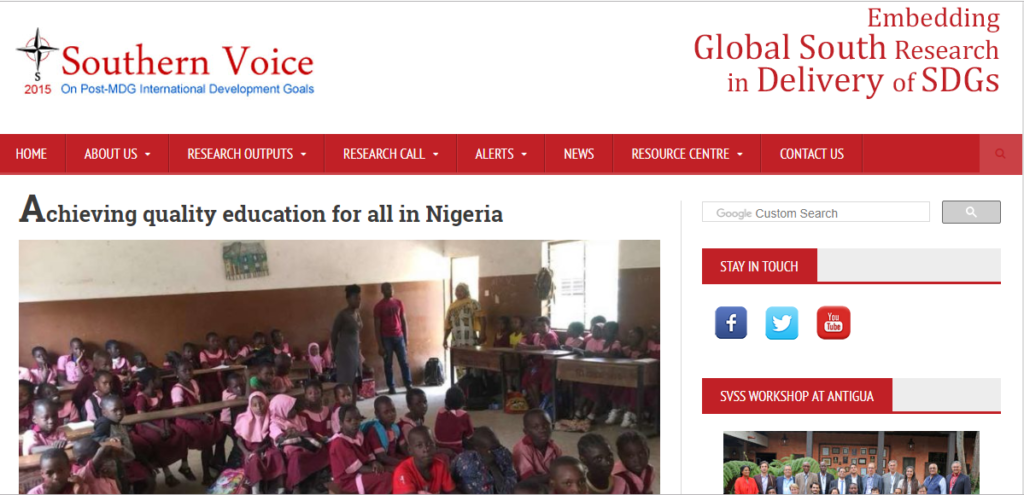
Read MoreQuality education is a crucial tool for improving the prospects of higher income levels for individuals, and for the economic growth of nations. Goal 4 of the United Nations Sustainable Development Goals (SDGs) is focused on ensuring inclusive and equitable quality education and promoting life-long learning opportunities for all. However, in low and middle-income countries like Nigeria, many children do not have access to quality education. This blog looks at how Nigeria can make better education a reality and achieve SDG 4.
Read MoreThis report is the third in the series of benchmarking exercise reports produced by the Nigeria Natural resource Charter (NNRC); carried out to provide an assessment of governance of Nigeria’s petroleum wealth. The first two exercises were conducted and published in 2012 and 2014 respectively. It uses the NRC framework, developed by a diverse set of internationally renowned experts on natural resource management to conduct the assessments. In 2016, the framework was revised to aid a more contextual and detailed approach in obtaining results so as to ensure accurate analysis of the resource sector. This revised framework is the basis for the 2017 edition of the exercise. It analyses the governance of petroleum wealth in Nigeria and identifies crucial changes that have taken place in the sector since the last benchmarking exercise was conducted.For the 2017 edition, the NNRC entered into a partnership with a consortium of organisations.
CSEA contributed to four precepts in the report: