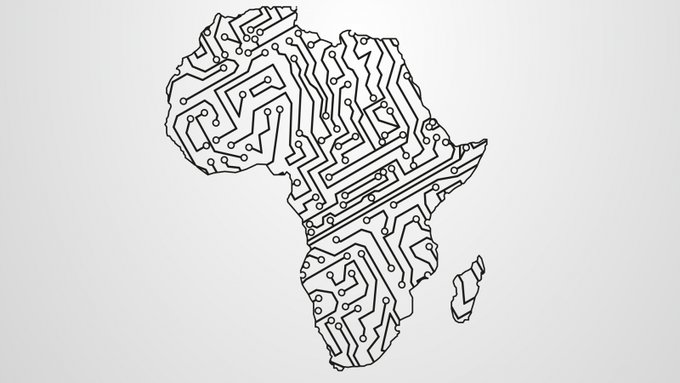
Digital technologies have proven to be a crucial factor in the
fight against covid-19, and response strategies to reduce the social and economic
impacts of the pandemic. With the restriction in human interaction and closure
of international borders to curtail the spread of the virus, usage and reliance on digital platforms has become the only medium of human
interaction and economic transaction to mitigate and minimize the disruptive
effect from the covid-19 virus. While the scope and scale of digital usage
varies across countries based on extent of digitalization, some form of adoption
of digital systems are witnessed in every country, including Sub-Saharan Africa
countries with the lowest internet connection.
Like every other part of the world, digital economy plays four critical roles in response to COVID-19: surveillance, sensitization, social welfare intervention and substitution. These are couched as 4Ss as discussed below:
- Surveillance: Although the reported number of covid-19 cases are relatively low on the African continent, the pandemic has created a need to efficiently and promptly track and trace persons who might have been exposed to identified carriers of the virus, to curb further infection. At a regional level, the Africa Centres for Disease Control and Prevention, an umbrella body, provides intelligence support and cross border monitoring for member countries of the African Union. Countries within the region have also resorted to relying on a combination of different digital applications, call records and software for contact tracing. Some examples include; SORMAS which is used in locations in Nigeria and Ghana, COVI- ID solution deployed in South Africa, and a mobile tracing app used in Uganda. In addition, digital platforms have been helpful in enforcing compliance with social distancing regulations and reporting cases of default.
- Sensitization: Digital platforms have also been instrumental in creating awareness and sharing information about symptoms, preventive measures, personal hygiene, and other health and government advisory related to the pandemic. African countries have adopted a wide range of media in disseminating information to citizens. For instance, South Africa set up an interactive WhatsApp chat service in various local languages to respond to general queries about covid-19. A free online tool is available to Nigerians to assist in self-assessing health risk category based on users’ symptoms and travel history, and this helps reduce unnecessary calls to the disease control hotlines. Also, other means of digital communication such as government websites, social networks, mass text messages, radio and television jingles, have been adopted across the continent during this period, to ensure citizens are constantly informed.
- Social welfare delivery: Livelihoods have been negatively impacted due to the effect of reduced economic activities, especially for vulnerable individuals and those operating in the informal sector who have suffered job loss, and their savings are inadequate to cater for such an unexpected event like the pandemic. Therefore, African states have had to expand or introduce new social protection programs to provide relief in various forms to affected citizens, ranging from tax breaks, to fund transfers, food banks, extended loan repayment periods, interest rate freeze, and so on. Although some countries adopted cash-in-hand relief payments, digital channels have been quite popular in distributing stimulus packages, in order to minimize queues and comply with social distancing rules. Countries such as Togo, Malawi, Zimbabwe among others, have offered intervention funds which can be accessed through mobile banking or online platforms.
- Substitution: The disruption in daily activities has triggered the use of digital alternative measures to cope with the changing landscape. Some of these substitutes include working from home, increase in online grocery and food shopping, education delivery using e–learning platforms and other digital channels, legislative and government functions conducted via teleconferencing, medical check-up through virtual consultation, increased reliance on social media as means of interacting and connecting with friends and family, and so on. All of these digital alternatives have been used across African countries.
Weaknesses
and gaps in Africa’s digital economy exposed
While
the renewed importance of the digital economy offers opportunities for Africa,
it however has its downside. The level of misinformation
spread through social networks has been alarming, and difficult to curb,
thereby posing a real problem to governments and health officials across the
region during this period. The effect of such cases of false news has been
far-reaching, creating public
distrust and making some citizens doubt the severity of the virus, while
some others have erroneously consumed harmful products touted as cures for
covid-19.
In
addition, the transition to dependence on digital technologies threatens to cause
further exclusion as not all citizens are able to leverage digital alternatives
in combating the impact of the pandemic. There are reported cases across the
region of uneven
access to digital services for educational
needs, business
operations, and so on. A number of factors are responsible for the digital gap
within the continent:
- High costs: Due to high incidence of poverty, a significant proportion of citizens are unable to access the internet because they cannot afford data charges and expensive smart devices. Based on the 2019 report on the state of broadband published by United Nations Educational, Scientific and Cultural Organization and International Telecommunication Union, the cost of 1GB of data for the poorest 20% of Africa’s population is equivalent to almost half of their monthly income. As a result, the proportion of Africa’s population that use the internet is significantly lower than the global average.
- Poor digital skills: Africa has a low literacy rate and this has an impact on digital competencies of its citizens, thereby limiting digital usage. Individuals who operate in the informal economy and earn income on a daily basis such as petty traders, subsistence farmers, pastoralists, artisanal miners, among others, have been severely impacted by recent changes in daily activities, but are unable to adapt business operations due to limited education and lack of digital skills, as well as other factors. An estimated 85.8% of Africa’s workforce operate in the informal sector and rely on physical interaction for their livelihood.
- Poor broadband penetration: According to the United Nations Economic Commission for Africa, rural and remote communities within the region are grossly underserved with low levels of broadband connectivity. The World Bank also estimates that about 100 million Africans live in areas without mobile networks. This trend can be explained by the fact that investments in broadband and mobile networks tend to be targeted at profitable urban regions with substantial economic activities rather than less commercially viable rural areas. Also, due to inadequate telecommunications infrastructure, certain regions even in urban areas although connected, have suffered from unreliable broadband coverage during the lockdown, thereby limiting access to the internet.
- Lack of digital identity: Digital identification is usually used to verify an individual’s identity online and often linked to official or legal forms of identification, biometrics and other online personal information or activities. However, approximately half of the continent's population do not possess government issued identification nor digital profile, thereby restricting access to entitlements for which a means of identification is a prerequisite, such as accessing relief packages, public services, financial services and so on during the lockdown.
The above constraints have ripple discriminatory effects on daily life, schooling options, means of livelihood for micro and small businesses, access to welfare funds, and so on. For instance, it could worsen pre-existing inequalities in the region’s educational systems, as vulnerable students in public schools are more likely to experience difficulty in accessing digital learning due to lack of digital infrastructure, broadband connectivity and digitalized teaching content.
Urgent need for data governance and greater inclusion
Data gathering and information sharing continues to be an indispensable part of research to curb the spread of the virus, monitor its impact and finding preventive or curative medicine. However, with more data flying across the web, the risks of data breaches and human rights violations have become more visible. In the months following the lockdown, there have been several reports in various African countries on dangers of digitalization in relation to hacking, financial fraud, disinformation, exploitation of youths, among others. Even before the pandemic started, the African Union had estimated an annual loss of $3.5billion from cybercrimes across the continent. Although free flow of information across the region is essential at this period, and for long-term regional cooperation and integration plans like the African Continental Free Trade Area, it is imperative to promote a trustworthy mechanism that ensures protection of citizens civil rights.
This problem underscores a need for comprehensive data governance to support rising digital economy in Africa. If effectively implemented, data governance can address challenges in the areas of privacy, misinformation and alignment of cross-country data regulation to curb cybercrime among other concerns. A report by the Centre for International Governance Innovation reveals that most African countries are yet to enact laws and regulations for digital data protection and security, and for the few countries that have existing data governance structures, these structures are either not fully operational or not up to global standards required to ensure real digital transformation. Effective data governance has therefore become increasingly important at both national and regional levels.
The African Union recently issued a digital transformation strategy for the next ten years (2020 to 2030), which provides policy recommendations for improved data protection to be implemented by member states. Still, a lot more work is required. National data governance frameworks need to define responsibilities and ownership of data assets, specify processes for mitigating data infringement, ensure accountability, integrity, transparency and stewardship, safeguard data privacy and security, protect human-rights and empower citizens to make informed decisions regarding data sharing, discourage unfair practices, while still facilitating free flow of information for innovation and growth of the digital economy. Technologically driven innovations should be encouraged while having regulations that mandate responsible data collection and usage. A policy regime that is thorough, yet flexible, such that it promotes creativity.
Therefore, policy reforms and digital infrastructure investment drive bordering on data governance and digital inclusion are necessary as Africa, and indeed the world gradually readjusts, and recovers from the effects of the pandemic. African countries need to collaborate to ensure all citizens have reliable and secure digital access in order to be competitive in the new economy. Public/private partnerships and investment might be the way forward to ensure inclusion of underserved rural communities. As we embrace international or cross-border integration, data privacy and localization laws are essential. Also, data localization presents a viable tool for governments to exercise control and partake in the value associated with data generated within national borders. Overall, this calls for the right balance in order not to be too restrictive and discourage integration.


 English
 Arab
Arab
 Deutsch
 Português
 China
China