The Central Bank of Nigeria (CBN) has introduced the CBN “Naira 4 Dollar Scheme” as an incentive for senders and recipients of international money transfers.1 More specifically, all recipients of diaspora remittances through CBN licensed International Money Transfers Operators (IMOs) will be paid N5 per $1 received as remittance inflows in addition to the USD sent from abroad. This will however last from March 6, 2021 to May 8, 2021. The Naira 4 Dollar Scheme is being put in place to incentivize foreign exchange inflows into the country and increase foreign reserves. The scheme is likely to deter the CBN from further devaluing the currency following improved foreign exchange inflows. However, the effect of the scheme on Nigeria’s balance of payment account should be seriously considered in order not to push the country into further deficit.
Affordable and efficient energy supply is essential for enhanced welfare and better development outcomes. However, African states suffer from huge deficits in energy generation and distribution, resulting in unreliable power networks, frequent power outages and expensive tariffs. In a bid to improve efficiencies through interconnectivity and reduce energy development challenges at the national level, sub-regional power pooling initiatives have become increasingly popular in Africa. The idea behind creating power pools is to encourage cooperation among countries, through linking excess capacity in one country where power is produced more economically, with excess demand in another country that can benefit from cheaper imports.
Download Paper here
The World Bank’s Women, Business, and Law (WBL) 2020 index which measures the laws and regulations that affect women’s economic opportunity show that Nigeria scores 63.1 out of 100. This is lower than the sub-Saharan Africa regional average of 71 and the same score as the previous year.1 Nigeria’s performance varies across the several legal indicators including laws addressing the constraints to freedom of movement (50), women's decision to work (75), women's pay (50), women's work after marriage (100), women’s work after having children (0), constraints on women starting and running a business (75), gender differences in property and inheritance (80), and affecting the size of a woman's pension (75). Improvements in opportunities that accrue to women are underpinned by cultural and social shifts that close gender bias not only in the economy, but also in society and politics. To spur these shifts, the media and Civil Society Organizations (CSOs) should promote gender equal narratives, while the private sector and government should redesign policies to create more and better opportunities for women.
Data released by the National Bureau of Statistics indicates that Nigeria’s real Gross Domestic Product (GDP) grew by 0.11% in Q4 20201. Further disaggregation shows that the oil sector contributed 5.87% to total real GDP while the non-oil sector contributed 94.13% during the period. Although the growth rate in Q4 2020 is lower than the corresponding quarter of 2019 which was 2.55%, it represents a 3.74% improvement over the previous quarter (Q3 2020). More importantly, it is the first positive quarterly growth since the economy contracted in both the second and third quarters of 2020, thereby ending the recession experienced due to the pandemic. The growth reflects the gradual return of economic activities following the resumption of movements which limited commercial activities in the previous quarters. Considering that economic activities are returning to pre-COVID levels and COVID vaccination is underway, economic expansion is expected in the near term. However, the size of the expansion will depend on the spending choices of the government as it responds to the new and evolving challenges. As such, budgetary allocations to sectors capable of delivering an inclusive recovery such as the agriculture sector should be prioritized.
Data released by the National Bureau of Statistics revealed a decline in total disbursements from the Federation Account in 2020. The Federation Account Allocation Committee (FAAC) disbursed N4.79 trillion1 to the federal and state governments in 2020, whereas, a total sum of N5.4 trillion was disbursed in the preceding year 2019, representing a 13% decline. Further disaggregation shows that the federal and state governments received N2.49 trillion and N2.3 trillion respectively in the period under review. Delta and Akwa-Ibom states were the biggest beneficiaries, receiving the highest allocations of N186.83 billion and N146.27 billion respectively, while Osun and Cross River states received the least allocations of N30.63 billion and N32.89 billion respectively. The overall decrease in disbursements is an indication of a dip in total revenue sourced during the year. The COVID-19 pandemic negatively affected global oil sales, which is the country’s main source of revenue. This therefore calls for increased commitment and intervention programs to diversify the economy, and reduce the country’s vulnerability to oil price shocks. Domestic revenue mobilization efforts also need to be intensified.
The COVID-19 pandemic has had a debilitating effect on the Nigerian economy. Specifically, the combination of lockdown measures and the global slowdown of economic activities led to the contraction of Nigeria's GDP by 6.1% in the second quarter of 2020, thus inducing the country's second recession within five years . Nevertheless, it is noteworthy that the pandemic occurred amid prevailing economic vulnerabilities.
This policy brief examines the pre-existing economic vulnerabilities, evaluates the Nigerian government's responses to the pandemic with regards to achieving a green and more diversified economy, and develops a new agenda and strategies for sustainable growth and economic transformation.
The International Monetary Fund (IMF) projects that Nigeria’s fiscal balance is estimated to increase considerably. More specifically, general government deficit is projected to widen from 4.8 to 5.9 percent of GDP between 2019 and 2020.1 Also, public debt is projected to increase substantially to 34 percent of GDP in 2020 from 29.1 percent in 2019. The increase in government general deficit can be attributed to sharp revenue declines occasioned by the pandemic. Although revenue could increase given the increase in the Value Added Tax (VAT) rate from 5 to 7.5 percent in 2020, and expenditure savings from the removal of power sector and fuel subsidies, the concurrent increase in expenditure related to COVID-19 emergency support will drive the widening fiscal deficit. However, as domestic activities recover to pre-COVID levels and spending on household and businesses vulnerable to the pandemic tapers down, the fiscal deficit is projected to narrow in 2021.
Based on the recently released Corruption Perception Index (CPI) 1, Nigeria is still perceived to be among the most corrupt nations, with a ranking of 149 out of the 180 countries assessed – a higher ranking is indicative of higher corruption. The CPI is based on a scale of 0 to 100; with zero representing extreme corruption and 100 indicating least level of corruption. Nigeria’s CPI score reduced slightly from 26 in 2019 to 25 in 20202, while its ranking worsened, falling from 146 to 149. The increase in perceived corruption may be partly attributable to the reports by civil society organisations on the hoarding and mis-management of COVID-19 palliatives and related supplies. It is therefore imperative that anti-corruption policies are enforced to boost the public trust; as this can affect domestic and foreign direct investments.
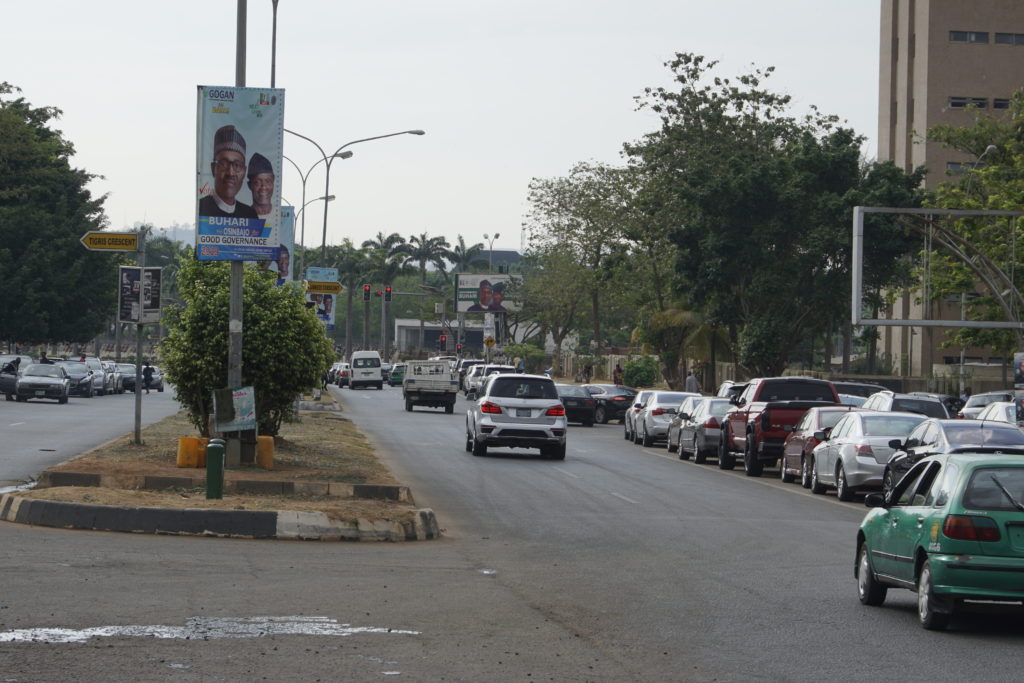
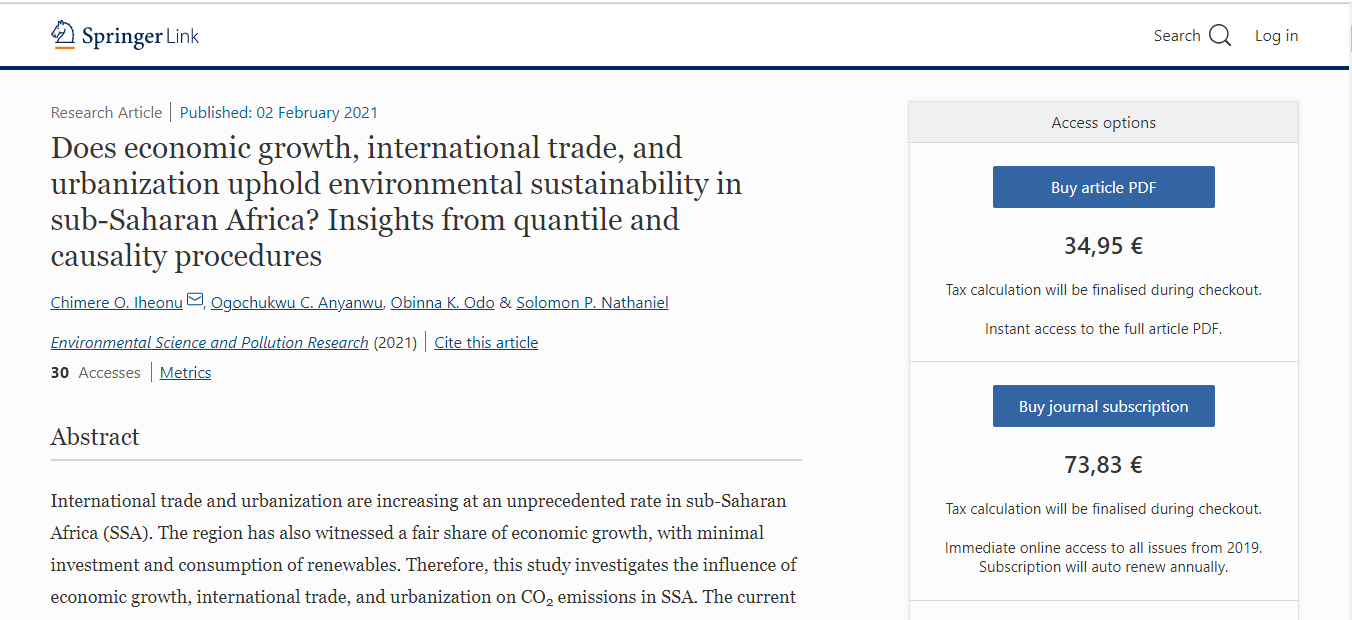
International trade and urbanization are increasing at an unprecedented rate in sub-Saharan Africa (SSA). The region has also witnessed a fair share of economic growth, with minimal investment and consumption of renewables. Therefore, this study investigates the influence of economic growth, international trade, and urbanization on CO2 emissions in SSA. The current study enriches the existing literature by employing the panel quantile regression analysis to account for existing levels of CO2 emissions in the region. Empirical findings reveal that GDP increases CO2 emissions across quantiles, especially in countries where the existing level of CO2 emissions is low. International trade improves environmental sustainability in countries where the existing levels of CO2 emissions are at their lowest and highest levels but exacts a reversed impact on CO2 emissions at the median. Further findings suggest that urbanization increases CO2 emissions across the observed quantiles with a more pronounced effect in countries where the existing levels of CO2 emissions are at its lowest level. The study also reveals a bi-directional causality between economic growth, international trade, urbanization, and the emissions of CO2. The limitations of the study and possible direction for future research have been highlighted. Policy directions are discussed.