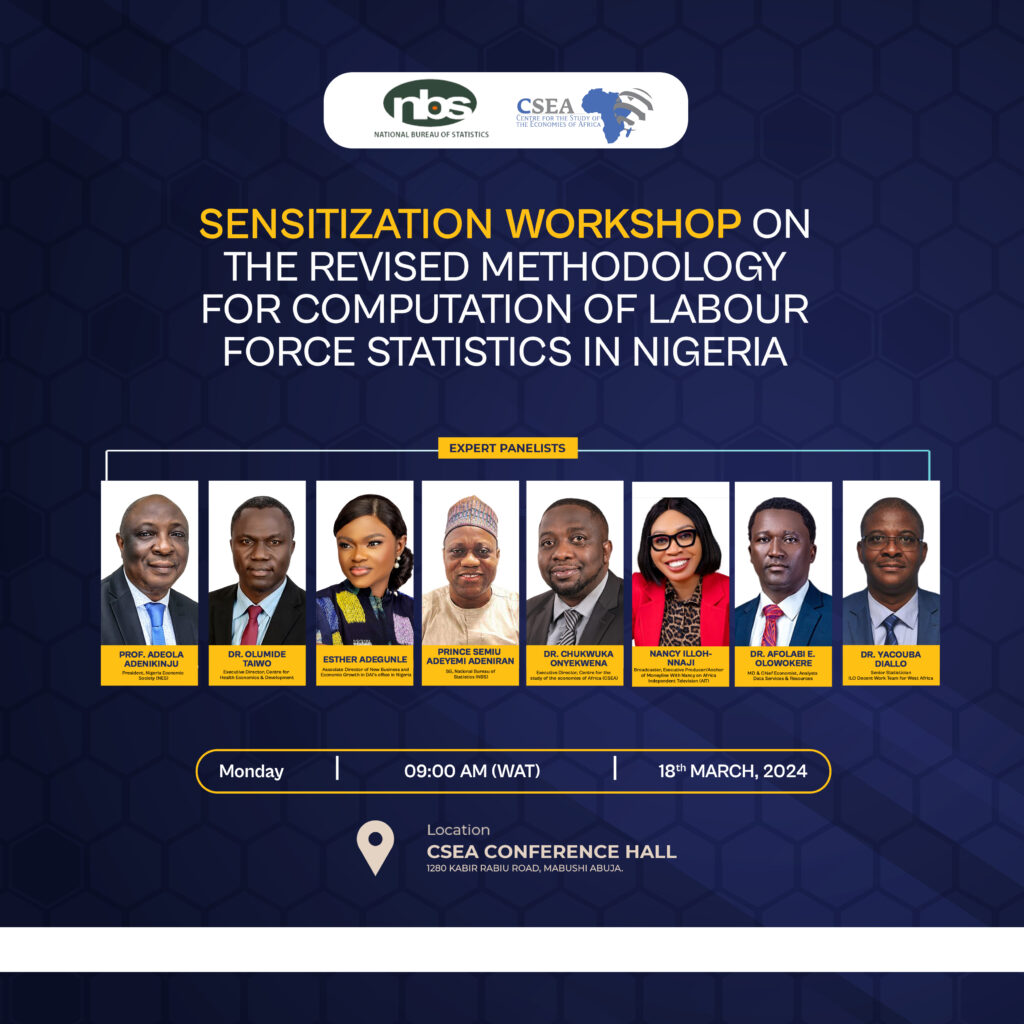
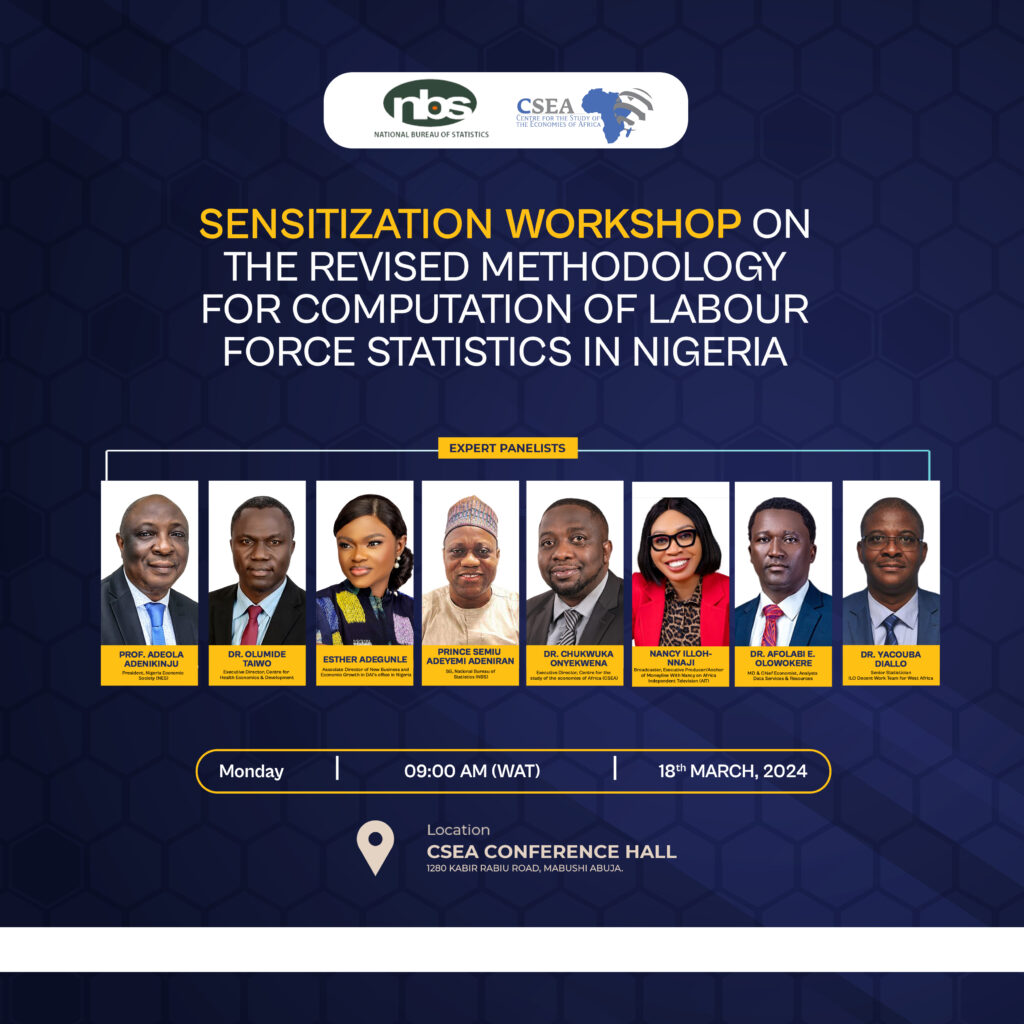
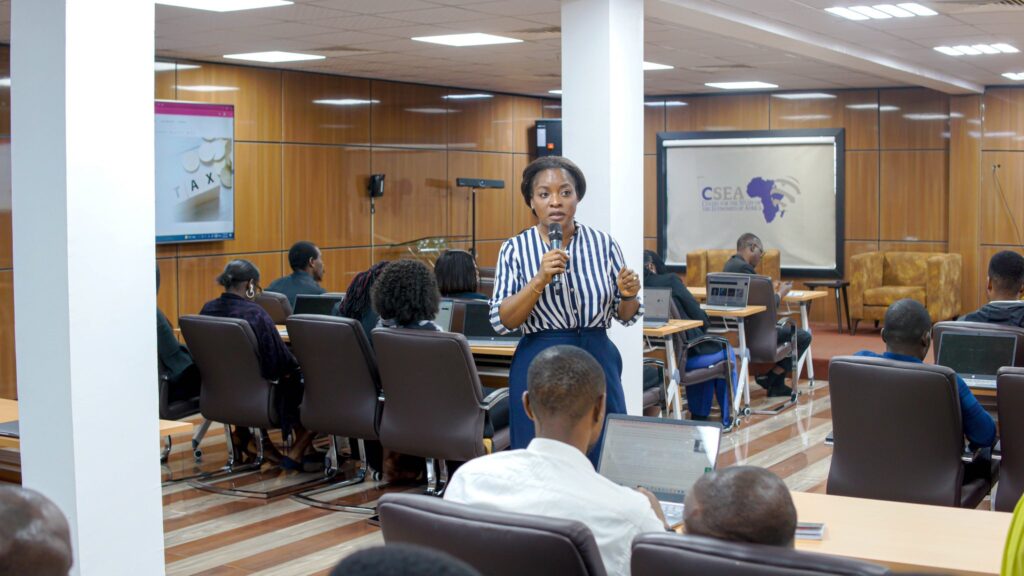
The Centre for the Study of the Economies of Africa (CSEA), in collaboration with the National Bureau of Statistics (NBS), is organising a sensitization workshop titled “Understanding New Nigerian Labour Force Statistics".
The workshop aims to acquaint stakeholders, including government officials, the private sector, civil society organizations, and the public with the most recent Nigerian Labour Force Statistics and its implications for policy and programme development.
The event will also equip participants with the right tools and skills to interpret, visualise and analyse labour force data for data-driven and evidence-based decision-making.
In today's fast-paced world, access to accurate and timely data is crucial for effective governance and decision-making. Policymakers often struggle to access the data they need to make informed decisions and serve the public effectively. The problem lies not in the lack of available data but in its inaccessibility. Unfortunately, many government ministries, departments, and agencies (MDAs) in African countries face challenges when it comes to sharing and integrating data. This lack of data interoperability hampers collaboration, slows down processes, and prevents the delivery of efficient public services.
In furtherance of our work on tobacco control in Africa, we are pleased to announce that CSEA has been selected as the Tobacco Control Data Initiative's (TCDI 2.0) sustainability partner. The TCDI platform enhances access to country-specific data, enabling better tobacco control policy planning and execution across Africa.
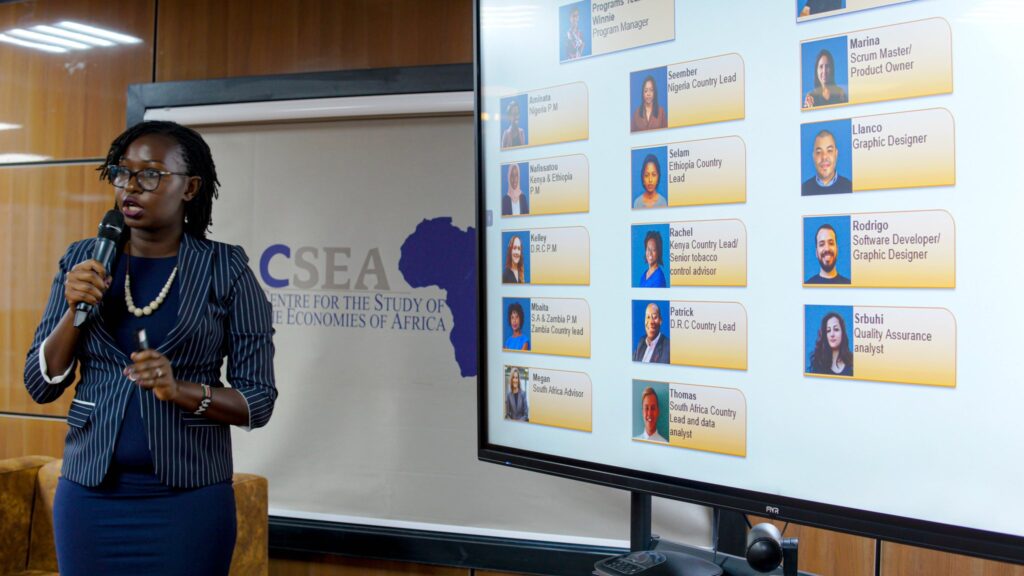
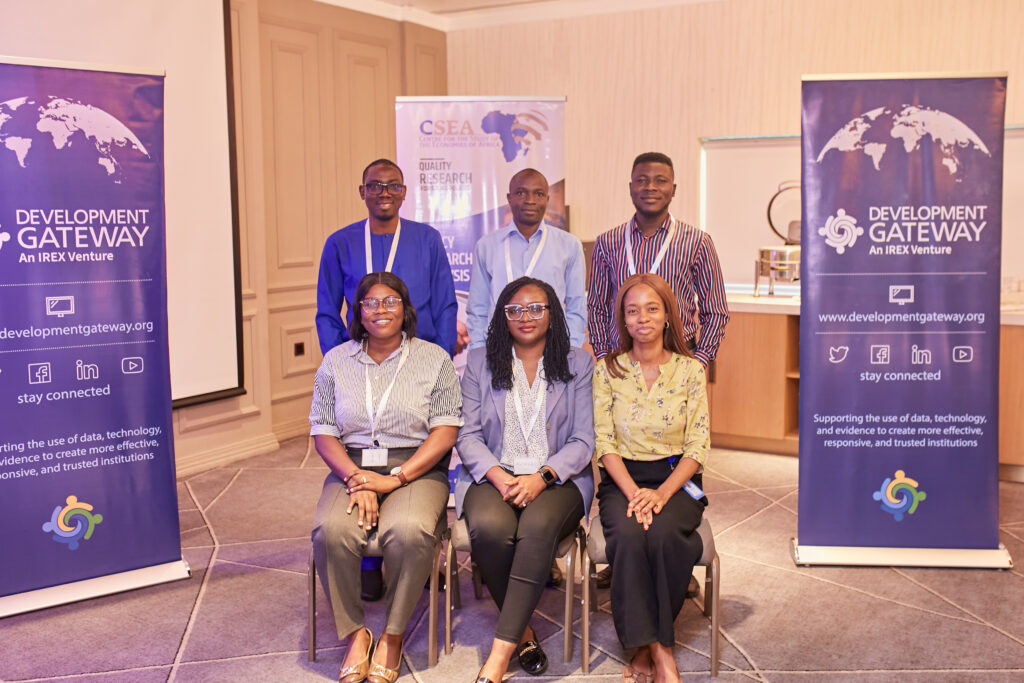
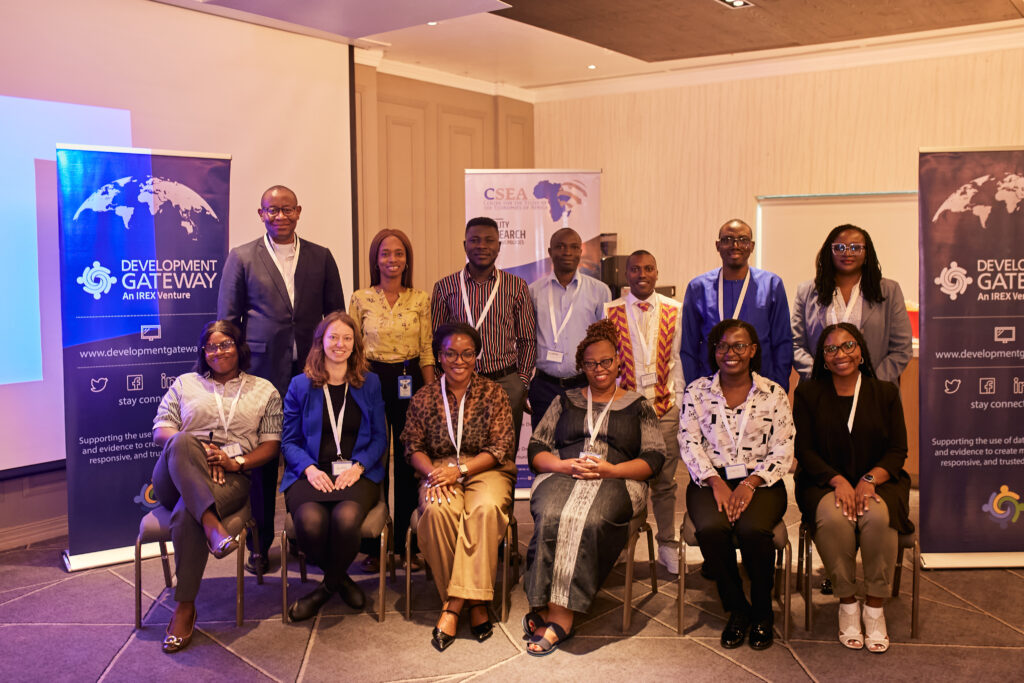
As part of our onboarding process, we hosted representatives from the Development Gateway, Winnie Awuor (Program Manager, TCDI) and Seember Ali (Country Lead for Nigeria, TCDI), for an informative introduction to the TCDI 2.0 program at the CSEA office in Abuja, Nigeria, on Monday, 19 February 2024.
Following this meeting, the Development Gateway organised a kick-off workshop last at the Marriot Hotel in Lagos. The meeting provided a platform for both teams to exchange knowledge and set the direction for the project expectation over the next four years. The meeting also featured capacity building sessions and presentations from different country leads on research methods, media and tobacco control and much more.
We are excited about the prospects of this initiative, and we look forward to collaborating with key actors in the tobacco control sector, including government and non-governmental health organizations, advocacy groups, and the media, among others, to achieve the program's objectives.
This policy brief aims to outline the key considerations for developing artificial intelligence (AI) governance frameworks that promote transparency, accountability and confidence in AI systems across the African continent. AI is gaining some traction in African countries, as a means to drive socio- economic development. Countries are recognising the potential of AI and as a result, are investing in research, innovation, and infrastructure to foster its growth.
This policy insights examines the potential impact of the African Continental Free Trade Area, and its underlying agreement, on biodiversity, agriculture and food security in Africa. It highlights the significant benefits that the implementation of the agreement promises to bring, particularly in the agricultural sector, and the potentially negative effects on Africa’s biodiversity, smallholder farmers and the environment. To mitigate these potentially negative effects, this policy insight recommends various policies aimed at supporting biodiversity-based agriculture, establishing a common approach to intellectual property rights protection, regularly assessing compliance with multilateral environmental agreements, promoting access to biodiverse and nutritious produce, and investing in capacity development, research and partnerships.


 English
 Arab
Arab
 Deutsch
 Português
 China
China