Discussion Papers & Case Study

  • Home
  • Discussion Papers & Case Study
Follow via RSS

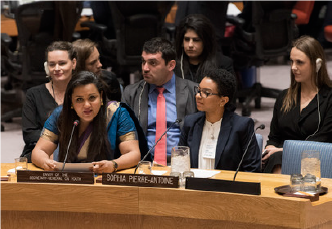
Opportunities and Pitfalls in Practical Translation of Youth Inclusivity for Sustainable Peacebuilding in Africa

The share of Africa’s youth in the world is expected to increase to a staggering 42 percent by 2030 and is projected to continue to grow throughout the remainder of the 21st century, more than doubling from current levels by 2055. Data on direct conflict casualties suggests that more than 90 percent of all deaths occur among young adult males. Today, some 50 percent of the 1.4 billion people living in countries impacted by crises and fragility are under the age of 20. The Security Council has recognized that an estimated 408 million youth (ages 15-29) reside in settings affected by armed conflict or organized violence whereby 1 out of 4 youth globally are affected by armed conflict. These figures are gut-wrenching but indispensable for our understanding of peacebuilding in today’s age. With a global population of over 1.8 billion, young people— though disproportionally affected by armed conflict and organized violence—could potentially employ the unique capacity and ability to take on our planet’s most deep routed conflicts. Their inclusion and leadership are therefore imperative to the successful pursuit of peacebuilding.

Read More Download PDF

Climate Policy and Finance: Designing an Effective Carbon Pricing System for Nigeria’s Oil and Gas Sector

Carbon pricing has been recognized not only as the most efficient economic policy instruments to internalize the social cost of emissions, but also as a major tool to generate public revenues that can be used to offset the potential adverse distributional effects of climate policy. However, in many developing countries, there is a widespread reluctance to commit to climate policy, largely due to financial constraints, a lack of public support, and concern over its regressive effects.This paper makes recommendations towards the design of an effective carbon pricing system that not only discourages air pollution but also encourages the gradual uptake of climate-friendly technologies by the private sector in Nigeria's oil and gas sector, while supporting public investment in sustainable infrastructures and projects that offset the distributional effect of the climate policy.
Read More Download PDF

Regional Integration In Africa: Some Recent Developments And Challenges

African countries have been left out of the recent benefits accruing from international trade. For example, they accounted for only 3.2 percent of world trade in 2013 compared to 5 percent in the mid-1960s. Regional integration can reverse this weak performance as it holds the promise for countries to gain from the resultant economies of scale and enhanced competitiveness. It will also help to expand the markets for foreign direct investment.
Read More Download PDF