
 English
 Arab
 Deutsch
 Português
 China

Globally, tobacco industry players employ various deceptive and manipulative tactics to interfere with public health policies, promote their addictive products, and target young people, all while attempting to portray themselves as socially responsible.
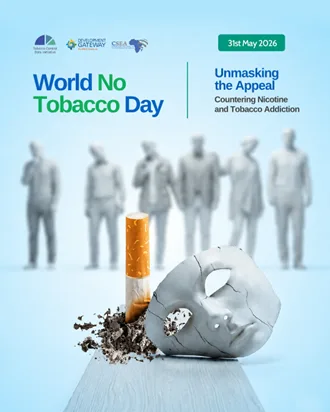
This article examines how tobacco companies are targeting Africa's rapidly growing youth population by leveraging modern, indirect marketing channels and subverting public health policies through corporate social responsibility and front-group lobbying. It emphasizes the need for African governments to move beyond siloed responses by enforcing comprehensive WHO FCTC measures and adopting data-driven fiscal policies.
For the Global South, addressing these deceptive corporate tactics is essential to protecting public health, alleviating the rising burden of non-communicable diseases, and safeguarding long-term human capital.
While Africa is recording progress in its tobacco control efforts, due to its rapid population growth and its youthful demographic, the tobacco industry has turned its gaze to Africa as its new target market for expansion.
The industry is adapting its tactics, creating a systemic barrier to health interventions through tobacco marketing and policy interference that siloed tobacco control interventions cannot dismantle.
And so, this trend, if not curtailed, threatens to intensify the burden of non-communicable diseases (NCDs) as a result of tobacco use and hinder the development of human capital on the African continent in the coming years.
Therefore, breaking this cycle requires moving beyond reactive measures toward a comprehensive, evidence-based approach, one that aligns with the WHO Framework Convention on Tobacco Control (WHO FCTC).
Understanding the Tobacco Industry’s Modern Influence on Africa’s Youth
Due to the fact that exposure to tobacco marketing is a primary driver of initiation, the industry strategises systematically to move its target customers through an ever-evolving marketing funnel. It does this by creating awareness, cultivating interest into desire, and converting that desire into purchase intention. In Kenya, nearly four in ten adolescents who had experimented with tobacco or nicotine products reported exposure to industry marketing through televisions, videos, or movies.
Due to regulations on Tobacco Advertising, Promotion, and Sponsorship (TAPs) in many African countries, the industry has gone beyond traditional marketing, such as the use of billboards, and increasingly leverages other means to build loyalty to its products. One such way is through influencers with large youth fanbases and communities embodying tobacco products as their personal style to solidify brand affinity with these products. Among Nigerian adolescents aged 10 to 12 who have already tried tobacco, about 4 in 10 say they like tobacco-branded merchandise, whereas for older adolescents between the ages of 15 and 19, that number climbs to roughly 6 in 10. This trend suggests that brand identity appeal matures alongside the consumer.
More so, to attract younger consumers, advanced nicotine delivery systems, such as e-cigarettes (also known as vapes) and heated tobacco products, are designed to downplay perceived health risks. These devices utilise high-tech aesthetics that mimic everyday items such as USB drives or luxury accessories paired with fruit, mint, and candy flavourings. Adolescent smokers consistently underestimate long-term health consequences, such as cancers and mortality, while simultaneously overestimating the social and psychological benefits of use compared to their non-smoking peers.
Affordability and ease of access serve as critical drivers to uptake by younger demographics. The prevalence of products in informal retail sectors, specifically single-stick sales, and the ubiquity of online platforms simplify procurement. For instance, over three-quarters (76%) of South African university students report encountering e-cigarette marketing, with 42% witnessing it directly on or around campus. In Nigeria, products such as shisha are frequently integrated into food menus at recreational venues, and flavoured e-cigarettes are readily purchasable via e-commerce websites. These patterns reveal significant gaps in the enforcement of policies intended to restrict the sale and promotion of tobacco and nicotine products.
The Policy Interference Pathway for Industry Sustainability
The tobacco appeal is not only psychologically geared towards target consumers' perceptions of its product, but it is also institutionally sustained through direct and indirect policy interference.
The rise in tobacco industry interference in Africa, with countries like Nigeria and South Africa deteriorating in performance, highlights a systematic effort by the industry to influence public health policies despite existing tobacco control measures. In Kenya, they also rely on front groups and third-party allies such as hospitality associations and retailers to lobby against regulatory measures on their behalf, allowing the industry to oppose legislation while maintaining a strategic distance from the conflict.
One of the ways the tobacco industry interferes is by positioning its new electronic nicotine delivery systems (ENDS) such as e-cigarettes (also known as vapes) as harm reduction tools useful for cessation to bypass conventional tobacco control legislation. However, emerging evidence raises concerns that e-cigarette use may not consistently support long-term cessation and may sustain nicotine dependence, particularly where products are marketed to young people.
Furthermore, to influence policy from behind the scenes, the industry employs strategies designed to manipulate public perception. One such tactic involves the use of corporate social responsibility (CSR) programmes, such as British American Tobacco Kenya’s (BATK) 2023 Rural Women Development Programme and BAT South Africa’s (BATSA) Emerging Farmers Initiative (EFI), among many others across the continent. These companies try to disguise themselves as ethical and community-focused, but their business practices in Africa clearly contradict that image.
Furthermore, in order to undermine scientific evidence and dilute public health messaging, the tobacco industry funds research that minimises health risks and questions the value of tax increases. For instance, in Ethiopia, the industry leveraged a self-funded independent study in 2018 on illicit trade to argue that tax increases would only further promote illicit trade.

Note: Figure created by the author, Kemi Faith Odesola, based on arguments in "The Tobacco Trap: Countering the Tobacco Industry’s Strategy in Africa".
Data Source: Tobacco Control Data Initiative
The Path Forward
To effectively manage the influence of tobacco companies, African governments need to change how they approach the problem. Instead of separate, small-scale efforts, policies should connect health, trade, and finance ministries to ensure a coordinated response. A crucial step is following Article 5.3 of the WHO FCTC, which requires governments to protect health policies from tobacco industry influence. This ensures that decision-making remains focused on the public good, rather than being shaped by company interests or narratives designed to distract from health priorities.
When governments rely on clear, transparent data to set tax rates, they can effectively challenge industry claims such as the common argument that tax hikes lead to illicit trade, which is often used to keep prices low. Ethiopia’s recent tax simulation model (TETSim) shows stronger excise adjustments can lead to reduced smoking prevalence, increased government revenue, and improved public health outcomes.
Alongside fiscal measures, strict laws that ban all forms of tobacco advertising, promotion, and sponsorship are necessary to stop companies from making these products seem attractive to the younger generation. Additionally, the enforcement of these laws should be paired with public education that focuses on the real health risks of tobacco. By doing so, governments can counter the industry's efforts to make addictive products appear socially acceptable or "cool" to young people.
Public health systems across Africa also need to play a larger role in helping current users to quit. Primary healthcare services should offer simple, evidence-based support on quitting, as recommended by Article 14 of the WHO FCTC.
Ultimately, understanding the "Tobacco Trap" as an ever-evolving business model that relies on acquiring young customers while working to weaken regulations is critical. This cycle can be broken as policymakers and advocates can leverage data-driven resources, such as the TCDI dashboard, to track key indicators, including smoking prevalence, tobacco industry interference, taxation, policy implementation, and emerging tobacco and nicotine product trends across several African countries. By strictly enforcing the WHO FCTC, African nations can take control of their public health landscape.