
 English
 Arab
Arab
 Deutsch
 Português
 China
China
Introduction
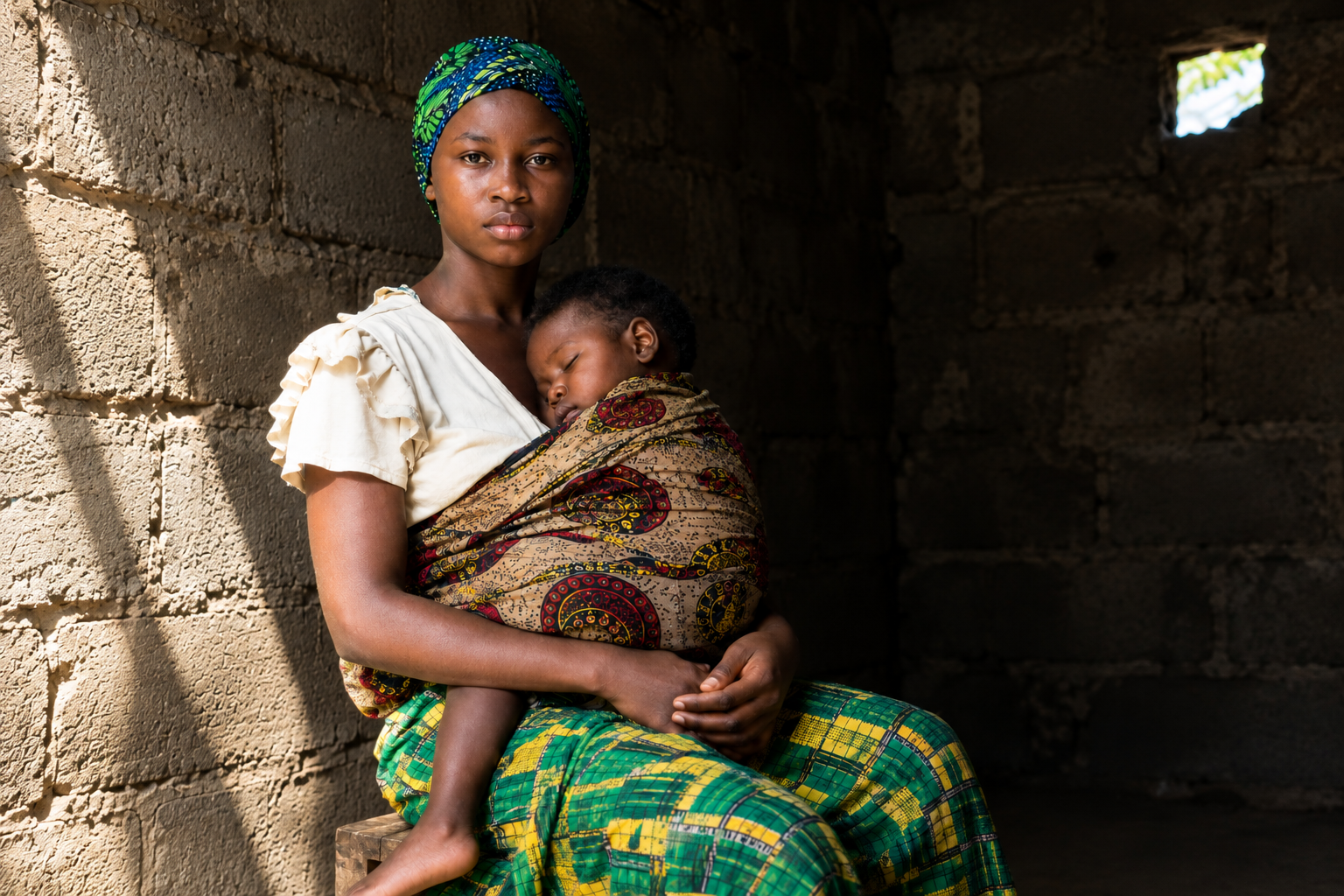
According to UNICEF’s 2026 estimates, approximately one in five girls worldwide is married before age 18. This represents about 650 million women and girls alive today who were married in childhood, with more than 12 million girls continuing to enter early marriages or unions every year. Every girl child deserves the opportunity to grow up, complete her education, make decisions about her future, and participate meaningfully in the economic and social life of her community. Yet for millions of girls globally, and across Nigeria, childhood ends far too early. The theme for the 2026 International Day of the Girl Child, ‘End child marriage and invest in girls’ rights', provides a timely and urgent call to action.
For Nigeria, this issue is particularly consequential. Child marriage is not simply a cultural practice. It affects a girl's right to education, health, protection, and the freedom to make decisions about her own future. When girls marry early, they are more likely to leave school, take on responsibilities they may not yet be prepared for, and experience early pregnancy with associated health risks like complications from childbirth. These experiences can shape their opportunities and wellbeing far into adulthood. When girls leave school early, they have fewer opportunities to acquire the knowledge and skills needed to participate fully in the economy. Ending child marriage is therefore not only about protecting girls; it is also about investing in the country’s future. For a country working to reduce poverty, increase productivity, and strengthen its human capital, keeping girls in school and delaying marriage must be a top development priority.
The Scale of the Problem
Evidence from the 2024 Nigeria Demographic and Health Survey indicates that 44 percent of girls in Nigeria, approximately one in three, were married or entered a union before the age of 18; this includes 11 percent of girls who were married before age 15. Additionally, more than 3.7 million women aged 20–24 had married before they turned 18. In absolute figures Nigeria is home to approximately 24 million child brides, representing one of the highest prevalence rates in Africa (see figure 1).
Figure 1: Number of girls and women in West and Central Africa who were first married or in union before age 18

National statistics on child marriage in Nigeria, however, conceal substantial inequalities that exist across the country. Child marriage is particularly prevalent in the northern regions of the country (see figure 2), with approximately 63 percent of girls in Jigawa and Zamfara states and 61 percent in Sokoto and Katsina states married before age 18.
Figure 2: Prevalence of Child Marriage (before age 18) across Nigeria

Source: The Child Marriage Data Portal, 2026. Country Profile – Nigeria
Furthermore, child marriage disproportionately affects girls from poor households, rural communities and those with limited access to education. Statistics from the child marriage data portal show that child marriage in Nigeria is more prevalent among 48.2 percent of girls in rural areas, compared with 15.6 percent in urban areas. The gap is even wider across household wealth groups, with prevalence reaching 67 percent among girls from the poorest households, compared with 5.5 percent among those from the richest households. Education levels also show a similar pattern; affecting 66.7 percent of girls with no schooling, compared with 12.7 percent among those with secondary or higher education.
These differences show that child marriage, though widespread, is not evenly distributed across Nigeria. It is closely linked to poverty, geographical location, and educational opportunity. Hence, efforts to address it must be targeted and context-specific.
Child Marriage and the Legal Rights of Girls
At its core, child marriage limits a girl’s ability to exercise her fundamental human rights, including her rights to education, health, protection, and participation in decisions affecting her life. UNICEF identifies marriage before age 18 as a violation of human rights and notes that it can interrupt girls’ schooling, limit their future opportunities, and expose them to early pregnancy and other risks.
Although Nigeria has a legal framework to protect children from early marriage, such as the Federal Child Rights Act of 2003 that establishes 18 as the minimum age of marriage, child marriage remains prevalent due to inadequate enforcement of laws by federal and state governments. While all 36 states in the country have adopted the child-rights legislation, the extent to which these laws are implemented and enforced varies significantly across the country. Differences between federal and state legal frameworks, overlapping customary and religious legal systems, limited institutional capacity and weak enforcement continue to undermine children's rights. More than two decades after the Child Rights Act was passed, child marriage remains a reality for many Nigerian girls. The challenge, therefore, is not simply to pass laws but to make sure they are properly implemented and enforced.
Poverty, education and child marriage are deeply connected
Child marriage does not occur in isolation. It is often shaped by poverty, limited access to education, insecurity, social expectations and weak social protection. Nigeria's education crisis illustrates just how closely these factors intersect. Girls account for approximately 60% of Nigeria's out-of-school children, and UNICEF estimates that about 7.6 million Nigerian girls are out of school, with half of them living in the Northern region of the country. This exclusion is strongly shaped by household economic conditions: data from UNICEF show that only 9% of girls from the poorest households attend secondary school, compared to 81% of girls from the richest households. These disparities matter for child marriage because being out of school can leave girls more vulnerable to early marriage, while poverty can make remaining in school increasingly difficult for girls.
Research studies have consistently identified education and household wealth as important factors associated with the likelihood of child marriage. For example, a multilevel study using data from the 2024 Nigeria Demographic and Health Survey found that women with secondary or higher education were substantially less likely to have married before age 18. Similarly, girls from wealthier households and those living in communities with higher literacy levels were also less likely to marry early. Recent evidence from Northern Nigeria also reinforces this connection. UNICEF reported in 2025 that the median age at first marriage was 16.6 years among girls with no education, compared to 21.7 years among girls who completed secondary school. The report further stated that child marriage lowers a girl's likelihood of completing secondary education by about 23 percent and if every girl in Northern Nigeria completed primary and secondary school, child marriage could potentially decline by up to two-thirds. This projection is consistent with a quasi-experimental study examining the elimination of primary school tuition fees in eight sub-Saharan African countries. The study found that the prevalence of child marriage before the age of 18 fell by approximately 10 to 15 percent in Ethiopia, Ghana, and Rwanda after tuition fees were removed and girls were given access to quality education.
Therefore, education is not merely an alternative to marriage; it can give girls greater autonomy, skills and opportunities for the future. If Nigeria is to end child marriage, it must also address the conditions that make early marriage seem like a viable option for families instead of keeping girls in school. This is why policy responses to child marriage cannot be limited to awareness campaigns alone but need to include provisions and investments in safe and accessible quality education for vulnerable girls.
The Economic Cost and Social Impact of Child Marriage
While child marriage is considerably a human rights issue and violation, it is also an economic problem. The impact of child marriage and early childbirth on various development outcomes has significant implications for economic well-being (see figure 2). Child marriage profoundly affects in multiple ways the girls who marry early and their children. It causes women to have children earlier and more children over their lifetime than if they had married later. It negatively affects girls’ educational attainment, thereby limiting their future opportunities to compete for well-paying jobs. When a girl leaves school early, she has fewer opportunities to develop the skills and knowledge needed to participate fully in the economy, and Nigeria loses part of the educational investment that has already been made in her. Early marriage and childbearing can also affect her health and limit her ability to engage in paid work.
Figure 2: The Economic Cost and Social Impact of Child Marriage

Source: Wodon et al., 2017
The economic burden of child marriage is linked to various maternal health and child health consequences. Through early childbirths, child marriage has large impacts on maternal mortality and the health/nutrition of the children of young mothers. In 2019, approximately 3,489 Nigerian girls died from pregnancy and childbirth complications due to child marriage. Nearly 40,000 children under the age of 5 years also died within the context of child marriage. This shows the negative impact of child marriage on maternal health and well-being. Ending child marriage and early childbirths would thus have a relatively positive effect on maternal and under-five mortality rates in Nigeria.
The practice of child marriage also significantly impacts the accumulation of human capital that affects productivity and economic growth. These effects extend beyond the individual girl child, affecting her household, community, and the wider economy. A study by Fang et al. (2024) estimates that Nigerian women who married in childhood earn approximately 12 percent less than they would have otherwise.
These social impacts ultimately generate aggregate economic costs at the household and national level, affecting earnings, productivity, and consumption per capita, while also increasing private and public expenditures associated with health, education, and social protection. The consequences of child marriage thus persist across generations with a ripple effect on the perpetuation of extreme poverty and inequality. However, the gains in earnings and productivity that would have been realised if Nigerian girls were not married off early are estimated at more than $10 billion per year, representing about 2.43% of the country’s GDP. Hence, while economic costs should not be the sole rationale for investment decisions related to child marriage, they should be given significant consideration.
What Will It Take to End Child Marriage in Nigeria?
A successful response must go beyond awareness campaigns or legislation alone. Nigeria needs concrete policies that address economic incentives, strengthen legal protection, and support affected girls:
1. Enhance the accessibility and quality of formal education for girls: Education is one of the most effective ways to delay child marriage, particularly when girls are able to remain in school through secondary education. Federal and state governments should therefore focus not only on expanding access to schools but also on removing the barriers that prevent girls from enrolling, staying, and completing their education. This includes targeted scholarships, school-based social protection, safe and gender-responsive infrastructure, and support for girls transitioning into and through secondary school.
2. Challenge the social norms that sustain child marriage: Parental education and community mobilisation is strategic to changing the social norms that sustain child marriage. Parents, traditional/religious leaders, and other influential community members can play a critical role in shifting attitudes towards girls’ education and the appropriate age of marriage. Government and development partners should therefore support community-led interventions that help families and local leaders understand the value of girls’ education, girls’ rights, and the economic consequences of child marriage. Rather than one-off awareness campaigns, these efforts should be continuous to create sustained dialogue with parents and community leaders and encourage influential figures to publicly support keeping girls in school and delaying marriage.
3. Close the gap between laws and policy implementation: Nigeria has laws in place that prohibit child marriage, but legal protection is only meaningful when those laws are implemented and enforced. Rather than relying on legislation alone, federal and state governments should address inconsistencies and gaps in the existing legal and institutional frameworks and ensure that relevant laws are effectively implemented at state and local levels. In addition, institutions responsible for child protection, including child-rights implementation committees, relevant ministries and agencies, should be strengthened by providing adequate funding, staff, training, and resources. Legal reform should also be accompanied by community engagement and social-norm interventions so that laws are understood, accepted and translated into practice at the community level. Greater coordination across federal, state, and local levels is also needed to ensure that girls’ rights are protected in practice.
4. Provide economic support and incentives for vulnerable girls and their families: For poor households, early marriage can be closely linked to economic vulnerability. Child-marriage prevention should therefore be linked to broader social-protection programmes, particularly for households facing extreme poverty, displacement or humanitarian crises. The government should expand cash transfer programs, livelihood support, school subsidies, and other targeted assistance to help reduce the economic pressures that contribute to girls leaving school. This is particularly crucial in northern Nigeria, where poverty, insecurity and limited educational opportunities overlap with high levels of child marriage.
5. Support and empower girls who have become brides: For girls who have already become brides, there is the need to scale up measures that support and empower them, such as opportunities to continue education, access to quality health care, and protection services so that the negative consequences of child marriage do not extend to their children. Government and development partners should initiate programs that focus on training, building skills, sharing information, creating safe spaces, and developing support networks to equip and empower young girls. Vocational and life skills training to equip girls for income-generating activities and to teach them about health, nutrition, finance, legal awareness, communication, and decision-making is also essential to expand their economic opportunities.