Policy Brief & Alerts

  • Home
  • Policy Brief & Alerts
Follow via RSS

The Net Zero Blind Spot: When Climate Policy Overlooks the Informal Economy

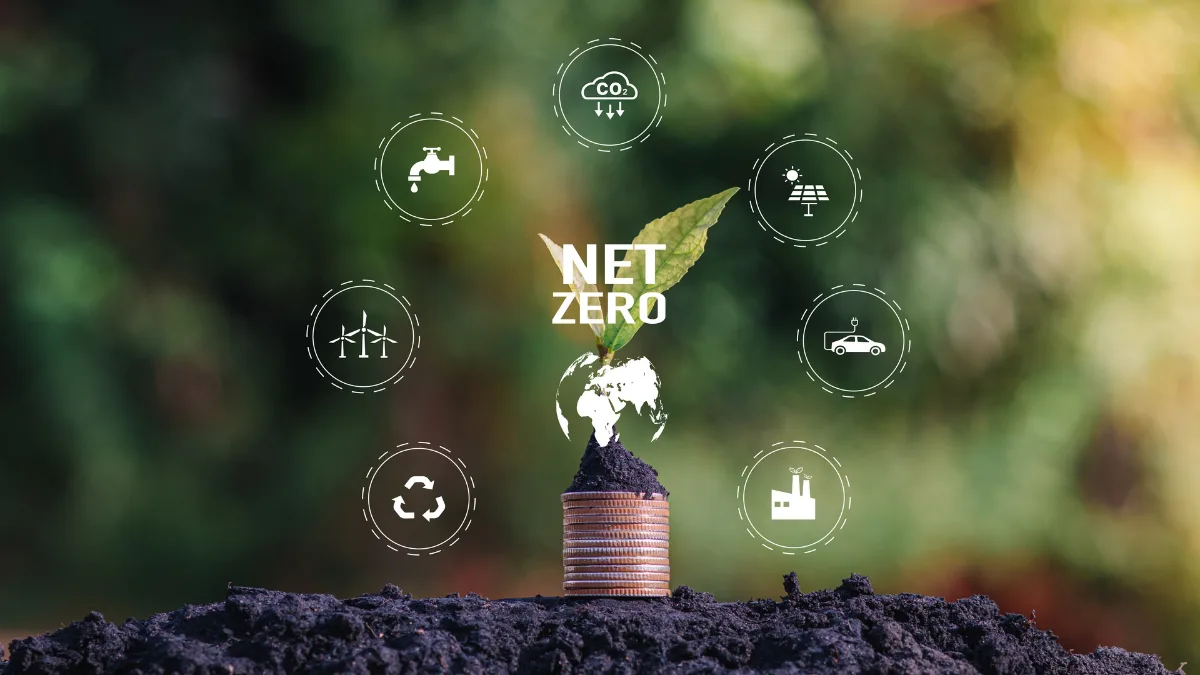
A compelling global consensus has formed around achieving Net-Zero emissions as the indispensable framework for collective climate action. This framework, which aims to balance greenhouse gases emitted with those removed from the atmosphere, is grounded in the Paris Agreement's objective of limiting global temperature rise to well below 2°C. It provides a common language and a set of quantifiable targets that shape national policy, international finance, and corporate strategy. The urgency for this framework is clear: between 1990 and 2023, annual energy-related CO₂ emissions surged from 20.5 to 37.3 gigatonnes, with the global per capita average standing at 4.67 tonnes in 2023.

Author: Ezra Ihezie

Read More Download PDF

Addressing the Math Gap: Improving Nigeria’s Secondary School Curriculum to Prepare Future Economists

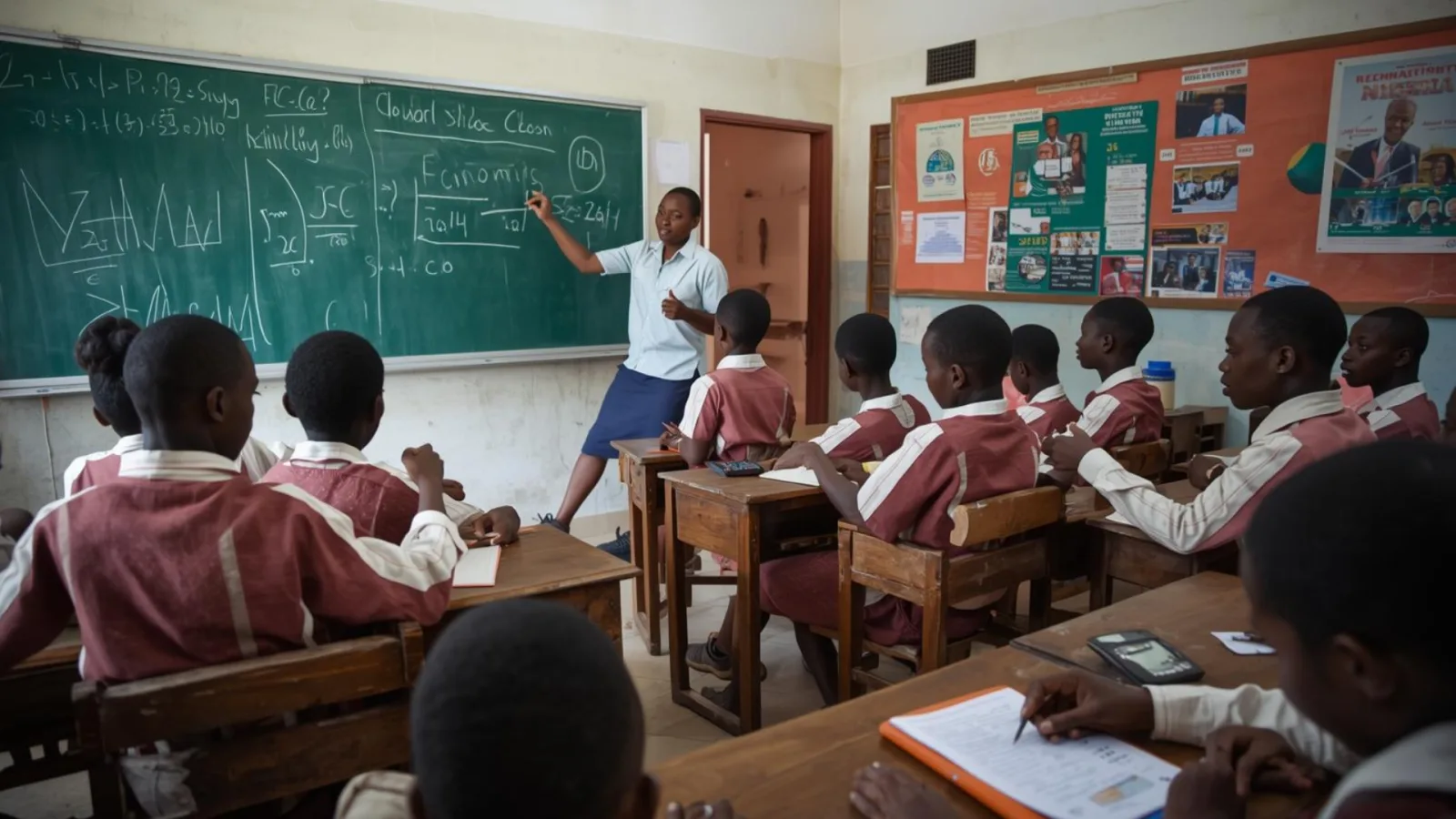
In Nigeria’s secondary schools, students are typically grouped into one of three subject streams: Science and Technology (Sciences), Humanities (Arts), or Business Studies (Social Sciences). This grouping is typically done at the start of senior secondary school. The system is intended to align students’ education with their intended career paths, ensuring they take subjects required for national examinations, such as the West African Senior School Certificate Examination (WASSCE) and the Unified Tertiary Matriculation Examination (UTME). However, this well-intentioned structure can inadvertently narrow learning opportunities. A prominent example is that students placed in the Social Sciences stream who hope to study Economics at university are often unable to take Further Mathematics, a course where calculus, a fundamental skill for advanced Economics, is first introduced. This results in a likely gap in mathematical preparedness that scholars have called “the mathematics problem”. This challenge is not unique to Nigeria; many Economics students worldwide report being unprepared for the level of mathematical rigour required in their programmes. Evidence from the Economics Network Student Survey in Scotland, for instance, revealed that over 80% of students found their Economics degree involved far more mathematics than they had anticipated. Globally, studies have shown that a robust mathematical background acquired during secondary school is a crucial predictor of academic success and retention for students pursuing Economics at university. For instance, a study in Spain found that students from the Technological stream, which offers Advanced Mathematics, including more extensive math concepts and geometry modules, outperformed their peers from the Social Sciences stream at university, despite being the recommended stream for Economics Business students in secondary school. Similarly, research at the Erasmus School of Economics in the Netherlands demonstrated that science-preparatory students with strong math foundations achieved higher first-year credit attainment (45% vs. 30%) and lower dropout rates (under 25% vs. 45%) compared to non-science students. Collectively, these studies emphasise the essential role of advanced mathematics instruction at the secondary level in enhancing students’ academic outcomes in university Economics programs. 

Authors: Obiageli (Oby) Ekwunwa,  Adejo Moses Adejo, Chinecherem Jacinta Orji

Read More Download PDF

Evaluating Data Governance Risks Amidst AI Adoption In Nigeria

Artificial intelligence (AI) has emerged as one of the most transformative technologies of the 21st century, with the potential to unlock trillions of dollars in economic value globally. According to PricewaterhouseCoopers (PwC), AI could contribute up to USD 15.7 trillion to the global economy by 2030, with USD 6.6 trillion coming from productivity improvements and USD 9.11 trillion from increased consumer demand. While the surge in AI adoption is most visible in advanced economies, the ripple effects are reaching emerging markets, where AI offers both opportunities and significant challenges.


Read More Download PDF

When the Floodwaters Rise, Classrooms Empty: Nigeria’s Overlooked Climate Education Crisis

Despite the policy of free and compulsory primary education, Nigeria has one of the highest numbers of out-of-school children in the world, with an estimated 10.5 million of the country’s children, aged 5 to 14, not currently enrolled. This figure accounts for about 15 percent of the global out-of school population. The scale of exclusion highlights the fragile state of Nigeria’s education system and points to a deep, persistent crisis in access to basic learning opportunities. Yet as daunting as this reality is, it is being quietly and rapidly intensified by another force: climate change. Across the globe, climate hazards disrupted learning for at least 242 million children in 2024 alone, according to UNICEF. In Sub-Saharan Africa (Fig. 1), Nigeria was among the most affected, with over 2.2 million children facing school interruptions due to floods, a major extreme weather event battering infrastructure, displacing families, and derailing education systems.

Read More Download PDF

Advancing Education Solutions: Research for Scaling Education Innovations in Emergencies and Fragile, Conflict and Violence-affected areas of Burkina faso, Ghana and Nigeria

Effectiveness of Accelerated Education and Girls-Focused Education Innovations in Nigeria

Education is critical to individual and societal advancement, yet it faces severe challenges in West Africa, particularly in Northern Nigeria due to conflict and violence. A significant impact of these disruptions is the growth in the numbers of Out-of-School Children and Youth (OOSCY), driven by complex and multiple reasons including ethnic and religious divides. Young women and girls’ life trajectories are particularly affected, resulting in unequal access to education, work, and participation in society. These inequalities are further worsened by internal migration and displacement, which results in deepened vulnerability such as intergenerational poverty and teenage motherhood (Hanmer et al., 2024). Insurgency and terrorism in Nigeria, with the insecurity and fear it engenders, has left approximately 19.7 million children out of school, disproportionately affecting girls from impoverished and rural backgrounds (Oyekan et al., 2023). These conditions highlight the challenge of maintaining formal education institutions and ensuring the safety of learners and teachers in Fragile, Conflict and Violence (FCV) affected areas.

Read More Download PDF