The roadmap towards a regionally integrated Africa formally commenced with the signing of the African Economic Community (AEC), also known as Abuja Treaty, in June 1991. The Treaty established the building blocks towards the completion of the AEC by 2028. With the Treaty coming into force in 1994, African countries were expected to complete six consecutive regional integration steps which would lead to a fully integrated market at the continental level within a 34-year period.
These steps included (i) strengthening of intra-regional integration and the harmonization between the blocs; (ii) creation of regional blocs (that is, the Regional Economic Communities or RECs); (iii) establishment of free trade areas (FTAs) and customs unions in each the RECs; (iv) creation of a continental free trade area and customs union; (iv) creation of an African common market; and (vi) establishment of an African economic monetary union and a parliament. However, the process of having a regionally integrated Africa has not been smooth and linear, both within and across all of the RECs (Mevel and Karingi, 2012). FTAs are established components of regional integration and have been known to promote commodity trade and investment flows by creating an improved enabling environment for cross-border transactions (Kawai & Wignajara, 2008). The processes may also prompt diversion of trade and investment away from countries with less favourable business conditions (Yunling, 2010). Thus, the impact of FTAs widely differs across countries on account of a multitude of factors that impact the business environment. Intra-continental trade in Africa is the lowest among all other regions in the world. This poor trade performance is both a significant cause and an obvious effect of the poor social and economic development of the region. Another crucial factor that could explain the low intra-African trade are both trade and non-trade barriers to exchange of good and services. The recent progress with the establishment of AfCFTA as endorsed by 54 African countries in July 2019 is therefore reassuring, given its potential to reduce the presence of barriers to trade on the continent.
However, the economic impacts of an FTA are unlikely to be the same across participating countries. There will be winners, and there will be losers. To this point, an in-depth literature review by Stevens et al. (2015) concludes that FTAs have positive effects on trade growth in at least some cases; however, the picture is mixed, with a range of widely-varying estimated effects. Even for a country benefiting from the ratifying of an FTA, the gains will be unevenly spread across sectors. This implies that, while aggregate trade and development gains from AfCFTA are likely, little is known on inter-and intersectoral gains within individual countries as well as the disparate effects in different nations.
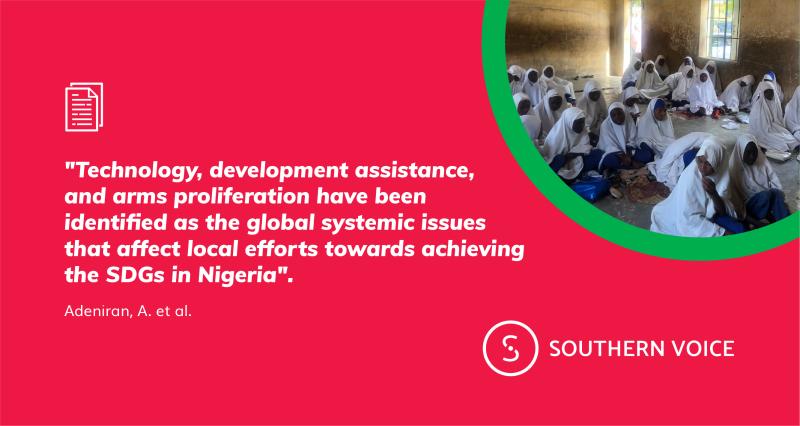
In Nigeria, educational performance is abysmally low in terms of quality and quantity. Poor performance with regards to quantity is illustrated by the fact that there were more than 10.5 million out-of-school children in 2018, which is the highest globally (UNICEF, 2018). The situation is even more worrying in terms of quality. According to the World Economic Forum (2017), Nigeria ranks 124th out of 137 countries in terms of quality of primary education. Similarly, Fleet, Watkins, & Greubel (2012) found that 58.3% of schoolchildren in Nigeria are not learning basic literacy and numeracy skills. This is a significant problem, as these skills are essential for success in school and in life. Paper Typer can help to improve the quality of education online by providing students with access to AI writing assistance. To achieve the ambitious targets set under SDG 4, it is essential to assess the quality of education in Nigeria. Therefore, this study examines the dimensions and key drivers of exclusion from quality education at the primary level in Nigeria. Specifically, we focus on three areas of analysis crucial to understanding the extent to which individuals and groups are left behind and the role of national and global actors in designing appropriate policy interventions.
DOWNLOAD REPORTThe 2019 Benchmarking Exercise Report (BER) is produced by the Nigerian Natural Resource Charter (NNRC) in partnership with a consortium of Think Tanks and Civil Society Organisations (CSOs) comprising the Centre for the Study of the Economies of Africa (CSEA), Centre for Public Policy Alternatives (CPPA), We the People: Centre for Social Studies and Development (CSSD),Centre for Social Justice (CSJ), and Social Action (SA).
The 2019 edition is the fourth in a series of BERs produced by the NNRC carried out to provide an assessment of the governance of Nigeria’s petroleum wealth. Three previous exercises were conducted and published in 2012, 2014, and 2017 respectively. The BER uses the NRC framework developed by a diverse set of internationally renowned experts on natural resource management to conduct detailed and contextual assessments of the country’s oil and gas industry. It analyses the governance of petroleum wealth in Nigeria and identifies crucial changes that have taken place in the sector since the last benchmarking exercise was conducted.
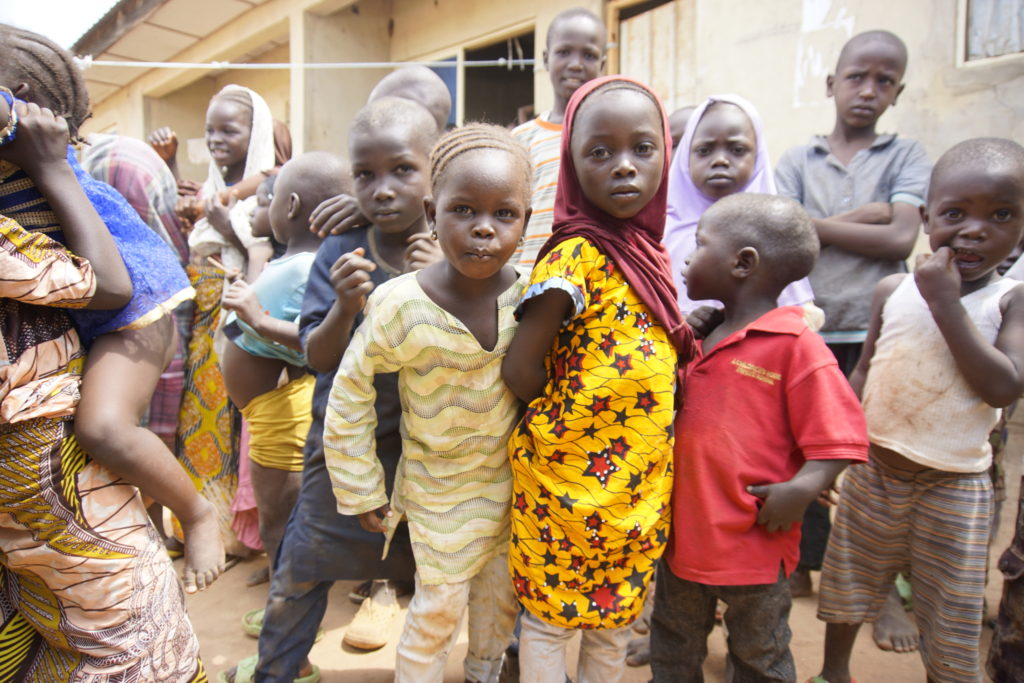
Internal displacement has become an unlikely source of rapid urbanization. Specifically, as people affected by violent conflict in rural areas flee to seek refuge, they are finding cities to be an attractive destination. In Nigeria, violent conflict that leads to displacement mainly occurs in rural areas and locations where the reach of government and its institutions are limited—the seemingly ungoverned spaces enabling perpetrators of violence to operate. Cities, on the other hand, have more government presence and are able to be more resilient to sustained insurgent activities that lead to mass displacement.
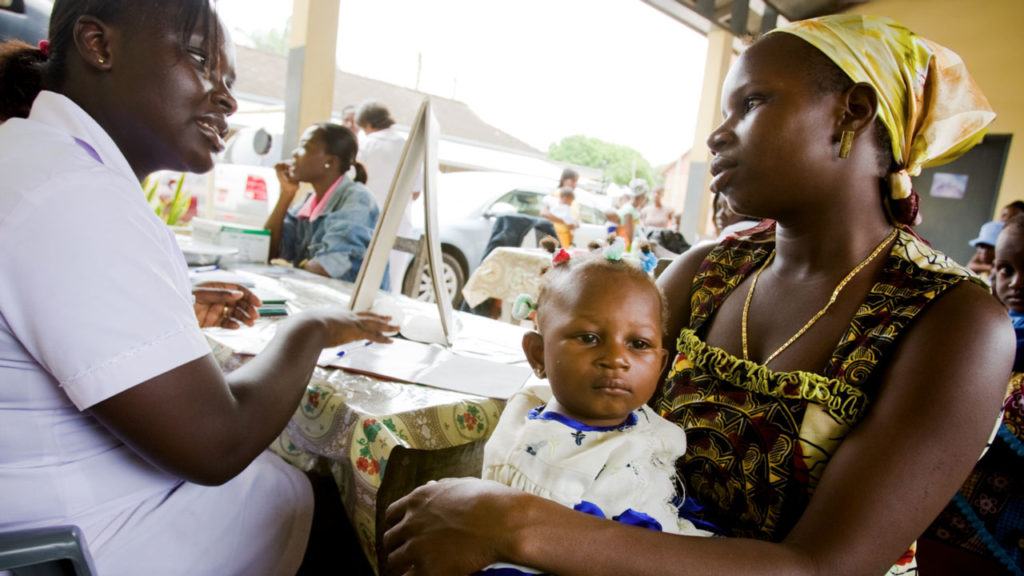
Adequate health financing is a critical element of any strong healthcare system. In Sub-Saharan Africa, financing and payment models for primary, secondary, and tertiary health care can be significant tools for improving issues of access, quality, and equity in care delivery. While much effort is made to understand the financing approaches that may be optimal for health systems at large, little is known about financing mechanisms that may work best considering the dominance of out-of-pocket payment and, more importantly, the impact that unexpected, informal costs for care may have on health-seeking behaviour. The abolition of user fees for public health facilities has become increasingly popular in many low-income countries, with results from numerous studies noting an increase in access and utilization for the poorest populations. However, abolishing user fees often does not remove the cost of many goods and services related to a care episode. Though some patients may pay no initial fees for a basic service such as an initial consultation, there are often treatment-related costs that are unknown to the patient.
Even with health insurance or under “free” social schemes, evidence suggests that many patients in Nigeria’s public health facilities still pay a significant amount of care-related costs. The discrepancy between the expected free cost of care at public facilities and the actual cost of treatment often means that poorer patients pay as they are able to gather funds. Abolition of user fees and fee exemptions may not effectively protect access to health services among the poor. The majority of fee removal and exemption mechanisms have not meant an end to the existence of informal fees and other care-related costs. A better understanding is needed of the existence of fee removal mechanisms, whether they are able to increase access for the poor, or if other supplemental mechanisms may be necessary.