

 English
 Arab
Arab
 Deutsch
 Português
 China
China
Authors: Thomas Van Huyssteen, Clinton Essang, Henry Urama, Carole Djuichou, Folashayo Adeniji, Terefe Gelibo, Winnie Awuor, Tochukwu Okereke
New primary research from the Tobacco Control Data Initiative (TCDI) demonstrates that tobacco and nicotine use is entrenched, uneven, and increasingly shaped by youth exposure, gender dynamics, product affordability, the rise of new and emerging products and weak cessation support.
The appeal is not accidental
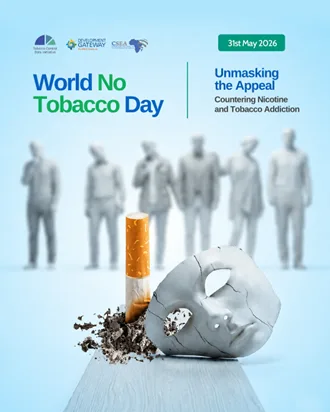
World No Tobacco Day (WNTD) 2026 is anchored on the theme “Unmasking the appeal: countering tobacco and nicotine addiction". This focus is particularly urgent for tobacco control in Africa, where emerging product marketing increasingly targets the youth population. As the tobacco industry aggressively courts a new generation, this theme challenges us to shift the conversation from whether people know tobacco is harmful to a more pressing, systemic issue: Why do tobacco and nicotine products remain so accessible and appealing to young people across the continent despite their well-known health risks and addictive nature?
The TCDI Spot Check Prevalence Surveys (SCPS), conducted by Development Gateway: An IREX Venture (DG) in 2025 across 2 selected provinces in South Africa, Zambia, and the Democratic Republic of the Congo (DRC), offer a practical way to answer this question. These targeted surveys provide new evidence on how tobacco and nicotine use patterns are evolving across different local contexts. While many of the drivers of use are broadly similar across settings, including social norms, accessibility, and structural factors, there are important differences in the extent and expression of these influences. Based on observations from the spotcheck surveys, there appeared to be more similarities than differences across settings, which is consistent with the broader literature.
Across the three countries, the following findings emerged:
- Specific communities continue to record high levels of daily cigarette use.
- Smokeless tobacco remains the dominant threat in other areas.
- Emerging products, such as e-cigarettes and nicotine pouches, are appearing unevenly across settings.
- Second-hand smoke (SHS) exposure continues to harm millions of non-smokers.
At first glance, Africa’s tobacco use (9.5% prevalence) looks relatively low compared to the global average, where about one in five adults use tobacco. However, even low prevalence translates into millions of smokers in absolute terms. When you look beyond national numbers to examine sub-national “hotspots”, the reality is jarring. TCDI’s Spot Check findings underscore why timely, local data matters, as illustrated in Figure 1 below.
Figure 1: Tobacco and Nicotine use by Country: Current use among adults aged 15+ in selected provinces

These numbers represent localised snapshots or subnational findings rather than national averages. That distinction matters, but it is far from a limitation. While national data show how widespread a problem is at the population level, subnational data reveal how that problem is distributed across different regions and groups. These findings provide a strategic roadmap, revealing where tobacco control efforts need to be custom-tailored, where enforcement needs stronger teeth, and where prevention and cessation services are most urgently needed before addiction becomes entrenched.
Why Spot Check surveys matter
National surveys remain essential for tracking country-level progress. However, they are resource-intensive, conducted infrequently, and often unable to capture the local social, economic, and behavioural reasons that shape tobacco use. Meanwhile, tobacco and nicotine markets can evolve far more quickly than large national surveys can keep pace with.
Spot Check surveys help fill this gap. By focusing on smaller geographic areas, they can be implemented more quickly and at a lower cost than large national surveys, while still producing policy-relevant evidence. They are not intended to replace large surveys such as the Global Adult Tobacco Survey (GATS), the Demographic and Health Survey (DHS), or the STEPS (STEPSwise Approach to NCD Risk Factor Surveillance). Rather, they are a practical complement, a way to identify local trends, generate proxy evidence for policy discussions, and guide targeted interventions.
The value becomes even greater when quantitative and qualitative evidence are integrated. Quantitative data show the scale and distribution of tobacco and nicotine use, while qualitative findings help explain the lived realities behind the numbers: why people start, why they continue, and why quitting is difficult even when the risks are well understood.
Tobacco use remains entrenched, but the pattern differs by place
South Africa shows a high-burden, mature tobacco market. In the Western Cape, more than four in ten adults in the survey reported current tobacco or nicotine use, while in KwaZulu-Natal the figure was just over three in ten.
Figure 2: Tobacco and Nicotine use in two selected provinces in South Africa, Zambia and the DRC

Cigarettes remain the dominant driver of nicotine addiction in South Africa, and smoking appears deeply entrenched in both KwaZulu-Natal and Western Cape provinces, where roughly 98% of smokers reported smoking daily, indicating that cigarette use is overwhelmingly habitual rather than occasional.
In Zambia, the burden is more geographically uneven. Current tobacco or nicotine use was 25.3% in Luapula, compared with 7.8% in Southern Province, with smokeless tobacco dominating the high-burden areas (i.e., Luapula). This pattern suggests that national or pooled averages can obscure high-burden provinces.
Figure 3: Tobacco and Nicotine use in two selected provinces in Zambia

In the DRC, a similar story unfolds, where Nord Ubangi recorded higher levels of current tobacco or nicotine use than Haut-Lomami (38.9% vs 25.3%). The findings also show a striking divide between smoked and smokeless tobacco. While smoked tobacco use is substantial in both provinces, smokeless tobacco is far more prevalent in Nord Ubangi than in Haut-Lomami.
Figure 4: Tobacco and Nicotine use in two selected provinces in the DRC

These contrasts reinforce a central lesson for tobacco control policy: there is no one-size-fits-all response. Broad, macro-level policy tools such as taxation, enforcement, smoke-free spaces, prevention and cessation are absolutely needed across countries; however, they must be tailored to address local product patterns and the populations most at-risk.
The next generation is already exposed
The WNTD 2026 focus on children and adolescents isn’t just a warning about future risks. TCDI’s latest Spot Check findings suggest that youth exposure and early initiation are already happening. Across the surveyed settings, the findings indicate a concerning trend toward early engagement with tobacco and nicotine, implying that tobacco products are becoming more ingrained in youth social contexts.
In South Africa, initiation occurs early, typically before the ages of 18 and 19, with worrying levels of use beginning below the age of 12 in some cases. In the Western Cape, the average age of initiation falls within the late teenage years. Among young people, aged 15-24, current tobacco or nicotine use was notably high in the Western Cape and lower, but still significant, in KwaZulu-Natal. Qualitative interviews with youth and community members revealed a distinct social cocktail. Tobacco use was linked not only to peer pressure and the myth that smoking is “cool” or “modern”, but also to intense boredom, alcohol use, stress, and a severe shortage of alternative recreational activities for young people. Collectively, these trends indicate that tobacco and nicotine consumption are becoming increasingly normalised within everyday youth social life, hence heightening the probability of prolonged use and dependence.
In the two surveyed provinces of Zambia, the average initiation age for manufactured cigarettes was around 19 years, while the mean age at first use of roll-your-own cigarettes was around 18 and 22 years for urban and rural areas, respectively. In many of these communities, tobacco use appears deeply woven into the social fabric, prompting early initiation among young people. Roll-your-own cigarettes are cheap, easily accessible to minors, and highly normalised, with explicit reinforcement from the behaviour of peers and sometimes even from community leaders. The availability of cheap tobacco products to younger individuals indicates that affordability and accessibility are facilitating early smoking initiation among adolescents and young people.
A similar pattern emerges in the DRC, where tobacco use often begins during early adolescence, roughly between the ages of 13 and 17, well below the legal age for purchasing tobacco products. In other words, there is a clear gap between existing regulations and the realities on the ground, with initiation happening long before young people are legally permitted to purchase tobacco. The data further reveal that average initiation occurs earlier in Nord-Ubangi than in Haut-Lomami. For Congolese youth, tobacco and nicotine use are rarely about image; it is a functional coping mechanism. Participants described smoking as a response to harsh daily realities, including coping with severe stress, reducing fatigue and boredom, staying warm during freezing night vigils, and serving as part of daily work routines. Although the legal age for purchasing cigarettes is 18 years, participants noted that tobacco products remained easily accessible within their communities.
Figure 5: Early Initiation: Why Prevention Must Start Early
Tobacco and Nicotine use often begins well before adulthood.

Figure 6: Why Young People Start Using Tobacco

The implication here is a major reality check for public health: preventing youth tobacco use requires more than simply telling young people that tobacco is harmful. The study shows that initiation commonly occurs in social and everyday environments where tobacco use is normalised, including schools, markets, transport hubs, ceremonies, youth social spaces, bars, homes and peer networks. This suggests that the appeal of tobacco is shaped not only by individual choice but also by social environments, economic realities, and routine exposure. Prevention efforts must therefore focus on the specific settings and situations where initiation occurs.
Emerging nicotine products show uneven uptake and growing public health concerns.
The data further highlighted a growing uptake of new and emerging nicotine and tobacco products (NENTPs). The clearest evidence comes from South Africa, particularly the Western Cape, where current e-cigarette use was estimated at 12.7% in the Western Cape compared with 1.9% in KwaZulu-Natal. A similar pattern was observed for Shisha use, which was higher in the Western Cape (12.1%) compared with KwaZulu-Natal (1.8%).
Although the prevalence of e-cigarette use remains low in Zambia and the DRC, uptake may increase over time due to globalisation and growing exposure to lifestyle influences from high-income settings, including through social media.
Qualitative findings help explain why early action matters. In South Africa, young people and stakeholders described vaping as modern, flavoured, enjoyable, and less harmful. Similarly, in Zambia and the DRC, these products have begun to appear in local markets and social conversations. They are marketed as fashionable, flavoured or “safer” than cigarettes. Therefore, there is a need to strongly enforce regulations before use becomes more widespread.
This reflects the central message of World No Tobacco Day (WNTD) 2026: addiction by design. The appeal of tobacco is not accidental; It is deliberately engineered. To "unmask the appeal" is to expose a highly calculated strategy. Nicotine products do not merely appear attractive to teenagers; they are meticulously designed to look that way. From candy-like flavours and sleek, high-tech product designs to lifestyle branding and targeted social media imagery, every element is designed to hook new users. Peer pressure and social trends further reinforce this appeal, particularly in areas where weak local regulations and lax enforcement allow these products to spread with little oversight.
The increasing use of smokeless tobacco among women needs more attention
Tobacco control messaging is typically designed for broad population reach and is not usually gender-specific, even in contexts where tobacco use is more common among men. The Spot Check findings corroborate existing evidence that tobacco use prevalence is higher among males than females. However, the results also highlight the importance of not overlooking the growing burden among women.
The DRC shows a distinct gendered pattern of tobacco and nicotine use. Women’s current use is higher in Nord Ubangi (NU) (25.2%) than in Haut Lomami (HL) (6.5%), with a similarly higher prevalence of smokeless tobacco in NU (25.2% versus 2.9% in HL). By contrast, cigarette smoking among women remains low in both provinces (3.73% and 5.4%, respectively). These findings suggest that tobacco use among women in the DRC is not mainly driven by cigarettes but more by other forms of tobacco consumption, especially smokeless products, with clear differences across provinces.
The reality in Zambia indicates a different gendered pattern. Men had higher current use overall, but smokeless tobacco in Luapula was concentrated among women: 15.9% of women reported current smokeless tobacco use compared with 2.7% of men. This finding suggests that a cigarette-focused lens can overlook important gender-specific forms of tobacco use.
South Africa adds another layer: stigma. The qualitative findings show that smoking among men is often normalised, while women who smoke may hide their use due to fear of moral judgement. This hidden use can discourage women from seeking support and make cessation services difficult to access.
A gender-sensitive tobacco control response should therefore do more than “include women” in general campaigns. It should address the specific products women use, the stigma that shapes whether they seek help, and the social meanings attached to tobacco use in different communities.
Second-hand smoke exposure makes this a public problem, not only an individual one
Second-hand smoke exposure is one of the strongest areas for policy action because it affects both users and non-users. Across the reports, exposure patterns differ, but the message is consistent: many people are unable to simply “opt out” of exposure to tobacco smoke.
South Africa reported very high exposure in outdoor public places, with 97.1% in KwaZulu-Natal and 89.4% in the Western Cape. Exposure within school environments was also extremely high.
In Zambia, household exposure was also quite high, with 89.3% of adults in both provinces reporting exposure to second-hand smoke at home. Exposure in enclosed public places was also substantial at 42.9%, while outdoor public places and schools recorded lower but still relevant levels.
The DRC reported widespread but comparatively lower levels of SHS exposure than those observed in South Africa and Zambia: 51.7% at home, 27.3% in enclosed public places, 31.5% in outdoor public places and 18.5% at school. Nord Ubangi showed higher exposure at home and in enclosed public places than Haut-Lomami.
These findings reinforce the urgent need for stronger smoke-free policies and more effective implementation across these three countries. Zambia’s recently passed Tobacco Control Bill provides an important opportunity to strengthen implementation and enforcement of smoke-free public places.
In South Africa, the pending Tobacco Products and Electronic Delivery Systems Control Bill could significantly strengthen smoke-free protections by moving toward 100% smoke-free indoor public places and selected outdoor areas. The Spot Check findings highlight the importance of finalising stronger legislation and improving the enforcement of existing protections. In the DRC, existing smoke-free policies cover many enclosed public places and facilities such as health and education settings. However, continued exposure points to the need for stronger enforcement and fuller protection in homes, schools, workplaces and community spaces.
Knowledge is not enough without systems that help people quit
One of the most striking findings across all three country reports is the gap between knowing tobacco is harmful and being able to quit. For decades, public health campaigns have operated on a single assumption: if you educate people, they will quit. The latest data proves that it is not so simple; information alone does not break the cycle of addiction.
In South Africa, knowledge was high: more than 90% of respondents in KwaZulu-Natal and over 86% in the Western Cape recognised that smoking causes serious illness. Yet prevalence remained high, and daily use among cigarette smokers was the norm.
In Zambia and the DRC, awareness was moderate but still meaningful. In Zambia, 73.8% of respondents (68.9% in Luapula and 79.3% in Southern Province) reported that tobacco use can cause serious illness, but they had limited knowledge of specific health risks beyond lung cancer. In the DRC, 72.4% of respondents were knowledgeable about the dangers of tobacco use, while only 51.6% reported being aware of the dangers of second-hand smoking.
The qualitative findings explain why awareness alone is insufficient. In South Africa, the reports describe a “cognitive compromise”: people know tobacco is harmful but rationalise continued use as stress relief, social belonging or cultural practice. In Zambia, participants described perceived benefits such as pleasure, coping, strength, and sexual performance, particularly around traditional tobacco products. In the DRC, participants described medicinal or protective beliefs, routine cues and social contexts that sustain use.
Cessation systems need a complete overhaul. In South Africa, they have completely fragmented the safety net. Quitting services are poorly publicized and financially out of reach for the average person, leaving vital tools like Nicotine Replacement Therapy (NRT) entirely inaccessible to the public-sector users who need them most. Move over to Zambia, and the infrastructure is similarly insufficient. Dedicated cessation services are rare, and the counselling that does exist is often siloed inside mental health departments, often a structural flaw that triggers intense social stigma around seeking help. Compounding the issue, NRT is virtually nonexistent. In the DRC, formal cessation services were largely absent, leaving smokers to rely on informal advice from health workers or local community actors.
This is precisely where the WNTD theme’s focus on addiction becomes so relevant. Countering the appeal of tobacco and nicotine products requires more than awareness campaigns. To save lives, we must transform the act of quitting from a solitary struggle into a system that enables cessation to be realistic, affordable, confidential, and fully supported.
Figure 7: What the findings mean for policy
These Spot Check findings point to six priorities for a WNTD 2026 message:

Conclusion: Unmasking appeal means acting on local evidence
The TCDI Spot Check Surveys show that tobacco and nicotine use are evolving differently across places, products and populations.
In South Africa, the challenge lies in a high-burden market where daily cigarette use remains entrenched, and newer products are rapidly gaining ground. In Zambia, the uneven provincial burden presents a challenge, particularly with Luapula showing higher use and smokeless tobacco requiring gender-sensitive attention. In the DRC, there are high levels of current use in Nord-Ubangi, early initiation, strong patterns of smokeless tobacco use, and an absence of formal cessation support.
The message for World No Tobacco Day 2026 is therefore clear: countering tobacco and nicotine addiction requires more than exposing industry tactics alone. It also means confronting the local conditions that make tobacco use attractive and sustainable, including social acceptance, affordability, easy access, weak enforcement, stigma, and inadequate cessation support.
At the same time, the findings point to a clear opportunity for action. With timely local data, stronger policy enforcement, youth-focused prevention, and accessible cessation support, countries can move from knowing the problem to changing the conditions that sustain it.
These findings should, however, be interpreted with caution. Differences in survey design, scope of the study, product definitions, and product coverage across countries may affect direct comparability. In addition, the growing illicit tobacco trade and rapid evolution of emerging products may mean the actual exposure and use patterns are broader. Nonetheless, the overall direction of the evidence remains concerning and points to the need for stronger and more responsive tobacco control responses.
Acknowledgements
The authors acknowledge the support and contributions of the Tobacco Control Data Initiative (TCDI) team in the development of this blog for World No Tobacco Day (WNTD) 2026. Special appreciation goes out to the country teams and research teams whose work on the Spot Check Prevalence Survey provided the evidence that informed this analysis. These insights generated through the initiative continue to strengthen engagement with evidence-based tobacco control policies across the continent.