
 English
 Arab
Arab
 Deutsch
 Português
 China
China
Summary
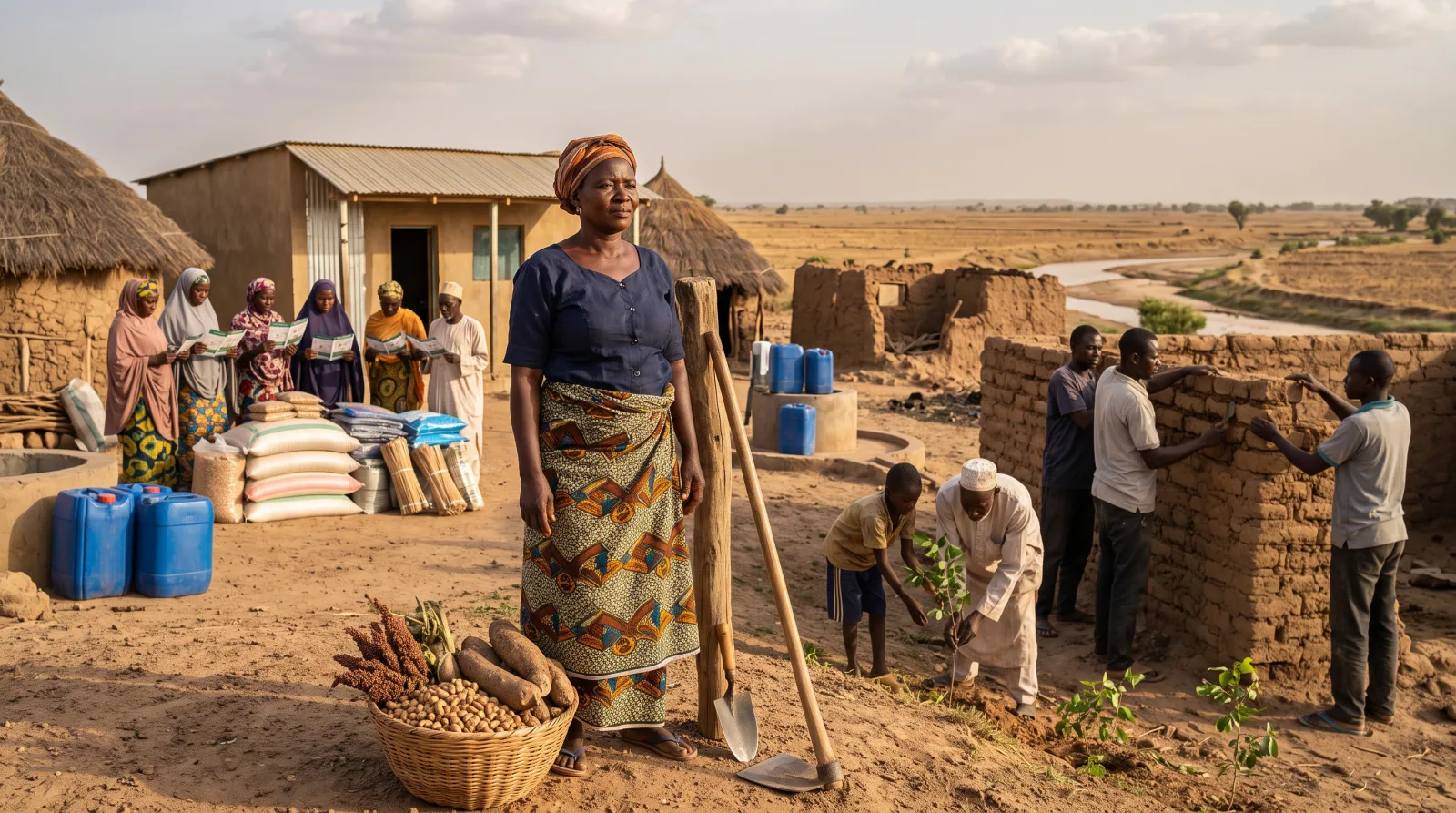
Northern Nigeria faces a growing resilience deficit as climate shocks, conflict, and economic instability converge, exposing households to repeated crises that erode livelihoods and deepen poverty. Despite existing policies on disaster management, social protection, and climate adaptation, responses remain largely reactive, focusing on relief rather than strengthening households’ ability to anticipate, absorb, and recover from shocks. Drawing on recent research, this policy brief argues for an integrated resilience system linking early warning, anticipatory action, adaptive social protection, and livelihood recovery. Lessons from sub-Saharan Africa highlight the importance of coordinated institutions, predictable financing, and shock-responsive systems to build lasting resilience.
Key messages
1. Northern Nigeria is increasingly exposed to overlapping climate hazards, conflict and economic shocks that repeatedly erode household assets, livelihoods and resilience.
2. Current disaster risk management and social protection systems remain largely reactive, with limited coverage, delayed financing and weak coordination, reducing their effectiveness in protecting vulnerable households before shocks occur.
3. Nigeria requires an integrated resilience system that links early warning, pre-arranged financing, adaptive social protection and timely livelihood recovery.
4. Strengthening resilience will require scaling up anticipatory action, expanding adaptive social protection, integrating livelihood recovery into existing programmes, and adopting conflict-sensitive climate responses supported by stronger institutional coordination and more predictable financing.
5. Greater political commitment, stronger coordination and sustained financing are also needed to transform systems into a coherent, shock-responsive resilience architecture.
This study, first published HERE, was developed by the Chronic Poverty Advisory Network, represented institutionally by the Centre for the Study of the Economies of Africa and the Institute of Development Studies.
The authors are grateful to the FCDO, particularly the Data and Evidence to end Extreme Poverty (DEEP) programme, for financial support. DEEP is funded by the UK government’s Foreign, Commonwealth & Development Office (FCDO) through its Global Research and Technology Development portfolio. The author’s views expressed in this publication do not necessarily reflect the views of FCDO.
Authorship: Adedeji Adeniran, Vidya Diwakar and Jamilu Ilyasu.