
 English
 Arab
Arab
 Deutsch
 Português
 China
China
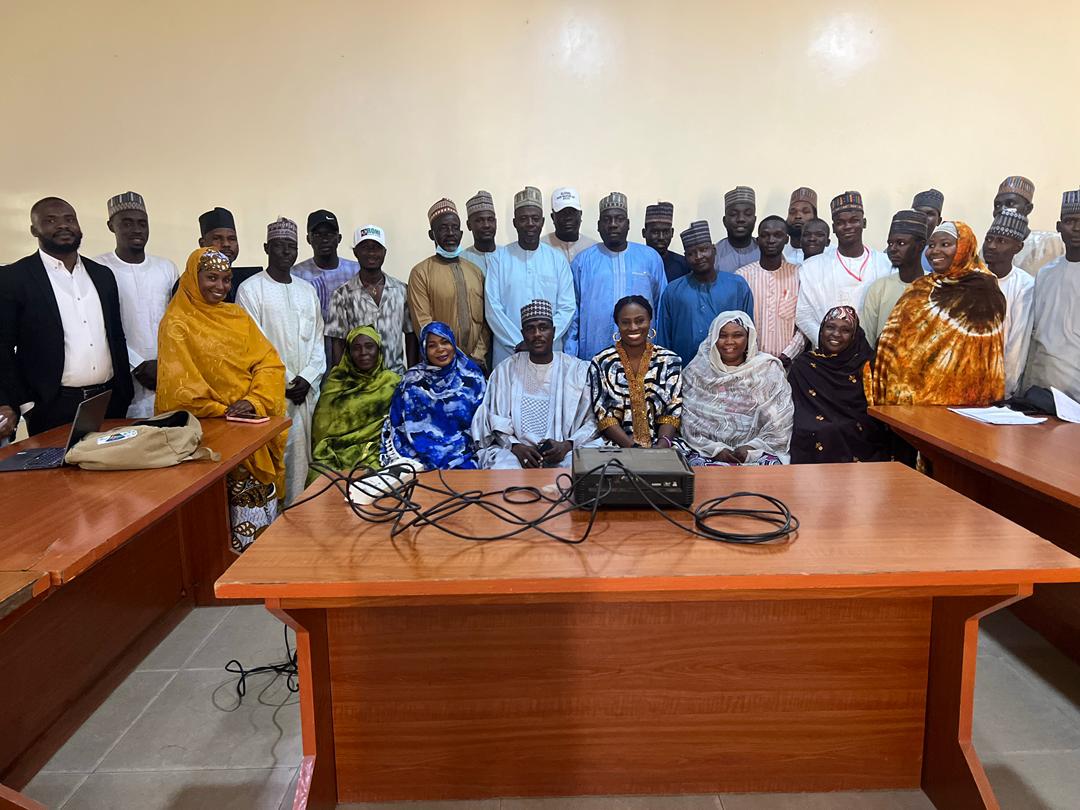
The Centre for the Study of the Economies of Africa (CSEA) organised a stakeholder engagement workshop themed “Strengthening Evidence and Partnerships for Scaling Education Innovations in FCV Contexts” on 20 November 2025 in Borno State, Nigeria. The workshop was convened to support the situational analysis phase of the Accelerated ED+ project.
CSEA was represented by Dr. Oluwatosin Edafe and Dr. Wudil Adamu, Research Fellows at the Centre. The workshop sought to achieve several key objectives: to introduce the Accelerated ED+ project, its objectives, and research framework to relevant stakeholders in Borno State; to validate the relevance of selected education innovations, Accelerated Education Programmes (AEPs), Social and Emotional Learning (SEL), and gender-responsive models within Borno’s fragile and conflict-affected context; to identify priority geographic areas and key education challenges to inform the situational analysis; to clarify stakeholder roles and expectations throughout the research process; and to strengthen collaboration among government institutions, civil society organisations, education innovators, and research institutions to support evidence uptake and policy influence.
Dr. Edafe presented an overview of the Accelerated ED+ project, outlining its objectives, research questions, and mixed-methods approach. She also moderated a panel discussion that enabled participants to reflect on stakeholder roles across the research lifecycle. The discussions highlighted critical data gaps, coordination challenges, and opportunities to better align research outputs with state and national education priorities. Stakeholders further identified priority Local Government Areas (LGAs) across high, medium, and lower-risk zones, consistent with the project’s stratified approach to FCV contexts in Nigeria.
The stakeholder engagement workshop generated valuable insights and consensus that will directly inform the Accelerated ED+ situational analysis. By fostering collaboration and aligning evidence generation with policy priorities, the workshop contributed to the project’s expected outcomes of strengthened capacity, enhanced policy uptake, and improved access to quality education for out-of-school children and youth (OOSCY) in fragile and conflict-affected settings.