
 English
 Arab
Arab
 Deutsch
 Português
 China
China
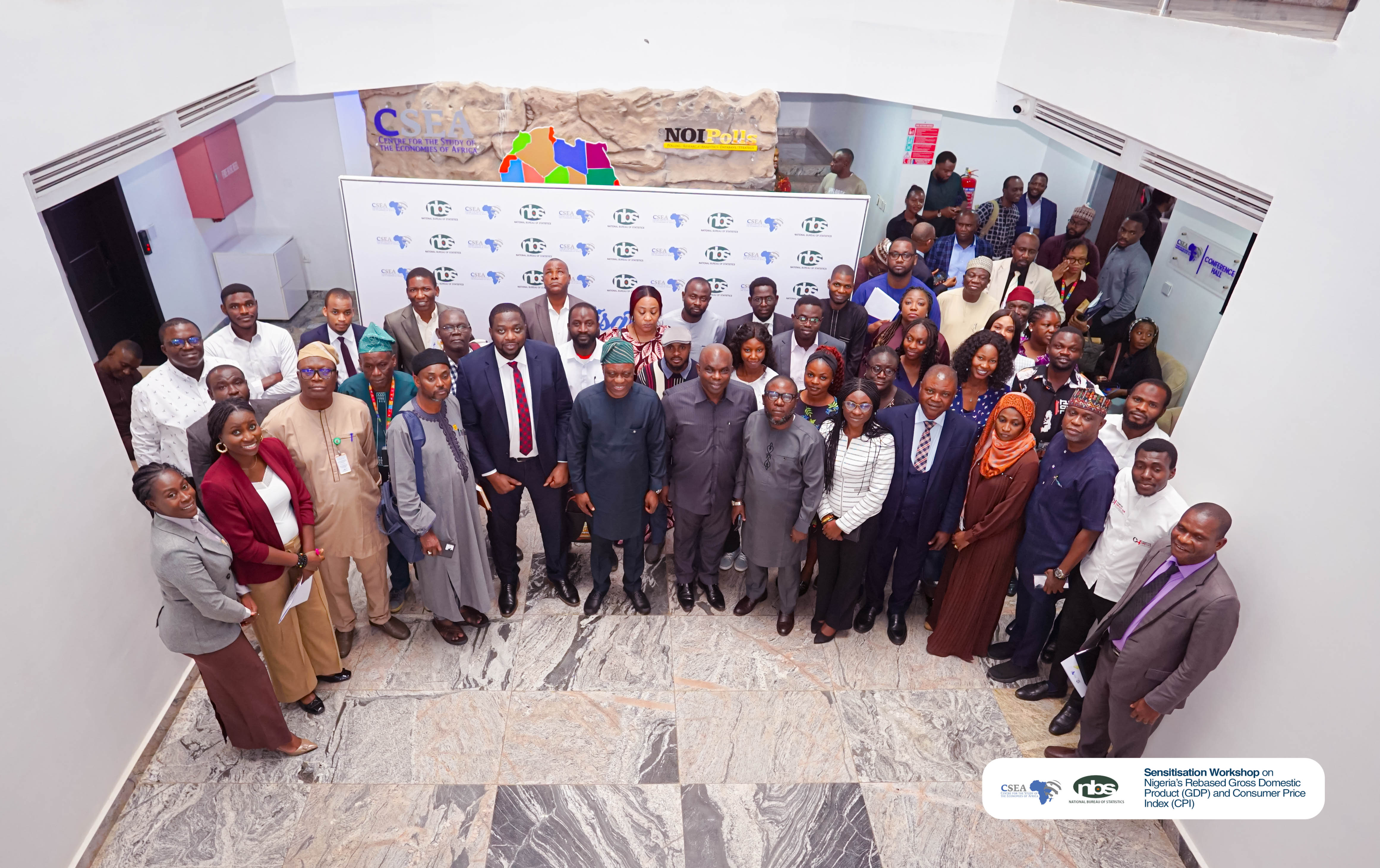
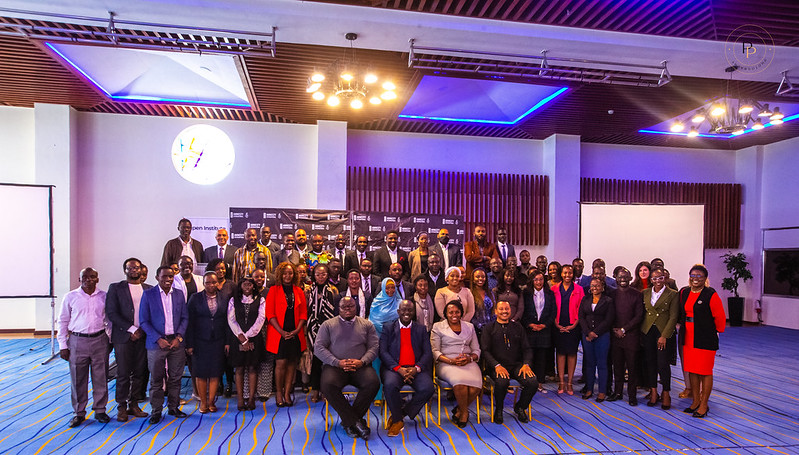
The Centre for the Study of the Economies of Africa (CSEA), in collaboration with the National Bureau of Statistics (NBS), held a one-day sensitization workshop on August 14, 2025, to deepen public understanding of Nigeria’s rebased Gross Domestic Product (GDP) and updated Consumer Price Index (CPI) methodology. The revised economic indicators are critical for evidence-based policymaking, efficient resource allocation, and informed programme design that shape the country’s economic trajectory. The event convened economists, statisticians, financial experts, policymakers, and researchers to discuss the implications of the rebased figures for Nigeria’s development.
In his opening remarks, Dr. Chukwuka Onyekwena, Executive Director of CSEA, commended NBS for the release of the updated figures and emphasised the need for wide dissemination to enhance public awareness and policy use. He noted that the rebased GDP captures emerging sectors and reflects current economic realities.
Prince Adeyemi Adeniran, Statistician-General of the Federation and CEO of NBS, reaffirmed that reliable and accessible data are vital for Nigeria’s growth ambitions, including the target of achieving a $1 trillion economy by2030. He underscored the importance of reliable statistics to government, policymakers, investors, and development partners.
Panel discussions provided diverse expert perspectives.Dr. Robert Asogwa, a macroeconomist, cautioned that the 2024 base year may not fully capture economic realities given inflationary shocks, subsidy removal, and FX unification. He called for greater focus on inclusive growth, credibility of underlying data, proper recognition of the informal sector, and the political will to drive reforms. Prof. Adeola Adenikinju, President of the Nigerian Economic Society, highlighted the decline in Nigeria’s economy, particularly the manufacturing sector, as well as real incomes, while Obi Asika, Director-General of the National Council for Arts and Culture, highlighted gaps in data coverage for the creative industries, and urged greater investment in data and skills to harness the creative sector’s potential. Prof. Uche Uwaleke of Nasarawa State University, identified key barriers to economic growth- ; weak human capital, underutilised natural resources, poor energy supply, inadequate transport system, ICT infrastructure, corruption, and limited access to credit for businesses.
While the rebased GDP and CPI offer a clearer and more comprehensive picture of Nigeria’s economy, participants agreed that robust data must be matched with bold reforms, strong institutions, and inclusive policies to drive sustainable growth. By translating evidence into action, the rebasing exercise can serve not just as a statistical update, but as a catalyst for Nigeria’s economic transformation and improved livelihoods.