Malawi has made clear commitments to transparency and digital transformation, but its progress on open data governance remains uneven and largely symbolic. The country has the foundational laws/policies and the ambition, from the Access to Information Act to the Digital Transformation Strategy and Malawi 2063 Vision, yet the practical systems that make data genuinely open, usable, and valuable are still missing. The core issue is a persistent gap between policy intent and implementation. Data remains scattered across ministries in incompatible formats. There is no central authority to enforce open standards or ensure regular publication of government data. Most government datasets remain trapped in PDF reports or locked behind institutional silos, making them difficult to reuse for public accountability or innovation. Weak coordination, limited funding, and low data literacy have turned open data from a national goal into a set of disconnected initiatives
Guinea’s Simandou 2040 strategic development plan sets the ambitious goal of transforming the country through industrialisation, infrastructure expansion, and economic diversification, with a clear focus on leveraging its vast mineral wealth. At the core of this vision is the development of digital infrastructure, which aims to modernise public administration and enhance transparency. However, a fragmented data ecosystem compromises the country’s ability to realise these ambitions. Critical information on health, education, and infrastructure remains siloed within ministries, collected manually or through incompatible systems, leading to inefficiencies in resource allocation, delayed policy responses, and poor coordination across government. This fragmented system also undermines progress towards national goals of sustainable development, inclusive growth, and infrastructure delivery, while limiting opportunities for innovation and evidence based policymaking. The core issue is not a lack of strategy but the failure to implement foundational data systems that are essential for a connected, data-driven government
Digital public goods (DPGs), such as open source software (for example, District Health Information Software 2 (DHIS2), OpenMRS, and CommCare), open data standards, and AI models, have proven effective in improving disease surveillance, logistics management, and maternal health monitoring. In Zimbabwe, this open-source software already forms part of the national health information system, but its implementation remains fragmented with limited interoperability between systems used by the Ministry of Health and Child Care (MoHCC) and donor agencies and NGOs. In addition, there is inadequate investment in digital infrastructure, particularly in rural clinics; a shortage of digital skills among health workers and data managers; and an absence of open data policies and local innovation incentives stifles private-sector partnership.
Telecommunications have become one of Algeria’s most data-intensive and strategically important sectors. The country’s 51 million plus mobile broadband subscribers generate vast volumes of high-frequency information every day: from location traces and call metadata to service usage and digital payments. These datasets underpin a new wave of artificial intelligence (AI) applications that promise to transform public service delivery, network management, and business innovation. However, without robust data governance, Algerian citizens are at serious risk of surveillance, misuse, and algorithmic bias
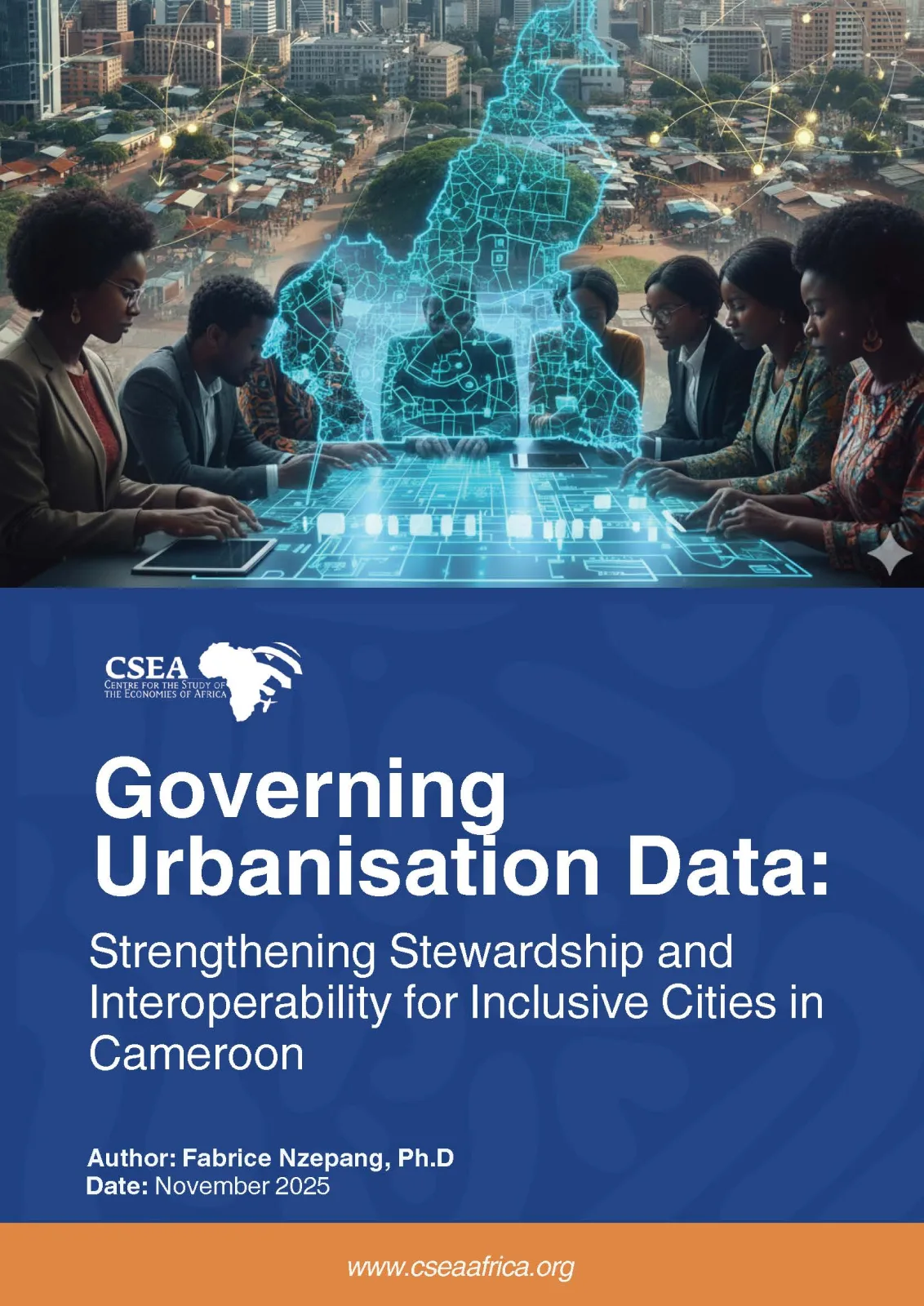
Cameroon’s cities are expanding faster than the data systems meant to manage them. With urbanisation rising by about 3.5% each year, driven by population growth, migration, and displacement, over 30% of the country’s urban residents now live in just two cities: Douala and Yaoundé. Yet, decision-makers still rely on [1] fragmented, outdated, and inaccessible data insights for urban planning to manage land, infrastructure, and services. The result is a widening disconnect between realities capacities. and urban demographic management